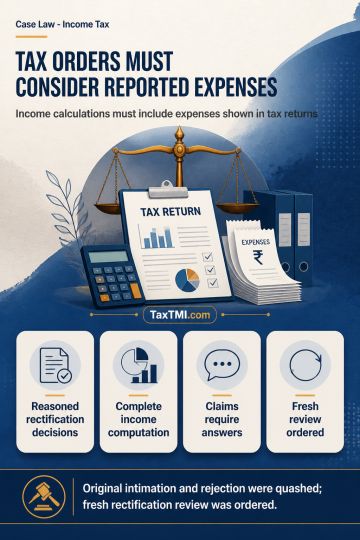
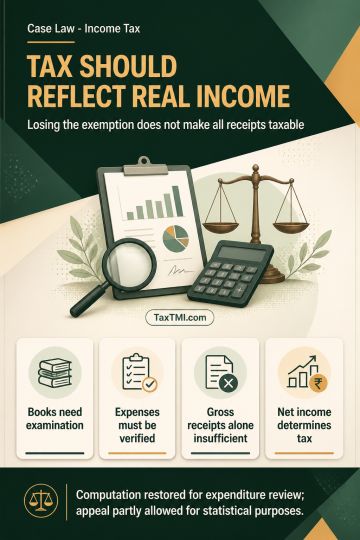
Reasoned rectification orders require consideration of expenditure disclosed in income-tax returns, preventing revision based on incomplete income com...
Modified returns after business reorganisations cannot trigger fresh scrutiny once the original assessment was complete, invalidating related transfer...
Third-party loose sheets require reliable nexus before supporting unexplained expenditure additions; presumptions do not establish payer identity or o...
TNMM comparability using audited accounts and working-capital adjustments can eliminate unwarranted transfer-pricing additions where verified margins ...
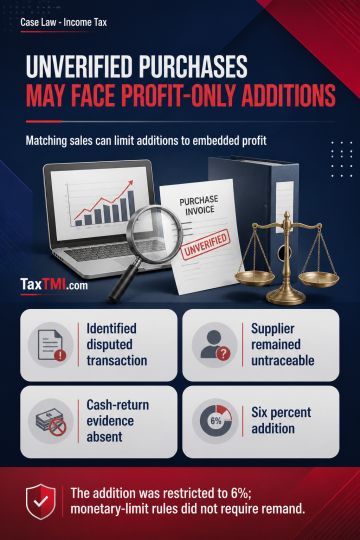
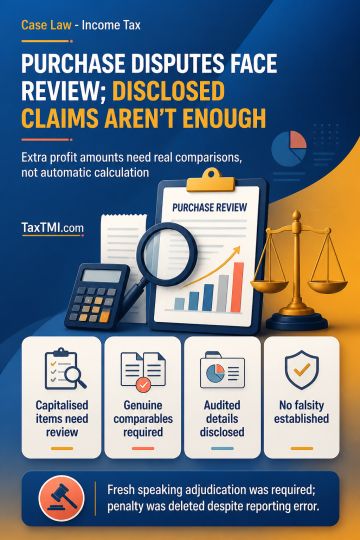
Gross-profit additions on disputed purchases require reasoned appellate determination; disclosed claims alone do not support inaccurate-particulars pe...
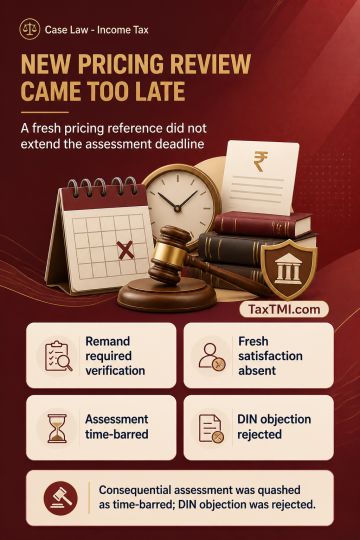
Limitation after transfer-pricing remand: fresh TPO reference did not extend the assessment deadline, rendering the consequential assessment time-barr...
Interim judicial restraint on tax deduction prevents default, while supporting reasonable cause and penalty deletion for foreign-leg LFC reimbursement...
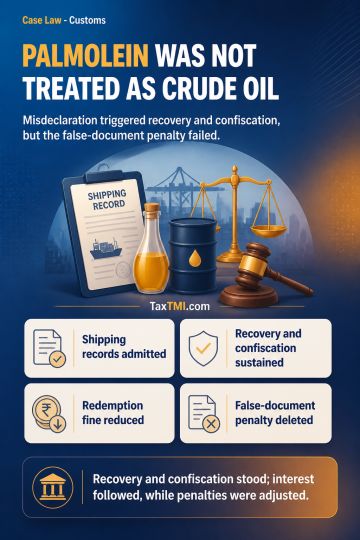
Palmolein classification defeated the crude-oil concession; material misdeclaration sustained recovery and confiscation, while separate false-document...
Termination compensation under a distribution arrangement that is substantively an agency relationship is treated as business income rather than a capital receipt, and taxation is confined to the settlement actually received. A non-compete covenant integral to acquiring and protecting a trademark qualifies as a depreciable intangible asset. For section 80-IB, only costs directly connected with an eligible undertaking should reduce its profit; allocation of finance, research, travel, head-office and export-promotion costs depends on factual nexus. Section 80HHC excludes receipts lacking a direct export nexus, while concurrent 80-IB and 80HHC deductions remain subject to the gross-total-income ceiling. A purely legal additional ground based on the existing record may be considered.
Termination compensation under a distribution arrangement that is substantively an agency relationship is treated as business income rather than a capital receipt, and taxation is confined to the settlement actually received. A non-compete covenant integral to acquiring and protecting a trademark qualifies as a depreciable intangible asset. For section 80-IB, only costs directly connected with an eligible undertaking should reduce its profit; allocation of finance, research, travel, head-office and export-promotion costs depends on factual nexus. Section 80HHC excludes receipts lacking a direct export nexus, while concurrent 80-IB and 80HHC deductions remain subject to the gross-total-income ceiling. A purely legal additional ground based on the existing record may be considered.
Note: It is a system-generated summary and is for quick reference only.
 TaxTMI
  TaxTMI
 of 4905