Cost-to-cost reimbursement of seconded employees is not service consideration; transfer-pricing markup was deleted and amalgamation amortisation allow...
Crystallisation of liability supports prior-period expense deduction, while functionally distinct divisions require separate transfer-pricing benchmar...
Functional comparability under TNMM requires transaction-specific FAR analysis before benchmarking business-support services provided to associated en...
Advance pricing agreement methodology can guide benchmarking for non-covered years when functions, assets, risks and activities remain materially unch...
Tax-audit exemption for substantially State-funded educational universities prevents audit-failure penalties where income qualifies for statutory exem...
Functional, asset and risk analysis excludes diversified technology companies from captive software development comparables under cost-plus arrangemen...
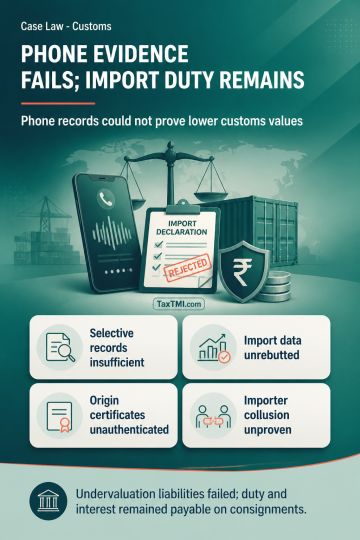
Mobile-phone electronic evidence failed to establish customs undervaluation, while duty survived on non-authentic origin certificates without importer...
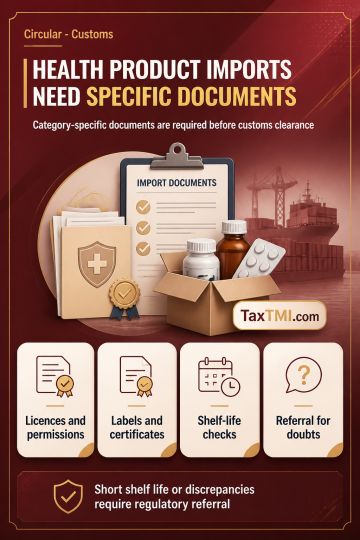
Imports of cosmetics, drugs, medical devices, and medical-device raw materials or components must meet category-specific checklist requirements under the Drugs and Cosmetics Act, 1940 and applicable rules before out-of-charge clearance. Customs verification requires, as applicable, registration certificates, import licences or permissions, invoices, packing lists, country-of-origin certificates, storage-premises licences, batch quality certificates, and labels matching approved particulars. Cosmetics require declarations regarding hexachlorophene and animal testing, while drugs require residual shelf life exceeding 60%; consignments below that level require port-office referral. Medical devices with applicable shelf life must meet prescribed residual-shelf-life thresholds. Personal-use, clinical, testing, and specified institutional imports require matching permissions and quantities. Discrepancies or doubts require referral for regulatory review.
Imports of cosmetics, drugs, medical devices, and medical-device raw materials or components must meet category-specific checklist requirements under the Drugs and Cosmetics Act, 1940 and applicable rules before out-of-charge clearance. Customs verification requires, as applicable, registration certificates, import licences or permissions, invoices, packing lists, country-of-origin certificates, storage-premises licences, batch quality certificates, and labels matching approved particulars. Cosmetics require declarations regarding hexachlorophene and animal testing, while drugs require residual shelf life exceeding 60%; consignments below that level require port-office referral. Medical devices with applicable shelf life must meet prescribed residual-shelf-life thresholds. Personal-use, clinical, testing, and specified institutional imports require matching permissions and quantities. Discrepancies or doubts require referral for regulatory review.
Note: It is a system-generated summary and is for quick reference only.
 TaxTMI
  TaxTMI
 of 4902