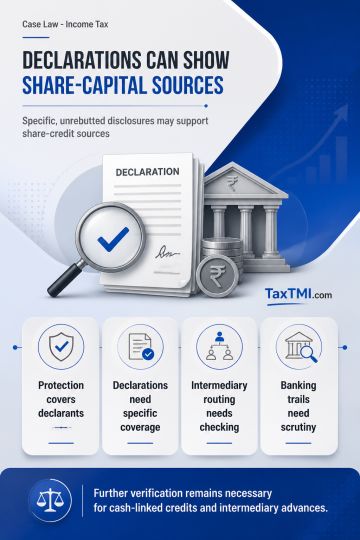
Income Declaration Scheme declarations can evidence share-capital sources, while round-tripped funds and cash-linked credits require further verificat...
Permanent establishment tests: independent subsidiary premises and principal-to-principal dealings did not create Indian taxability for offshore suppl...
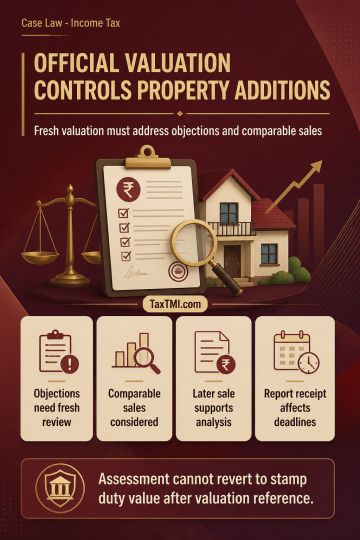
Valuation Officer estimates govern property-value additions once statutory valuation is invoked, requiring fresh consideration of objections and compa...
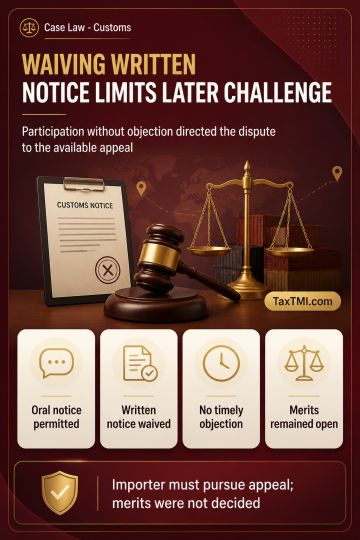
Waiver of written show-cause notice may prevent a later procedural challenge after participation in customs adjudication, preserving statutory appella...
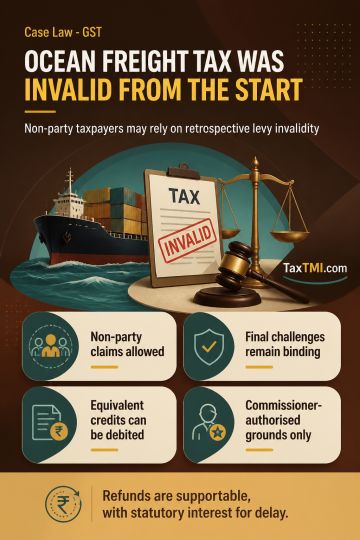
Retrospective invalidity of ocean-freight IGST supports refunds despite non-party status and prior credit utilisation, subject to authorised appeal gr...
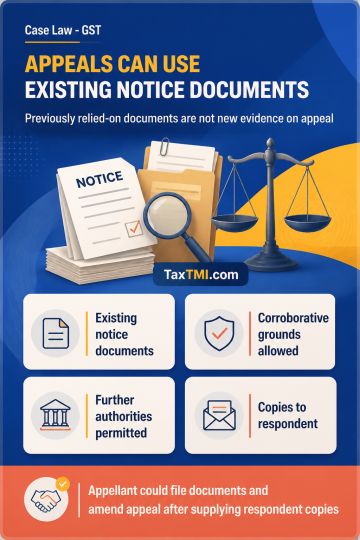
Additional evidence in departmental appeals may include show-cause-notice material without introducing a new case where it merely corroborates existin...
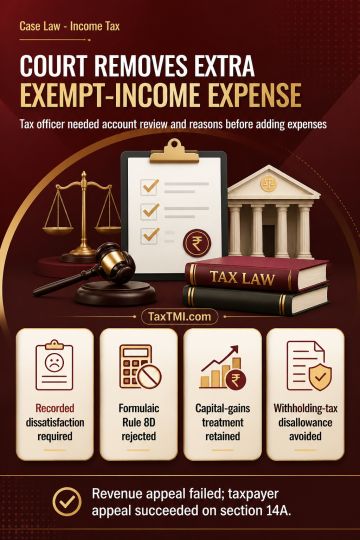
Gains from share and securities sales retained their capital-gains character because no factual distinction from later assessment years justified recharacterisation as business income. Import-purchase payments to a Japanese non-resident associated enterprise remained free from withholding-tax disallowance, as identical later-year determinations governed the issue. Rule 8D could not support an additional section 14A administrative-expenditure disallowance unless the Assessing Officer examined the accounts, recorded dissatisfaction with the taxpayer's own disallowance, and identified expenditure related to exempt income. Formulaic application without these steps required deletion of the additional disallowance. The Revenue's appeal failed, while the taxpayer's appeal succeeded on section 14A.
Gains from share and securities sales retained their capital-gains character because no factual distinction from later assessment years justified recharacterisation as business income. Import-purchase payments to a Japanese non-resident associated enterprise remained free from withholding-tax disallowance, as identical later-year determinations governed the issue. Rule 8D could not support an additional section 14A administrative-expenditure disallowance unless the Assessing Officer examined the accounts, recorded dissatisfaction with the taxpayer's own disallowance, and identified expenditure related to exempt income. Formulaic application without these steps required deletion of the additional disallowance. The Revenue's appeal failed, while the taxpayer's appeal succeeded on section 14A.
Note: It is a system-generated summary and is for quick reference only.
 TaxTMI
  TaxTMI
 of 4905