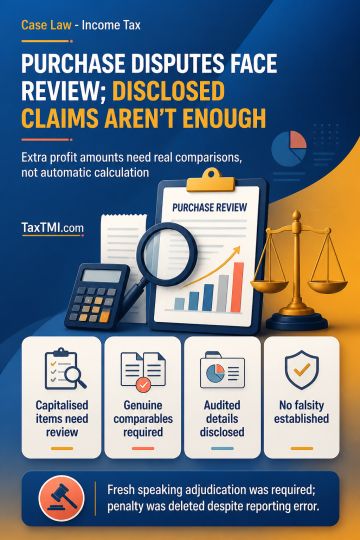
Gross-profit additions on disputed purchases require reasoned appellate determination; disclosed claims alone do not support inaccurate-particulars pe...
Limitation after transfer-pricing remand: fresh TPO reference did not extend the assessment deadline, rendering the consequential assessment time-barr...
Interim judicial restraint on tax deduction prevents default, while supporting reasonable cause and penalty deletion for foreign-leg LFC reimbursement...
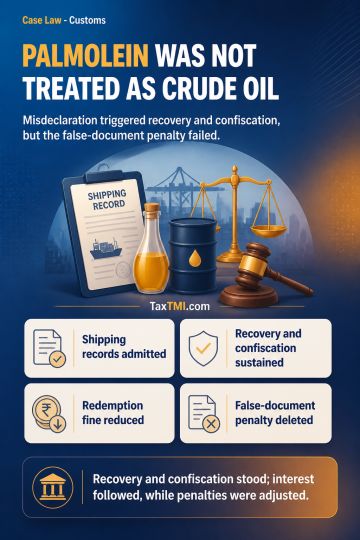
Palmolein classification defeated the crude-oil concession; material misdeclaration sustained recovery and confiscation, while separate false-document...
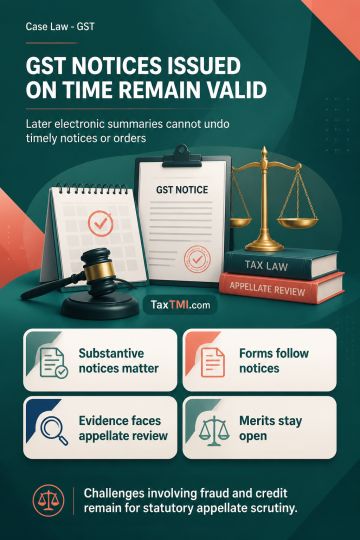
GST limitation under Section 74 turns on issuance of substantive show-cause notices and adjudication orders, while Rule 142 requires consequential electronic summaries in Forms GST DRC-01 and DRC-07. Later dates on those forms do not invalidate notices or Orders-in-Original issued within the applicable limitation period. Challenges involving fraud, suppression, supplier knowledge or collusion, input tax credit entitlement, and departmental evidence require statutory appellate scrutiny where no denial of hearing or patent jurisdictional defect exists. Merits remain open before the Appellate Authority.
GST limitation under Section 74 turns on issuance of substantive show-cause notices and adjudication orders, while Rule 142 requires consequential electronic summaries in Forms GST DRC-01 and DRC-07. Later dates on those forms do not invalidate notices or Orders-in-Original issued within the applicable limitation period. Challenges involving fraud, suppression, supplier knowledge or collusion, input tax credit entitlement, and departmental evidence require statutory appellate scrutiny where no denial of hearing or patent jurisdictional defect exists. Merits remain open before the Appellate Authority.
Note: It is a system-generated summary and is for quick reference only.
 TaxTMI
  TaxTMI
 of 4907