Road restoration charges constitute taxable services when requested for commercial pipeline activity, requiring reverse-charge GST from the business r...
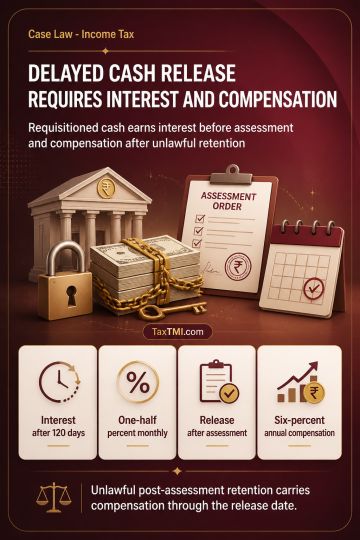
Interest on delayed release of requisitioned cash includes statutory pre-assessment interest and restitutionary compensation for unlawful post-assessm...
Incomplete inventory records justify rejecting accounts, while profit estimation requires relevant comparable material and interest falls under other ...
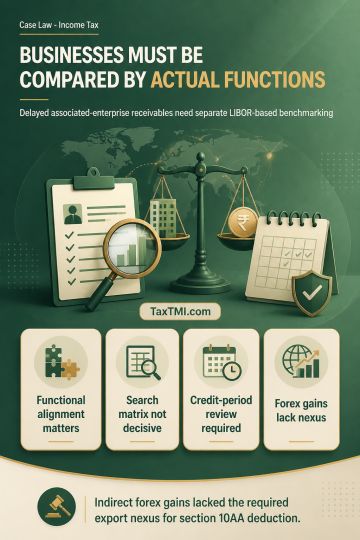
Transfer-pricing comparability requires functional alignment; delayed associated-enterprise receivables need separate LIBOR-based benchmarking, while ...
Extended reassessment limitation in search cases requires asset-linked escaped income, invalidating additions based only on unexplained money or expen...
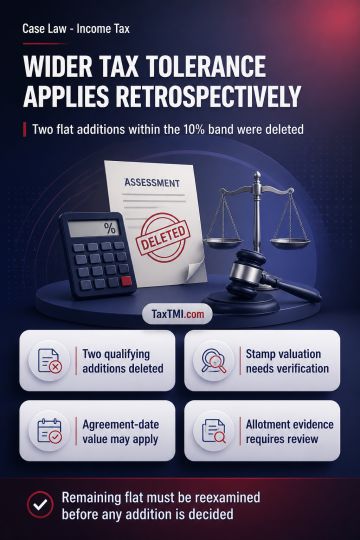
Enhanced tolerance band under section 43CA applies retrospectively, deleting qualifying deemed-sale additions while disputed stamp valuation requires ...
Page of 4910
Press 'Enter' after typing page number.
21 to 40 of 98196 Results
❮
❯
❯❯
0 / 200
Expand Note
Add to Folder
No Folders have been created
+
Are you sure you want to delete "My most important" ?
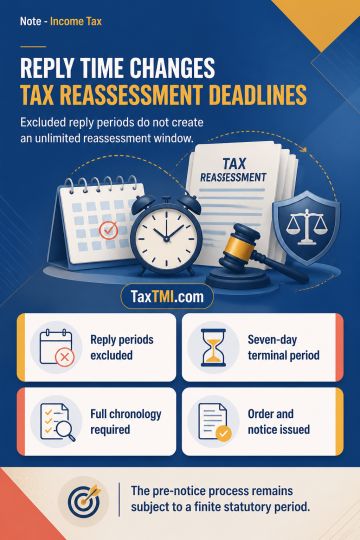
Under the former reassessment framework, time allowed or extended for an assessee's reply to a Section 148A(b) show-cause notice is excluded when computing the Section 149 limitation period. A notice is not invalid merely because the response period runs beyond the original limitation deadline. After that exclusion, where the remaining time does not exceed seven days, the sixth proviso provides a seven-day terminal period for issuing the Section 148A(d) order and consequential Section 148 notice. The exclusion does not create an open-ended period. Limitation must therefore be computed through the complete chronology of response periods, adjournments, extensions, reply-stage closure, and issuance of both the order and notice.
Under the former reassessment framework, time allowed or extended for an assessee's reply to a Section 148A(b) show-cause notice is excluded when computing the Section 149 limitation period. A notice is not invalid merely because the response period runs beyond the original limitation deadline. After that exclusion, where the remaining time does not exceed seven days, the sixth proviso provides a seven-day terminal period for issuing the Section 148A(d) order and consequential Section 148 notice. The exclusion does not create an open-ended period. Limitation must therefore be computed through the complete chronology of response periods, adjournments, extensions, reply-stage closure, and issuance of both the order and notice.
Note: It is a system-generated summary and is for quick reference only.
 TaxTMI
  TaxTMI
 of 4910