Split consignment classification treated complementary motorcycle parts as one imported motorcycle, sustaining valuation, confiscation and importer li...
Timely pronouncement of reserved judgments requires defined timelines, transparency measures, and remedial pathways to protect liberty and effective j...
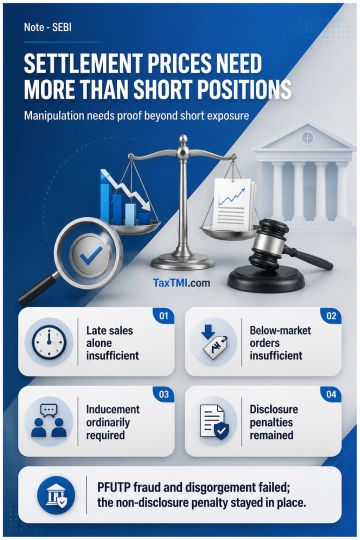
Settlement-price depression requires proof of manipulation, not merely short exposure, late selling, or below-market orders, preserving disclosure pen...
Page of 4907
Press 'Enter' after typing page number.
301 to 320 of 98136 Results
❮
❯
❯❯
0 / 200
Expand Note
Add to Folder
No Folders have been created
+
Are you sure you want to delete "My most important" ?
Reassessment validity depends on distinct safeguards governing notice, limitation and approvals. Under section 149(1)(b), extended limitation may apply where books, documents or evidence reveal qualifying escaped income represented as an asset, relevant expenditure, or entries in books of account; these are alternative statutory categories. Digital and handwritten cash-book records may constitute books of account when supported by possession, control, corroboration and taxpayer nexus. Section 151 sanction requires genuine consideration of the reopening proposal and material, but need not contain elaborate reasons. Approval for a section 143(2) notice must precede its issuance, and contemporaneous electronic communication may establish timing despite a later postal receipt. Section 148B approval for the assessment order remains distinct from notice-stage and scrutiny-notice approvals.
Reassessment validity depends on distinct safeguards governing notice, limitation and approvals. Under section 149(1)(b), extended limitation may apply where books, documents or evidence reveal qualifying escaped income represented as an asset, relevant expenditure, or entries in books of account; these are alternative statutory categories. Digital and handwritten cash-book records may constitute books of account when supported by possession, control, corroboration and taxpayer nexus. Section 151 sanction requires genuine consideration of the reopening proposal and material, but need not contain elaborate reasons. Approval for a section 143(2) notice must precede its issuance, and contemporaneous electronic communication may establish timing despite a later postal receipt. Section 148B approval for the assessment order remains distinct from notice-stage and scrutiny-notice approvals.
Note: It is a system-generated summary and is for quick reference only.
 TaxTMI
  TaxTMI
 of 4907