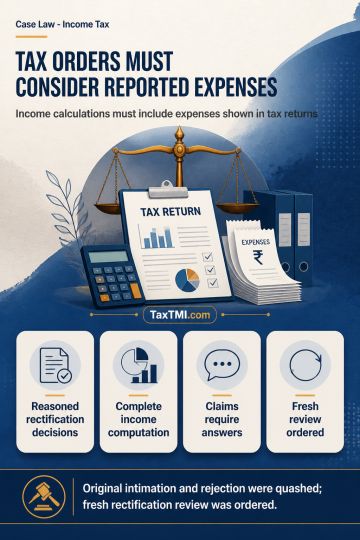
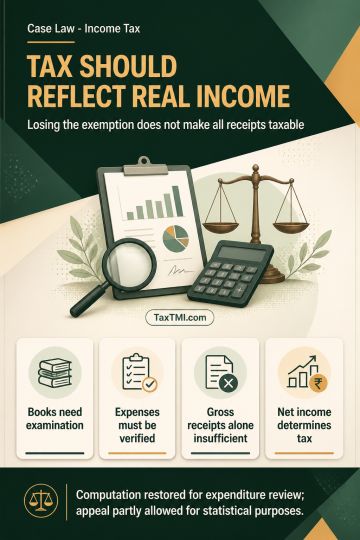
Reasoned rectification orders require consideration of expenditure disclosed in income-tax returns, preventing revision based on incomplete income com...
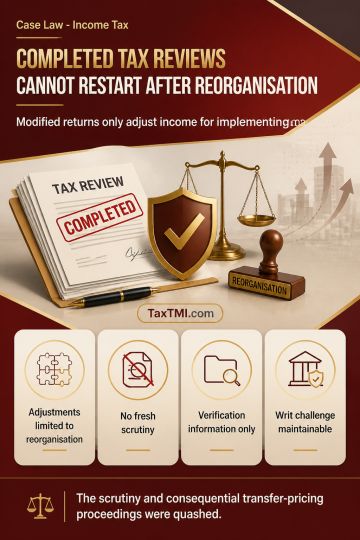
Modified returns after business reorganisations cannot trigger fresh scrutiny once the original assessment was complete, invalidating related transfer...
Third-party loose sheets require reliable nexus before supporting unexplained expenditure additions; presumptions do not establish payer identity or o...
TNMM comparability using audited accounts and working-capital adjustments can eliminate unwarranted transfer-pricing additions where verified margins ...
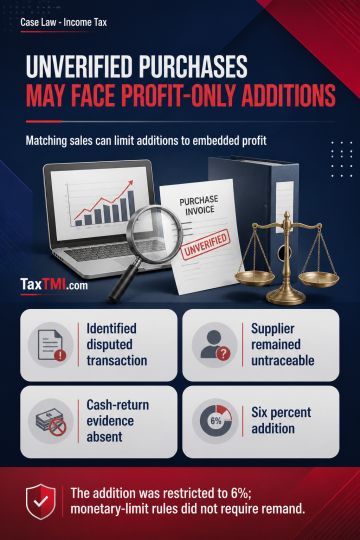
Gross-profit additions on disputed purchases require reasoned appellate determination; disclosed claims alone do not support inaccurate-particulars pe...
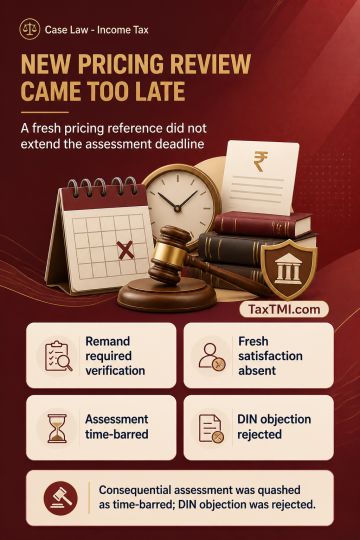
Limitation after transfer-pricing remand: fresh TPO reference did not extend the assessment deadline, rendering the consequential assessment time-barr...
Interim judicial restraint on tax deduction prevents default, while supporting reasonable cause and penalty deletion for foreign-leg LFC reimbursement...
Palmolein classification defeated the crude-oil concession; material misdeclaration sustained recovery and confiscation, while separate false-document...
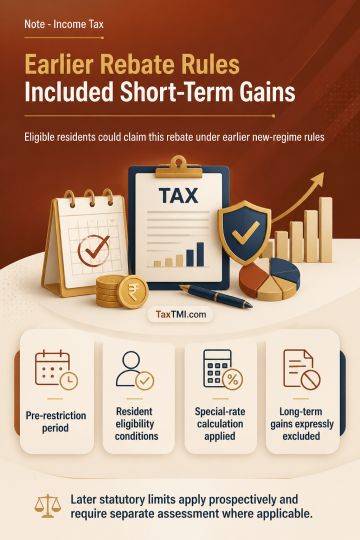
Section 87A rebate was treated, for the pre-restriction period discussed, as available against income-tax on total income, including tax on short-term capital gains subject to special-rate taxation, where a resident individual met the new-regime eligibility conditions. The distinction between special-rate computation and rebate availability was central: the special-rate provision determined tax on qualifying gains but contained no express rebate exclusion. By contrast, the express exclusion for specified long-term capital gains supported the view that a similar restriction could not be implied for short-term gains. Later statutory language limiting the rebate was prospective and requires separate assessment where applicable.
Section 87A rebate was treated, for the pre-restriction period discussed, as available against income-tax on total income, including tax on short-term capital gains subject to special-rate taxation, where a resident individual met the new-regime eligibility conditions. The distinction between special-rate computation and rebate availability was central: the special-rate provision determined tax on qualifying gains but contained no express rebate exclusion. By contrast, the express exclusion for specified long-term capital gains supported the view that a similar restriction could not be implied for short-term gains. Later statutory language limiting the rebate was prospective and requires separate assessment where applicable.
Note: It is a system-generated summary and is for quick reference only.
 TaxTMI
  TaxTMI
 of 4905