Cost-to-cost reimbursement of seconded employees is not service consideration; transfer-pricing markup was deleted and amalgamation amortisation allow...
Crystallisation of liability supports prior-period expense deduction, while functionally distinct divisions require separate transfer-pricing benchmar...
Functional comparability under TNMM requires transaction-specific FAR analysis before benchmarking business-support services provided to associated en...
Advance pricing agreement methodology can guide benchmarking for non-covered years when functions, assets, risks and activities remain materially unch...
Tax-audit exemption for substantially State-funded educational universities prevents audit-failure penalties where income qualifies for statutory exem...
Functional, asset and risk analysis excludes diversified technology companies from captive software development comparables under cost-plus arrangemen...
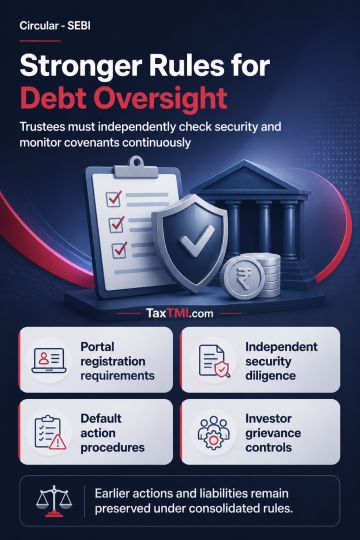
Master Circular consolidates the regulatory framework for debenture trustees and rescinds the earlier master circular while preserving prior actions, rights, liabilities, penalties, proceedings and pending applications. It requires portal-based registration requests and prior approval for change in control, and regulates business transfers, surrender, regulatory communications, and non-regulated activities through ring-fenced separate business units. Trustees must independently conduct security due diligence, issue prescribed certificates, validate charge creation and registration, and continuously monitor security cover, covenants, payments, ratings and defaults through the depository-hosted Security and Covenant Monitoring System. Issuers proposing listed debt securities must establish a Recovery Expense Fund for enforcement costs. The framework also prescribes disclosures, investor grievance handling, default remedies, investor-consent processes, compliance reporting, outsourcing controls, conflict management and suspicious-transaction reporting.
Master Circular consolidates the regulatory framework for debenture trustees and rescinds the earlier master circular while preserving prior actions, rights, liabilities, penalties, proceedings and pending applications. It requires portal-based registration requests and prior approval for change in control, and regulates business transfers, surrender, regulatory communications, and non-regulated activities through ring-fenced separate business units. Trustees must independently conduct security due diligence, issue prescribed certificates, validate charge creation and registration, and continuously monitor security cover, covenants, payments, ratings and defaults through the depository-hosted Security and Covenant Monitoring System. Issuers proposing listed debt securities must establish a Recovery Expense Fund for enforcement costs. The framework also prescribes disclosures, investor grievance handling, default remedies, investor-consent processes, compliance reporting, outsourcing controls, conflict management and suspicious-transaction reporting.
Note: It is a system-generated summary and is for quick reference only.
 TaxTMI
  TaxTMI
 of 4913