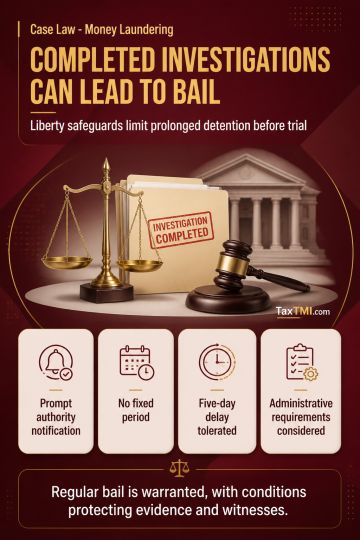
Constitutional personal-liberty safeguards limit PMLA twin bail conditions where completed investigations lead to prolonged incarceration before trial...
Automated airline software subscriptions without human intervention fail technical-services characterisation and do not make available underlying tech...
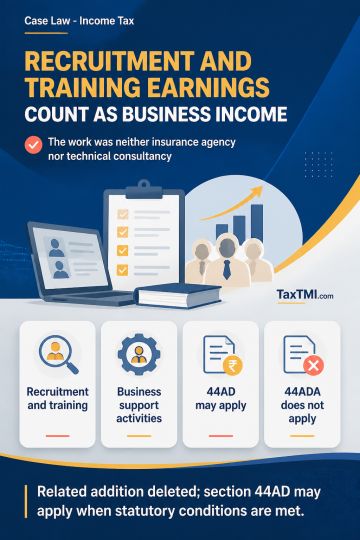
Business support recruitment and training receipts qualify for presumptive business taxation, not professional taxation under technical consultancy ru...
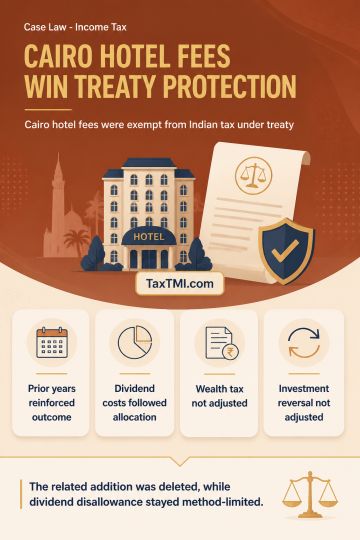
Treaty exemption for foreign permanent-establishment management fees prevailed, while dividend expense disallowance remained limited to an accepted al...
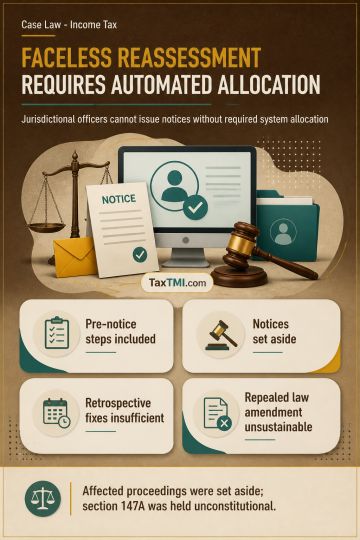
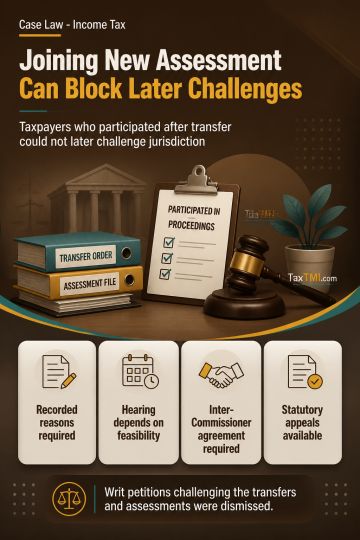
Centralised assessment transfers: participation after requesting centralisation can bar technical jurisdictional challenges, while assessment disputes...
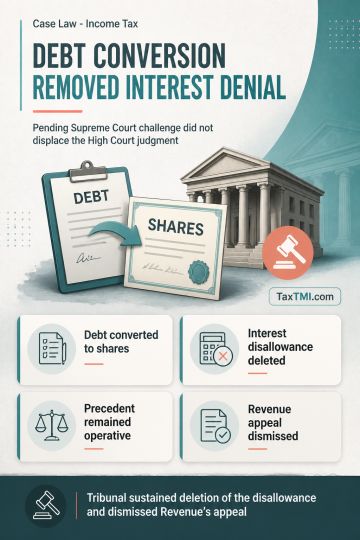
Binding precedent remains operative despite pending challenge, supporting deletion of interest disallowance when debt is converted into preference sha...
Page of 4912
Press 'Enter' after typing page number.
121 to 140 of 98239 Results
❮
❯
❯❯
0 / 200
Expand Note
Add to Folder
No Folders have been created
+
Are you sure you want to delete "My most important" ?
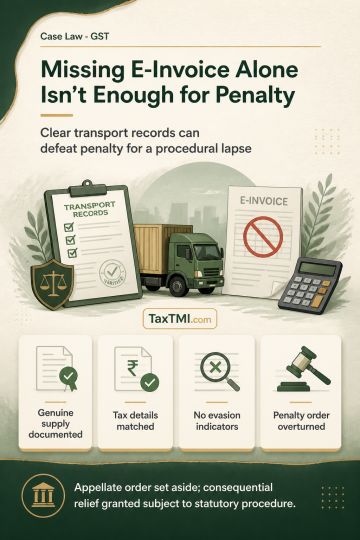
Non-generation of an e-invoice bearing IRN/QR Code before movement of goods is a procedural breach, but it does not by itself warrant detention penalty under Section 129. Where the tax invoice, e-way bill and lorry receipt identify the parties, goods, value and tax liability, and a later e-invoice matches the transaction, the lapse does not conclusively establish intent to evade tax absent fictitious documents, mismatched goods, value suppression or concealed supply. On these facts, the Section 129 penalty was unsustainable, the appellate order was set aside, and consequential relief was granted subject to statutory procedure.
Non-generation of an e-invoice bearing IRN/QR Code before movement of goods is a procedural breach, but it does not by itself warrant detention penalty under Section 129. Where the tax invoice, e-way bill and lorry receipt identify the parties, goods, value and tax liability, and a later e-invoice matches the transaction, the lapse does not conclusively establish intent to evade tax absent fictitious documents, mismatched goods, value suppression or concealed supply. On these facts, the Section 129 penalty was unsustainable, the appellate order was set aside, and consequential relief was granted subject to statutory procedure.
Note: It is a system-generated summary and is for quick reference only.
 TaxTMI
  TaxTMI
 of 4912