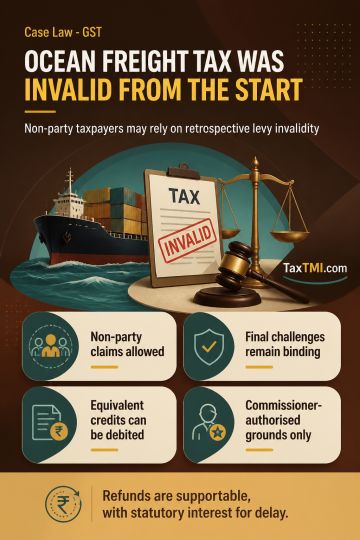
Retrospective invalidity of ocean-freight IGST supports refunds despite non-party status and prior credit utilisation, subject to authorised appeal gr...
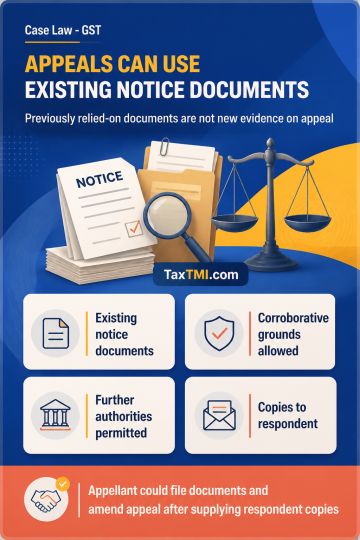
Additional evidence in departmental appeals may include show-cause-notice material without introducing a new case where it merely corroborates existin...
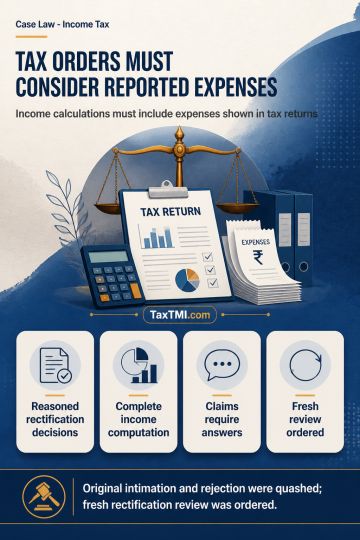
Reasoned rectification orders require consideration of expenditure disclosed in income-tax returns, preventing revision based on incomplete income com...
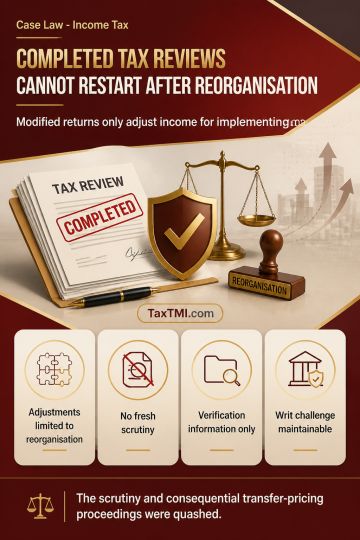
Modified returns after business reorganisations cannot trigger fresh scrutiny once the original assessment was complete, invalidating related transfer...
Third-party loose sheets require reliable nexus before supporting unexplained expenditure additions; presumptions do not establish payer identity or o...
TNMM comparability using audited accounts and working-capital adjustments can eliminate unwarranted transfer-pricing additions where verified margins ...
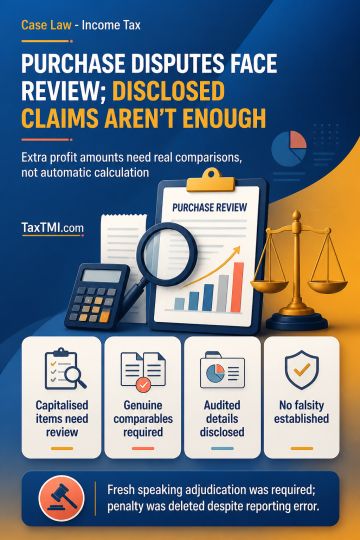
Gross-profit additions on disputed purchases require reasoned appellate determination; disclosed claims alone do not support inaccurate-particulars pe...
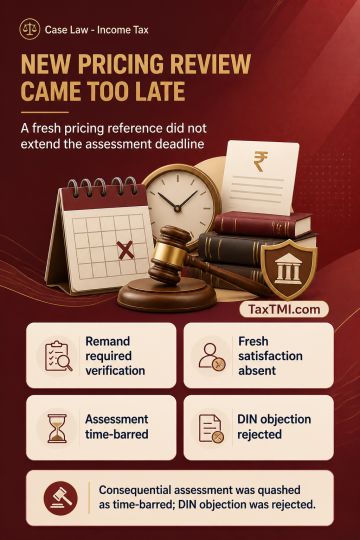
Limitation after transfer-pricing remand: fresh TPO reference did not extend the assessment deadline, rendering the consequential assessment time-barr...
Page of 4913
Press 'Enter' after typing page number.
461 to 480 of 98250 Results
❮
❯
❯❯
0 / 200
Expand Note
Add to Folder
No Folders have been created
+
Are you sure you want to delete "My most important" ?
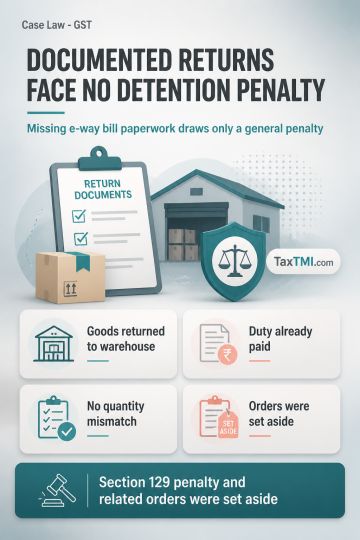
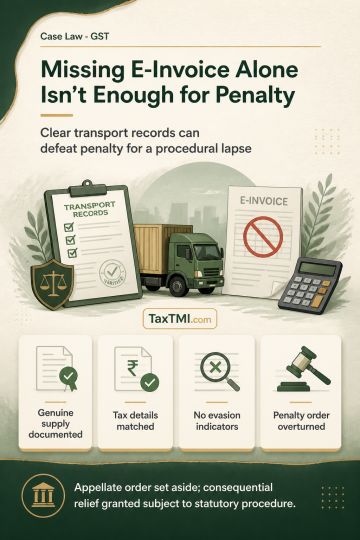
Non-generation of an e-invoice bearing IRN/QR Code before movement of goods is a procedural breach, but it does not by itself warrant detention penalty under Section 129. Where the tax invoice, e-way bill and lorry receipt identify the parties, goods, value and tax liability, and a later e-invoice matches the transaction, the lapse does not conclusively establish intent to evade tax absent fictitious documents, mismatched goods, value suppression or concealed supply. On these facts, the Section 129 penalty was unsustainable, the appellate order was set aside, and consequential relief was granted subject to statutory procedure.
Non-generation of an e-invoice bearing IRN/QR Code before movement of goods is a procedural breach, but it does not by itself warrant detention penalty under Section 129. Where the tax invoice, e-way bill and lorry receipt identify the parties, goods, value and tax liability, and a later e-invoice matches the transaction, the lapse does not conclusively establish intent to evade tax absent fictitious documents, mismatched goods, value suppression or concealed supply. On these facts, the Section 129 penalty was unsustainable, the appellate order was set aside, and consequential relief was granted subject to statutory procedure.
Note: It is a system-generated summary and is for quick reference only.
 TaxTMI
  TaxTMI
 of 4913