Road restoration charges constitute taxable services when requested for commercial pipeline activity, requiring reverse-charge GST from the business r...
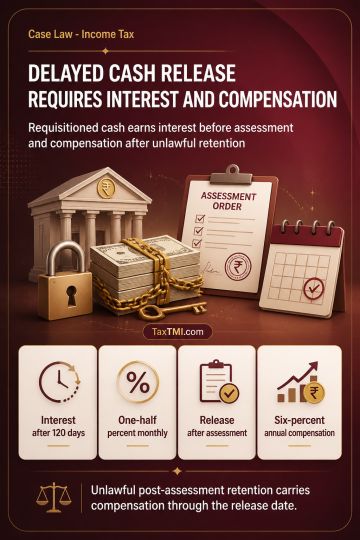
Interest on delayed release of requisitioned cash includes statutory pre-assessment interest and restitutionary compensation for unlawful post-assessm...
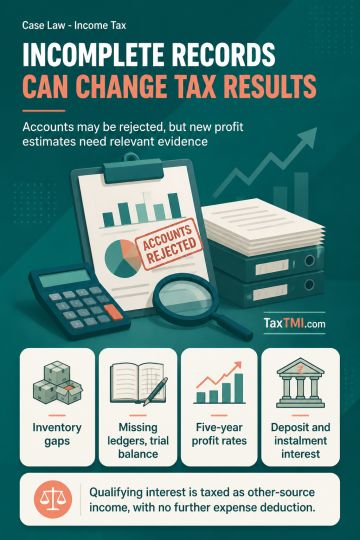
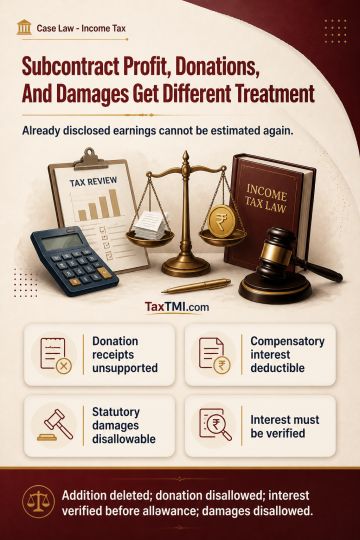
Incomplete inventory records justify rejecting accounts, while profit estimation requires relevant comparable material and interest falls under other ...
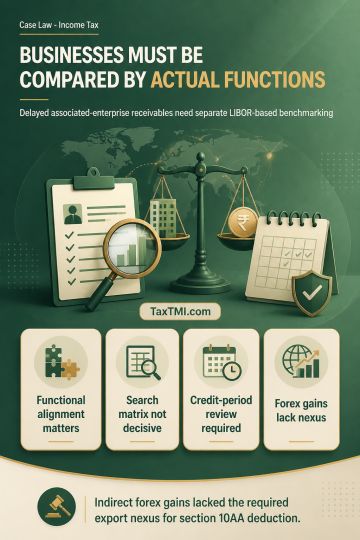
Transfer-pricing comparability requires functional alignment; delayed associated-enterprise receivables need separate LIBOR-based benchmarking, while ...
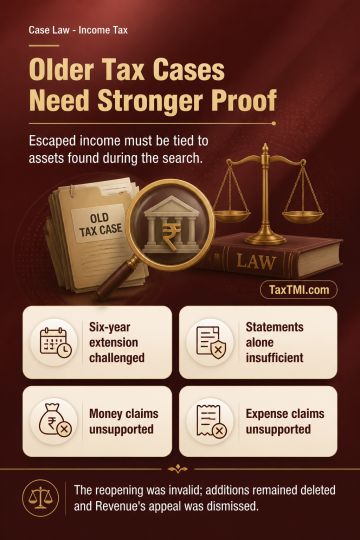
Extended reassessment limitation in search cases requires asset-linked escaped income, invalidating additions based only on unexplained money or expen...
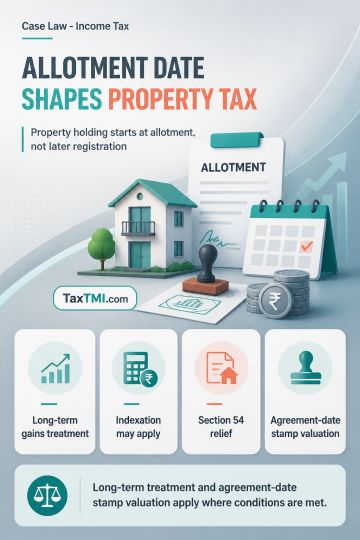
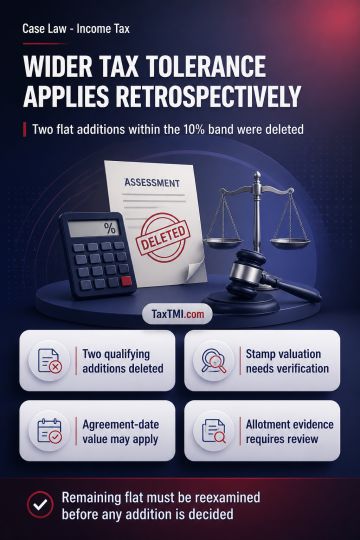
Enhanced tolerance band under section 43CA applies retrospectively, deleting qualifying deemed-sale additions while disputed stamp valuation requires ...
Page of 4910
Press 'Enter' after typing page number.
21 to 40 of 98196 Results
❮
❯
❯❯
0 / 200
Expand Note
Add to Folder
No Folders have been created
+
Are you sure you want to delete "My most important" ?
Section 122(1A) of the CGST Act may impose a penalty on any person, including an unregistered or non-taxable person, rather than only a taxable person. It applies only where a specified contravention under Section 122(1) is established and it is independently proved that the person retained the transaction's benefit and that the transaction occurred at that person's instance. As a penal provision, it operates prospectively for underlying acts or transactions occurring from 1 January 2021, rather than by reference to the show-cause notice date. Statutory appeals remain available for fact-specific findings despite writ determination of recurring legal questions.
Section 122(1A) of the CGST Act may impose a penalty on any person, including an unregistered or non-taxable person, rather than only a taxable person. It applies only where a specified contravention under Section 122(1) is established and it is independently proved that the person retained the transaction's benefit and that the transaction occurred at that person's instance. As a penal provision, it operates prospectively for underlying acts or transactions occurring from 1 January 2021, rather than by reference to the show-cause notice date. Statutory appeals remain available for fact-specific findings despite writ determination of recurring legal questions.
Note: It is a system-generated summary and is for quick reference only.
 TaxTMI
  TaxTMI
 of 4910