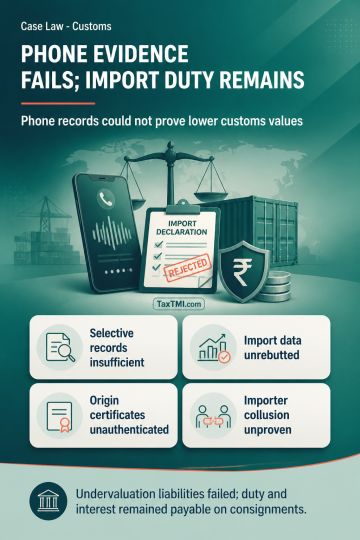
Mobile-phone electronic evidence failed to establish customs undervaluation, while duty survived on non-authentic origin certificates without importer...
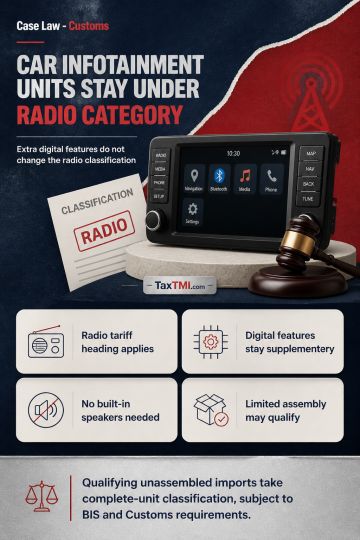
Automotive radio classification treats integrated infotainment features as supplementary, placing complete and qualifying unassembled units under the ...
Separate corporate personality prevents directors from being personally liable for company deposits without a guarantee or independent legal undertaki...
Cross-segment derivatives manipulation: integrated order patterns can support interim restraints, while director liability requires responsibility, co...
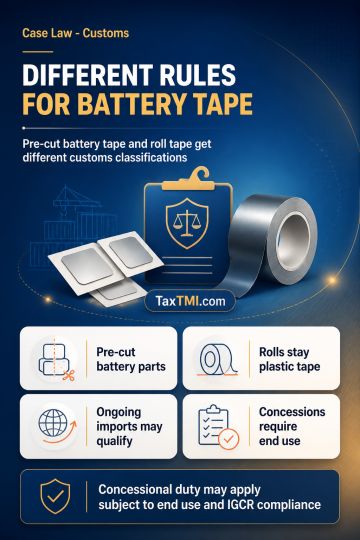
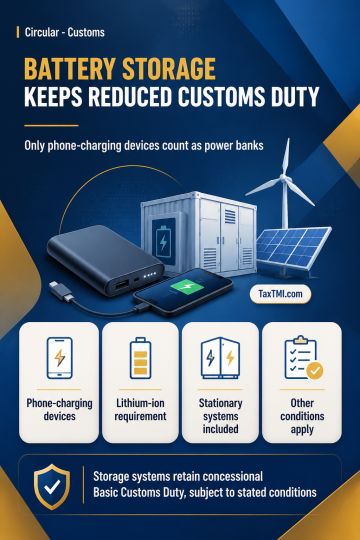
Power bank definition limits the customs-duty exclusion, preserving concessional treatment for stationary, grid-scale and industrial battery storage s...
Transfer-pricing benchmarking must separately assess support...
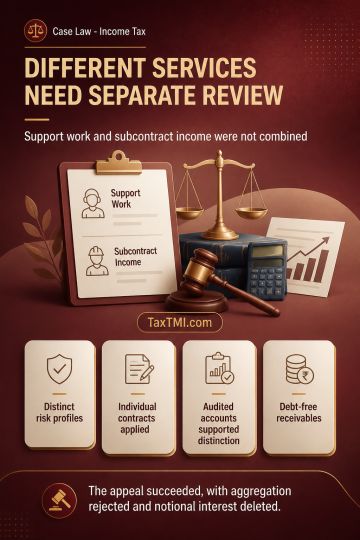
Transfer-pricing aggregation of distinct support-service and subcontract transactions was rejected, while debt-free receivables attracted no notional interest.
Contents
Summary
Note
Bookmark
Share
✓ Copied successfully !
Print
Print Options
For full text, please login
Login to TaxTMI
Verification Pending
The Email Id has not been verified. Click on the link we have sent on
Transfer-pricing benchmarking must separately assess support services rendered on a cost-plus, limited-risk basis and subcontract receipts from a full-risk entrepreneurial segment where separate agreements, functional profiles and risks apply. Their common character as BPO services does not justify aggregation, particularly where separate audited accounts are furnished. The Tribunal rejected aggregation on those grounds. Applying the jurisdictional High Court ruling, the Tribunal also deleted notional interest on delayed receivables because the assessee was debt-free and the Revenue did not distinguish the precedent. The appeal was allowed.
Transfer-pricing benchmarking must separately assess support services rendered on a cost-plus, limited-risk basis and subcontract receipts from a full-risk entrepreneurial segment where separate agreements, functional profiles and risks apply. Their common character as BPO services does not justify aggregation, particularly where separate audited accounts are furnished. The Tribunal rejected aggregation on those grounds. Applying the jurisdictional High Court ruling, the Tribunal also deleted notional interest on delayed receivables because the assessee was debt-free and the Revenue did not distinguish the precedent. The appeal was allowed.
Note: It is a system-generated summary and is for quick reference only.
 TaxTMI
  TaxTMI
 of 4913