Stock-in-trade transfer taxability follows possession and consideration, not later conveyance registration, limiting deemed-value provisions to the ac...
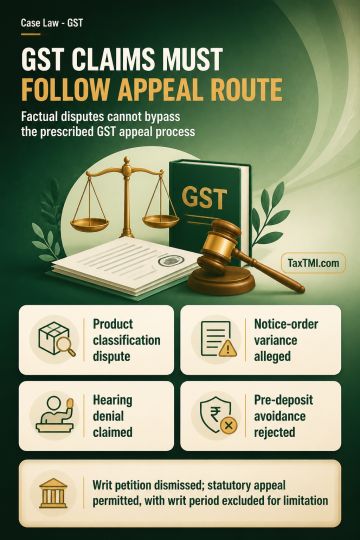
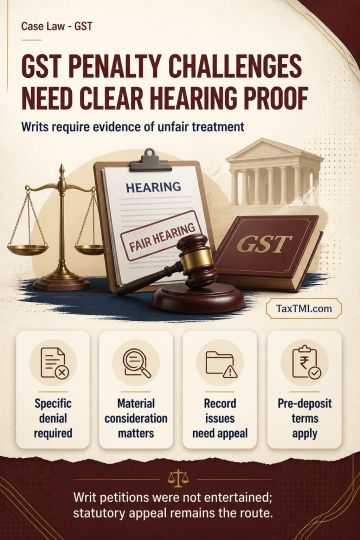
Alternative statutory remedy under GST bars writ challenge where classification, notice variance, and hearing disputes require factual appellate revie...
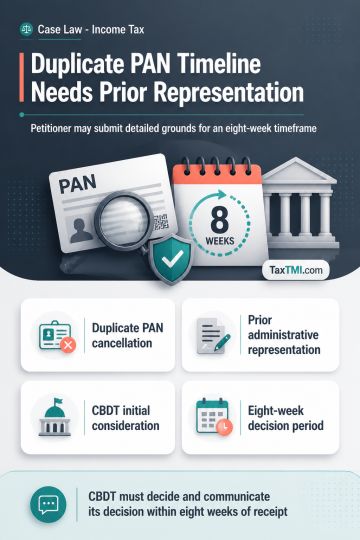
Duplicate PAN cancellation timeframe requires prior administrative representation before judicial intervention, ensuring a time-bound decision on the ...
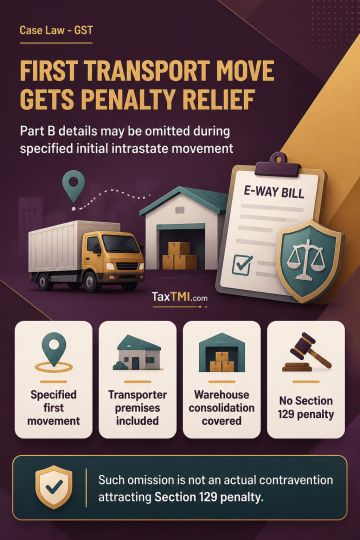
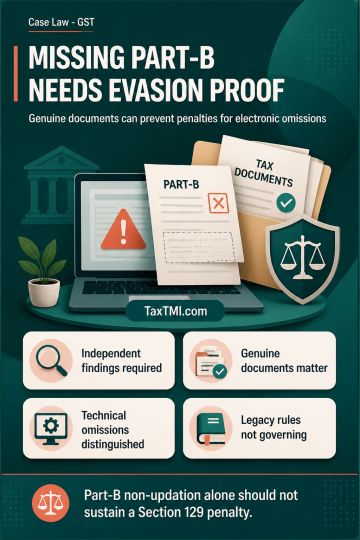
Section 129 penalties for failure to update Part-B of an e-way bill require independent findings of an intent to evade tax where the goods movement is otherwise supported by genuine tax documents. The integrated electronic GST framework distinguishes technical or procedural omissions from active tax-evasion attempts. Where the invoice, Part-A details and underlying transaction transparently establish the movement, non-updation of Part-B alone should not sustain a penalty. Strict-liability principles developed under the legacy manual check-post regime are not treated as governing such electronic GST compliance failures.
Section 129 penalties for failure to update Part-B of an e-way bill require independent findings of an intent to evade tax where the goods movement is otherwise supported by genuine tax documents. The integrated electronic GST framework distinguishes technical or procedural omissions from active tax-evasion attempts. Where the invoice, Part-A details and underlying transaction transparently establish the movement, non-updation of Part-B alone should not sustain a penalty. Strict-liability principles developed under the legacy manual check-post regime are not treated as governing such electronic GST compliance failures.
Note: It is a system-generated summary and is for quick reference only.
 TaxTMI
  TaxTMI
 of 4913