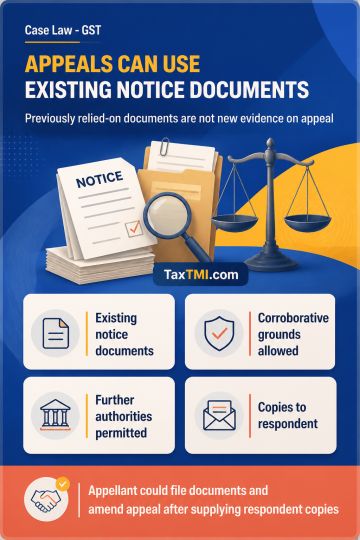
Additional evidence in departmental appeals may include show-cause-notice material without introducing a new case where it merely corroborates existin...
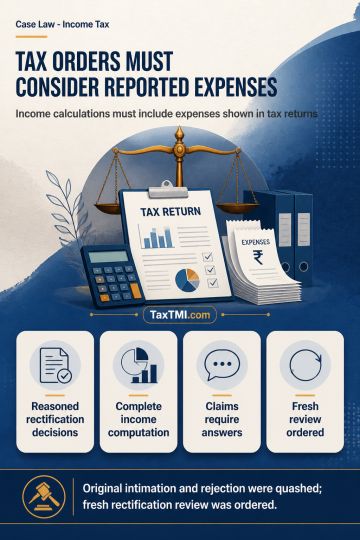
Reasoned rectification orders require consideration of expenditure disclosed in income-tax returns, preventing revision based on incomplete income com...
Modified returns after business reorganisations cannot trigger fresh scrutiny once the original assessment was complete, invalidating related transfer...
Third-party loose sheets require reliable nexus before supporting unexplained expenditure additions; presumptions do not establish payer identity or o...
TNMM comparability using audited accounts and working-capital adjustments can eliminate unwarranted transfer-pricing additions where verified margins ...
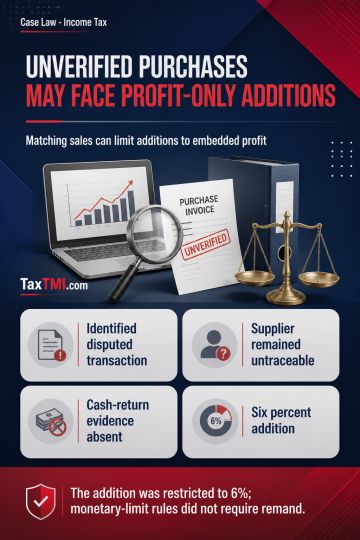
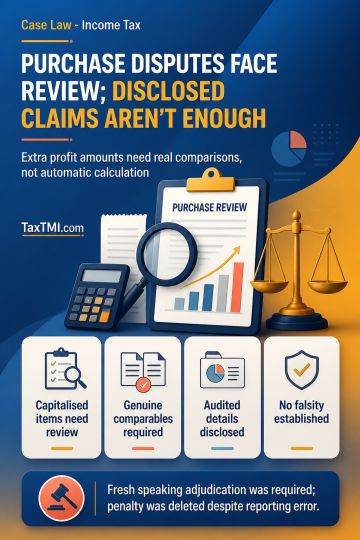
Gross-profit additions on disputed purchases require reasoned appellate determination; disclosed claims alone do not support inaccurate-particulars pe...
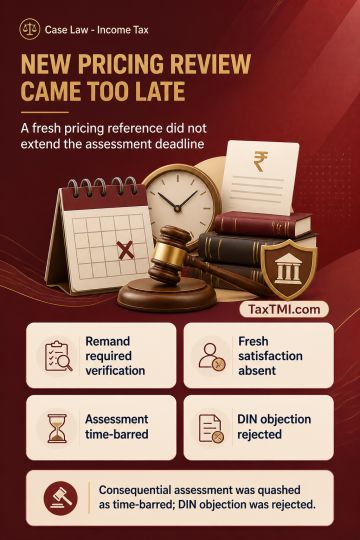
Limitation after transfer-pricing remand: fresh TPO reference did not extend the assessment deadline, rendering the consequential assessment time-barr...
Interim judicial restraint on tax deduction prevents default, while supporting reasonable cause and penalty deletion for foreign-leg LFC reimbursement...
Page of 4915
Press 'Enter' after typing page number.
501 to 520 of 98288 Results
❮
❯
❯❯
0 / 200
Expand Note
Add to Folder
No Folders have been created
+
Are you sure you want to delete "My most important" ?
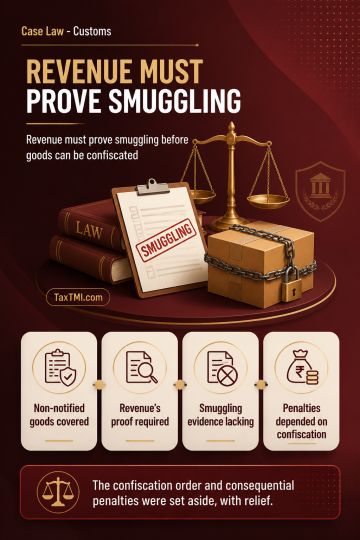
For non-notified goods such as black pepper and socks, the Customs Act places the burden on Revenue to prove their smuggled character before confiscation can be sustained. Failure to discharge that burden means the goods are not liable to confiscation, and penalties imposed solely as a consequence of confiscation cannot stand. The confiscation order and consequential penalties were set aside, with consequential relief.
For non-notified goods such as black pepper and socks, the Customs Act places the burden on Revenue to prove their smuggled character before confiscation can be sustained. Failure to discharge that burden means the goods are not liable to confiscation, and penalties imposed solely as a consequence of confiscation cannot stand. The confiscation order and consequential penalties were set aside, with consequential relief.
Note: It is a system-generated summary and is for quick reference only.
 TaxTMI
 TaxTMI

 of 4915