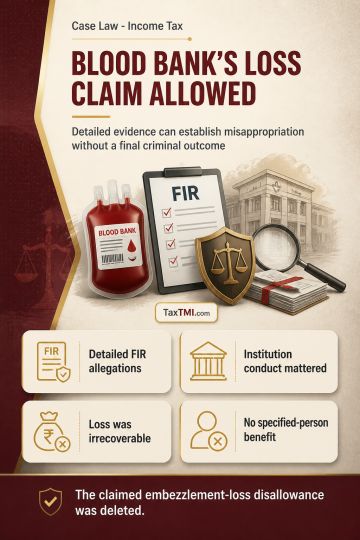
Embezzlement losses in charitable institutions remain allowable when misappropriation is established, irrecoverable, and not a specified-person benefi...
National long-distance undertaking status supports deduction where separately licensed infrastructure, resources, revenue, and expenditure establish c...
Agency reimbursement income follows contractual deposit-liability computation, while pending deposit collections do not constitute deemed-dividend loa...
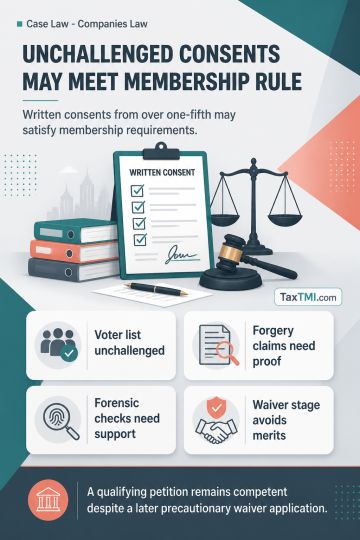
Membership-consent thresholds for oppression petitions are satisfied by unchallenged voter-list consents, while unsupported forgery claims require pro...
Page of 4912
Press 'Enter' after typing page number.
641 to 660 of 98239 Results
❮
❯
❯❯
0 / 200
Expand Note
Add to Folder
No Folders have been created
+
Are you sure you want to delete "My most important" ?
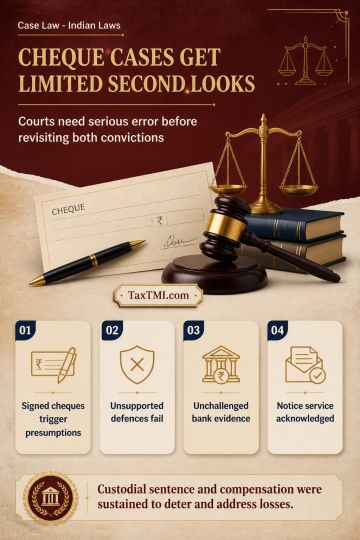
Revisional jurisdiction over concurrent cheque-dishonour convictions is supervisory, not a second appellate review of evidence, and interference requires perversity, patent illegality, or miscarriage of justice. Admission of a signed cheque, including where it is alleged to have been delivered blank, triggers presumptions of consideration and legally enforceable liability; inconsistent or unsupported explanations do not establish a probable defence. Unchallenged bank evidence may prove dishonour, while a signed acknowledgement proves actual service of the statutory demand notice without recourse to deemed service. Custodial sentence and compensation may be sustained where they reflect the deterrent purpose of the offence and compensate for loss of use of funds and prosecution expenses.
Revisional jurisdiction over concurrent cheque-dishonour convictions is supervisory, not a second appellate review of evidence, and interference requires perversity, patent illegality, or miscarriage of justice. Admission of a signed cheque, including where it is alleged to have been delivered blank, triggers presumptions of consideration and legally enforceable liability; inconsistent or unsupported explanations do not establish a probable defence. Unchallenged bank evidence may prove dishonour, while a signed acknowledgement proves actual service of the statutory demand notice without recourse to deemed service. Custodial sentence and compensation may be sustained where they reflect the deterrent purpose of the offence and compensate for loss of use of funds and prosecution expenses.
Note: It is a system-generated summary and is for quick reference only.
 TaxTMI
  TaxTMI
 of 4912