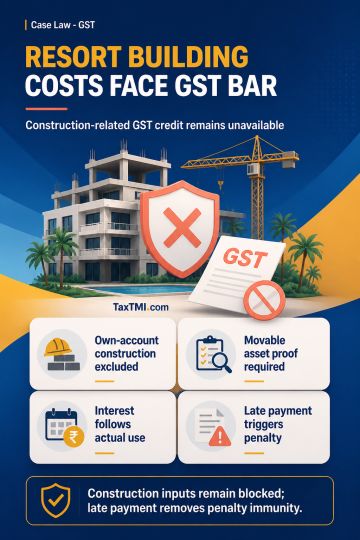
Blocked input tax credit for resort construction remains unavailable; interest follows actual utilisation, while delayed payment attracts statutory pe...
Duplicate PAN allocation requires record verification and deactivation reasons before assessment-related transactions can be attributed to an assessee...
Faceless assessment safeguards require requested personal hearings and adequate final show-cause response time, failing which reassessment is required...
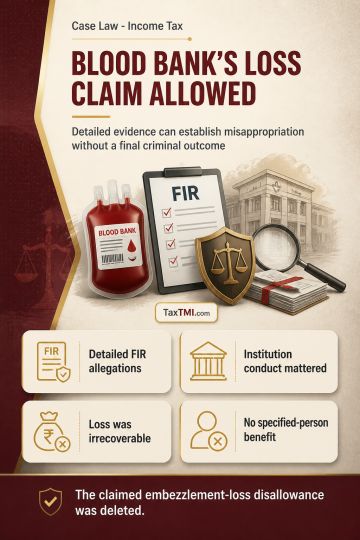
Embezzlement losses in charitable institutions remain allowable when misappropriation is established, irrecoverable, and not a specified-person benefi...
National long-distance undertaking status supports deduction where separately licensed infrastructure, resources, revenue, and expenditure establish c...
Page of 4913
Press 'Enter' after typing page number.
641 to 660 of 98250 Results
❮
❯
❯❯
0 / 200
Expand Note
Add to Folder
No Folders have been created
+
Are you sure you want to delete "My most important" ?
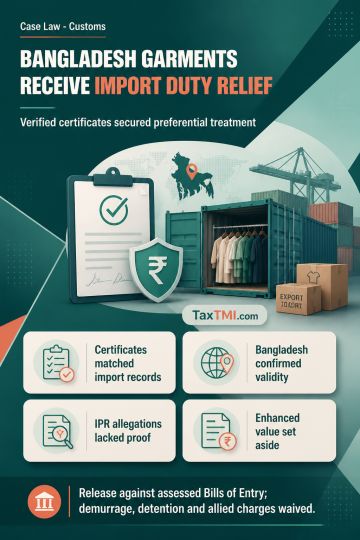
SAFTA preferential duty exemption applied to Bangladesh-origin garment imports because verified Certificates of Origin were linked to invoices and Bills of Entry, Bangladesh authorities confirmed their validity, and no evidence established intellectual-property infringement. Customs detention and provisional release conditions were therefore unsustainable, requiring release against the assessed Bills of Entry with preferential treatment. Enhanced assessable value based on an undisclosed market enquiry lacked particulars or documentary support and was set aside. Regulation 6(1) of the Handling of Cargo in Customs Areas Regulations, 2009 required complete waiver of demurrage, detention and allied charges because the goods had been unlawfully detained.
SAFTA preferential duty exemption applied to Bangladesh-origin garment imports because verified Certificates of Origin were linked to invoices and Bills of Entry, Bangladesh authorities confirmed their validity, and no evidence established intellectual-property infringement. Customs detention and provisional release conditions were therefore unsustainable, requiring release against the assessed Bills of Entry with preferential treatment. Enhanced assessable value based on an undisclosed market enquiry lacked particulars or documentary support and was set aside. Regulation 6(1) of the Handling of Cargo in Customs Areas Regulations, 2009 required complete waiver of demurrage, detention and allied charges because the goods had been unlawfully detained.
Note: It is a system-generated summary and is for quick reference only.
 TaxTMI
  TaxTMI
 of 4913