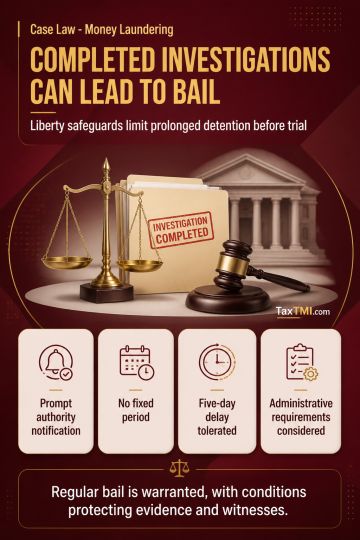
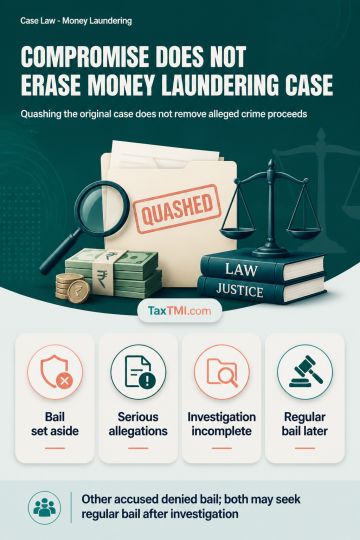
Constitutional personal-liberty safeguards limit PMLA twin bail conditions where completed investigations lead to prolonged incarceration before trial...
Automated airline software subscriptions without human intervention fail technical-services characterisation and do not make available underlying tech...
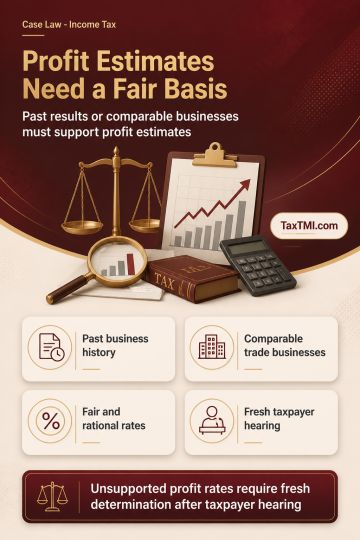
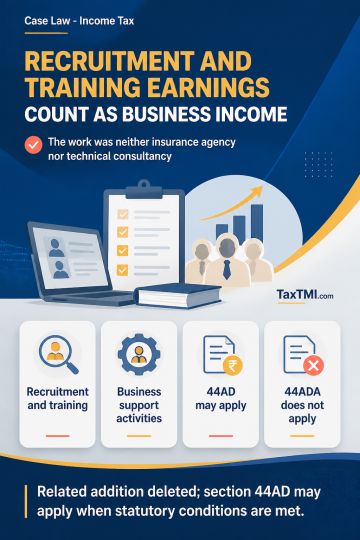
Business support recruitment and training receipts qualify for presumptive business taxation, not professional taxation under technical consultancy ru...
Treaty exemption for foreign permanent-establishment management fees prevailed, while dividend expense disallowance remained limited to an accepted al...
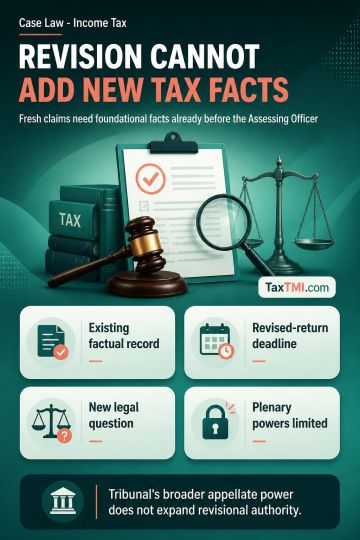
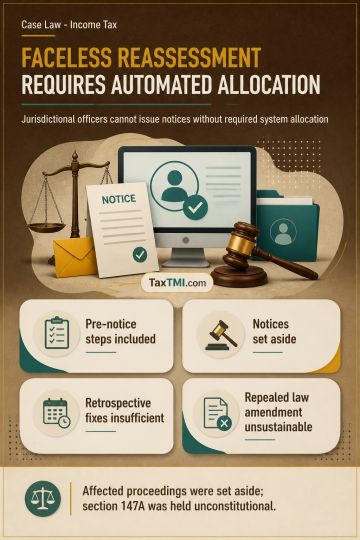
Centralised assessment transfers: participation after requesting centralisation can bar technical jurisdictional challenges, while assessment disputes...
Fraud-classification action cannot rest solely on a forensic...
Fraud classification show-cause notices founded on inconclusive forensic audit material cannot sustain action, permitting fresh proceedings on conclusive evidence.
Contents
Summary
Note
Bookmark
Share
✓ Copied successfully !
Print
Print Options
For full text, please login
Login to TaxTMI
Verification Pending
The Email Id has not been verified. Click on the link we have sent on
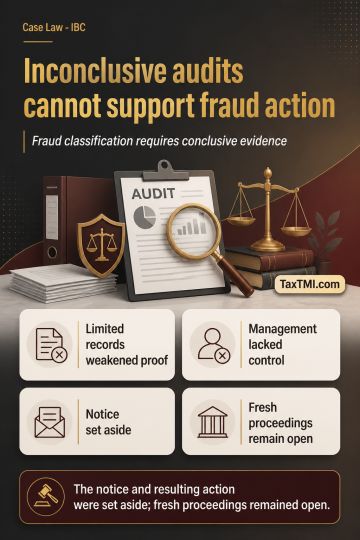
Fraud-classification action cannot rest solely on a forensic audit report that is inconclusive, based on limited lender-provided material, and qualified because complete records were unavailable. Where the borrower is in CIRP and liquidation, the erstwhile management lacks control and relevant books and records may be seized, reinforcing the report's evidentiary limitations. A show cause notice founded on the same report previously treated as inconclusive in relation to the lead bank remains defective despite the borrower filing a reply. The fraud-classification notice, resulting order, and consequential action were set aside, while fresh action on conclusive evidentiary material remains open.
Fraud-classification action cannot rest solely on a forensic audit report that is inconclusive, based on limited lender-provided material, and qualified because complete records were unavailable. Where the borrower is in CIRP and liquidation, the erstwhile management lacks control and relevant books and records may be seized, reinforcing the report's evidentiary limitations. A show cause notice founded on the same report previously treated as inconclusive in relation to the lead bank remains defective despite the borrower filing a reply. The fraud-classification notice, resulting order, and consequential action were set aside, while fresh action on conclusive evidentiary material remains open.
Note: It is a system-generated summary and is for quick reference only.
 TaxTMI
 TaxTMI

 of 4915