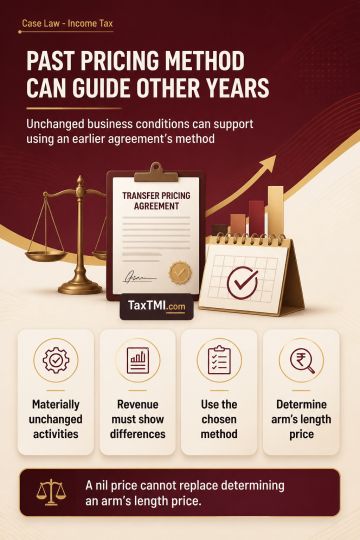
Advance pricing agreement methodology can guide benchmarking for non-covered years when functions, assets, risks and activities remain materially unch...
Tax-audit exemption for substantially State-funded educational universities prevents audit-failure penalties where income qualifies for statutory exem...
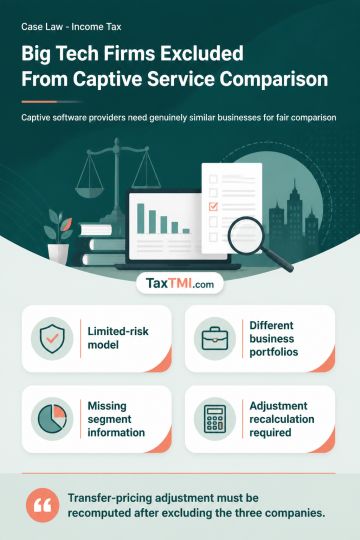
Functional, asset and risk analysis excludes diversified technology companies from captive software development comparables under cost-plus arrangemen...
Mobile-phone electronic evidence failed to establish customs undervaluation, while duty survived on non-authentic origin certificates without importer...
Automotive radio classification treats integrated infotainment features as supplementary, placing complete and qualifying unassembled units under the ...
Separate corporate personality prevents directors from being personally liable for company deposits without a guarantee or independent legal undertaki...
Appellate enhancement is confined to income sources examined in...
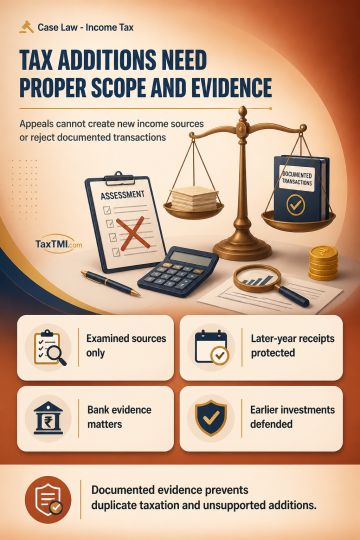
Appellate enhancement limits protect against new income sources, while documented credits and prior-year investments resist unexplained-income additions.
Contents
Summary
Note
Bookmark
Share
✓ Copied successfully !
Print
Print Options
For full text, please login
Login to TaxTMI
Verification Pending
The Email Id has not been verified. Click on the link we have sent on
Appellate enhancement is confined to income sources examined in assessment and cannot introduce sale consideration as a new taxable source where only related expenditure was scrutinised. Advance rental receipts already offered in later years are not taxable again absent accrual in the relevant year, preventing double taxation. Recorded bank credits, loans and advances supported by ledgers, confirmations and banking evidence cannot be treated as unexplained without adverse material. Likewise, no unexplained-investment addition arises for shareholdings acquired in earlier years, while documentary proof of disclosed cash sources and individual-to-HUF transfers shifts the evidentiary burden to the Revenue.
Appellate enhancement is confined to income sources examined in assessment and cannot introduce sale consideration as a new taxable source where only related expenditure was scrutinised. Advance rental receipts already offered in later years are not taxable again absent accrual in the relevant year, preventing double taxation. Recorded bank credits, loans and advances supported by ledgers, confirmations and banking evidence cannot be treated as unexplained without adverse material. Likewise, no unexplained-investment addition arises for shareholdings acquired in earlier years, while documentary proof of disclosed cash sources and individual-to-HUF transfers shifts the evidentiary burden to the Revenue.
Note: It is a system-generated summary and is for quick reference only.
 TaxTMI
 TaxTMI

 of 4915