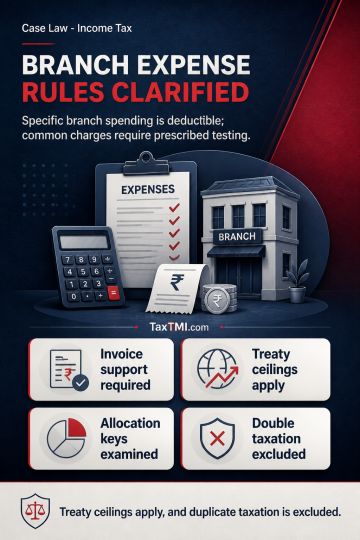
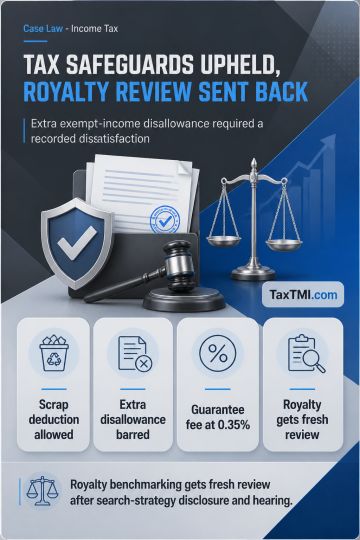
Head Office cost allocation requires prescribed transfer-pricing methods; treaty ceilings bar surcharge and cess, while duplicate taxation is excluded...
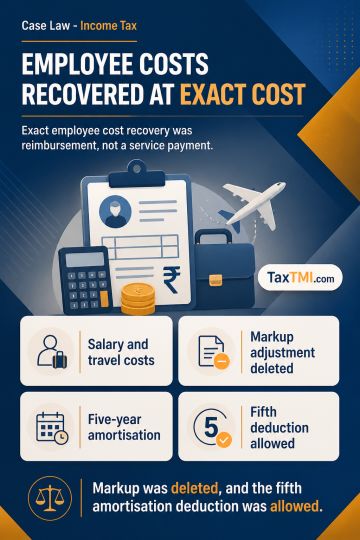
Cost-to-cost reimbursement of seconded employees is not service consideration; transfer-pricing markup was deleted and amalgamation amortisation allow...
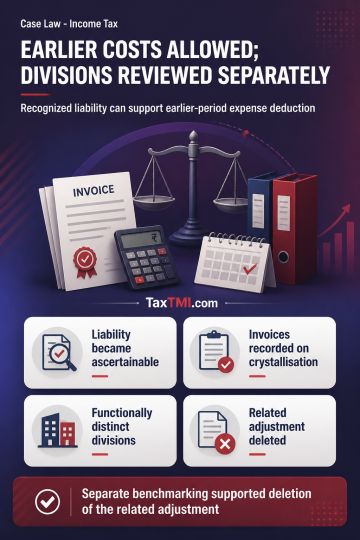
Crystallisation of liability supports prior-period expense deduction, while functionally distinct divisions require separate transfer-pricing benchmar...
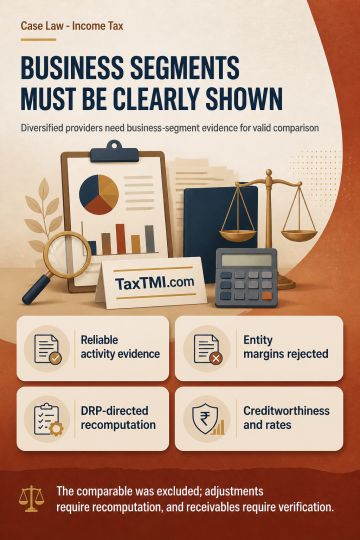
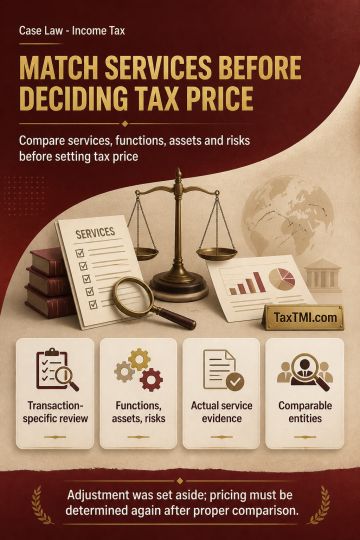
Functional comparability under TNMM requires transaction-specific FAR analysis before benchmarking business-support services provided to associated en...
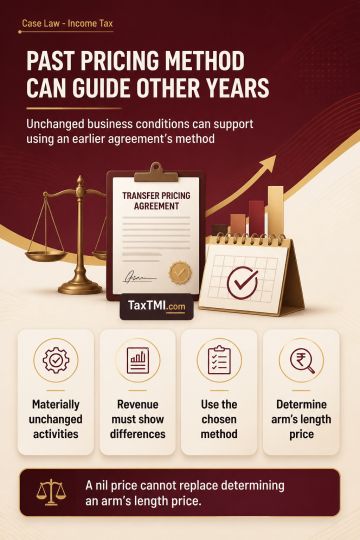
Advance pricing agreement methodology can guide benchmarking for non-covered years when functions, assets, risks and activities remain materially unch...
Page of 4918
Press 'Enter' after typing page number.
341 to 360 of 98359 Results
❮
❯
❯❯
0 / 200
Expand Note
Add to Folder
No Folders have been created
+
Are you sure you want to delete "My most important" ?
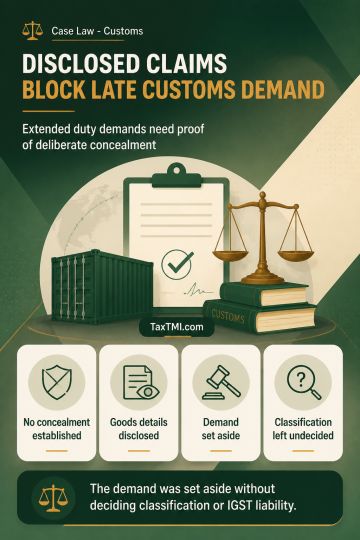
Extended limitation for customs duty under Section 28(4) requires material showing collusion, wilful misstatement or suppression causing short-payment; a subsequent departmental view on classification or exemption is insufficient. Disclosure of the goods description, classification and exemption claim in the Bill of Entry, accepted by the proper officer, did not establish concealment, false declaration or deliberate suppression to evade differential IGST on imported rice bran. The demand was therefore set aside without determining the correct classification or IGST liability, while preserving timely action permitted by law. Writ jurisdiction remains available despite a statutory appeal where extended-period jurisdictional conditions are unmet.
Extended limitation for customs duty under Section 28(4) requires material showing collusion, wilful misstatement or suppression causing short-payment; a subsequent departmental view on classification or exemption is insufficient. Disclosure of the goods description, classification and exemption claim in the Bill of Entry, accepted by the proper officer, did not establish concealment, false declaration or deliberate suppression to evade differential IGST on imported rice bran. The demand was therefore set aside without determining the correct classification or IGST liability, while preserving timely action permitted by law. Writ jurisdiction remains available despite a statutory appeal where extended-period jurisdictional conditions are unmet.
Note: It is a system-generated summary and is for quick reference only.
 TaxTMI
 TaxTMI

 of 4918