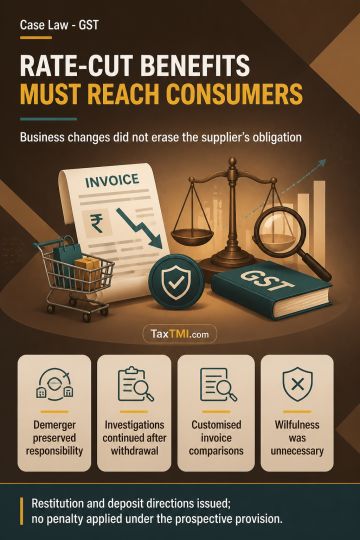
Anti-profiteering obligations survive business demerger, complaint withdrawal, and customized supply arrangements where rate-reduction benefits are no...
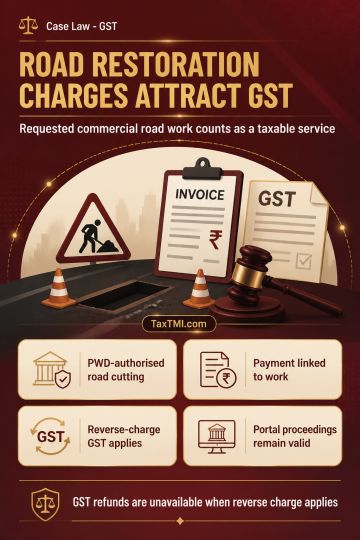
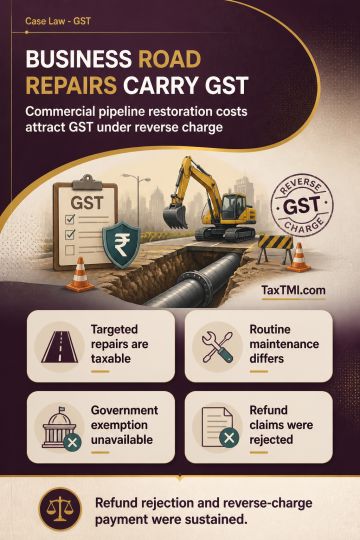
Road restoration charges constitute taxable services when requested for commercial pipeline activity, requiring reverse-charge GST from the business r...
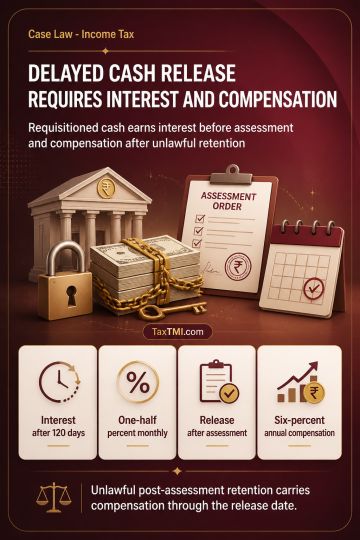
Interest on delayed release of requisitioned cash includes statutory pre-assessment interest and restitutionary compensation for unlawful post-assessm...
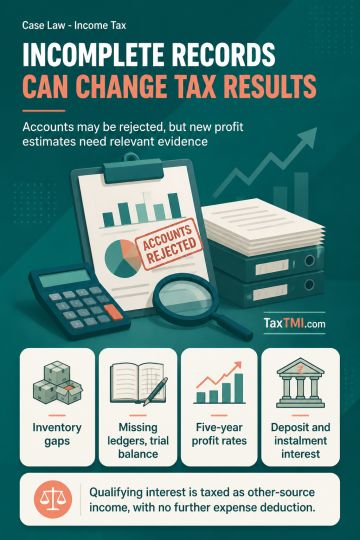
Incomplete inventory records justify rejecting accounts, while profit estimation requires relevant comparable material and interest falls under other ...
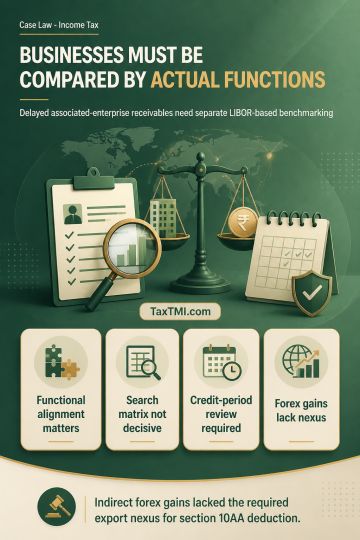
Transfer-pricing comparability requires functional alignment; delayed associated-enterprise receivables need separate LIBOR-based benchmarking, while ...
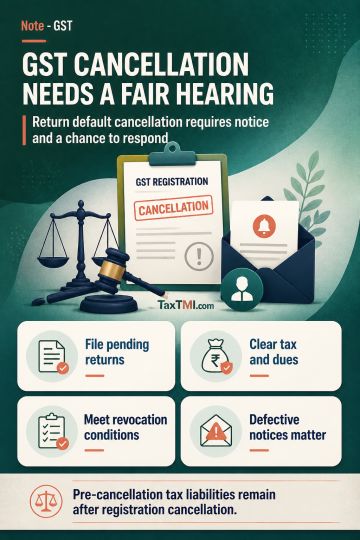
GST registration may be cancelled for continuous non-filing of returns under Section 29, but cancellation does not extinguish pre-cancellation tax liabilities. Rule 22 requires notice and an opportunity to respond; where pending returns are filed and tax, interest and late fee are fully paid before cancellation, the officer must drop proceedings. Post-cancellation revocation under Rule 23 requires compliance with prescribed filing, payment and limitation conditions, while appellate authorities cannot exceed statutory condonation limits. Defective notices, absence of reasons, denial of meaningful hearing, or unexplained retrospective cancellation may invalidate the process. Conditional restoration may be available in appropriate non-fraud cases upon full regularisation of returns, tax, interest, late fee and penalty.
GST registration may be cancelled for continuous non-filing of returns under Section 29, but cancellation does not extinguish pre-cancellation tax liabilities. Rule 22 requires notice and an opportunity to respond; where pending returns are filed and tax, interest and late fee are fully paid before cancellation, the officer must drop proceedings. Post-cancellation revocation under Rule 23 requires compliance with prescribed filing, payment and limitation conditions, while appellate authorities cannot exceed statutory condonation limits. Defective notices, absence of reasons, denial of meaningful hearing, or unexplained retrospective cancellation may invalidate the process. Conditional restoration may be available in appropriate non-fraud cases upon full regularisation of returns, tax, interest, late fee and penalty.
Note: It is a system-generated summary and is for quick reference only.
 TaxTMI
  TaxTMI
 of 4912