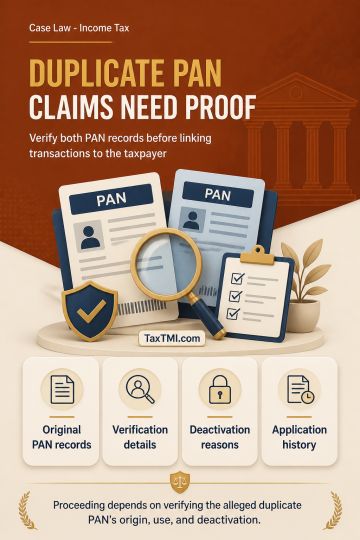
Duplicate PAN allocation requires record verification and deactivation reasons before assessment-related transactions can be attributed to an assessee...
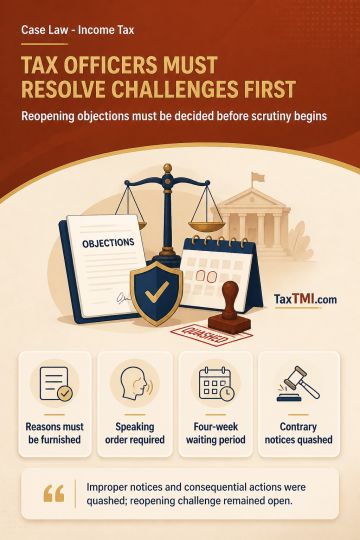
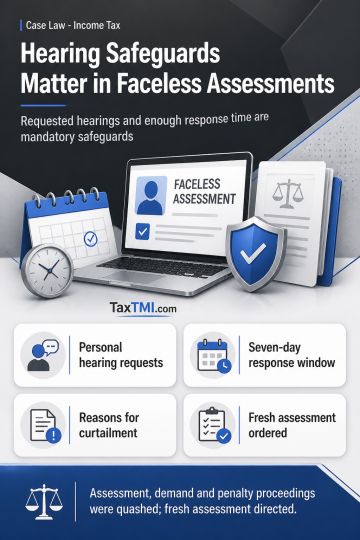
Faceless assessment safeguards require requested personal hearings and adequate final show-cause response time, failing which reassessment is required...
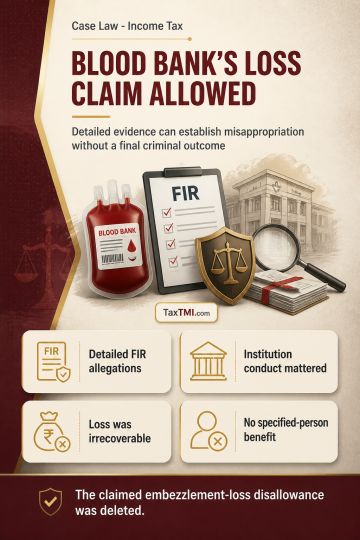
Embezzlement losses in charitable institutions remain allowable when misappropriation is established, irrecoverable, and not a specified-person benefi...
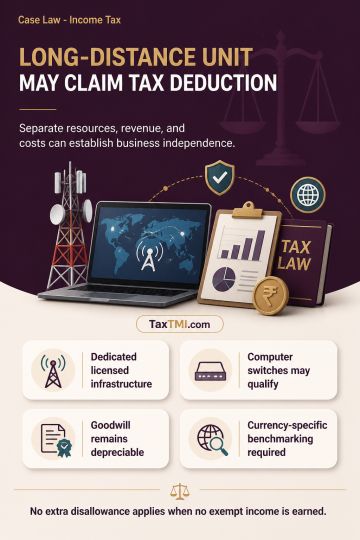
National long-distance undertaking status supports deduction where separately licensed infrastructure, resources, revenue, and expenditure establish c...
Agency reimbursement income follows contractual deposit-liability computation, while pending deposit collections do not constitute deemed-dividend loa...
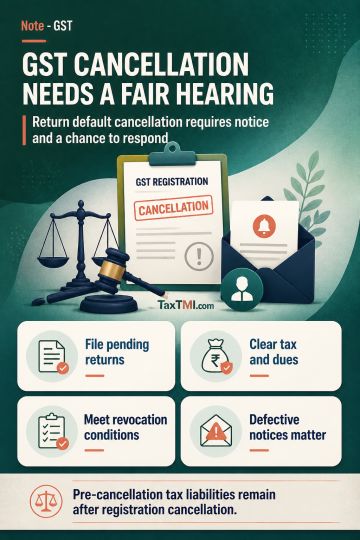
GST registration may be cancelled for continuous non-filing of returns under Section 29, but cancellation does not extinguish pre-cancellation tax liabilities. Rule 22 requires notice and an opportunity to respond; where pending returns are filed and tax, interest and late fee are fully paid before cancellation, the officer must drop proceedings. Post-cancellation revocation under Rule 23 requires compliance with prescribed filing, payment and limitation conditions, while appellate authorities cannot exceed statutory condonation limits. Defective notices, absence of reasons, denial of meaningful hearing, or unexplained retrospective cancellation may invalidate the process. Conditional restoration may be available in appropriate non-fraud cases upon full regularisation of returns, tax, interest, late fee and penalty.
GST registration may be cancelled for continuous non-filing of returns under Section 29, but cancellation does not extinguish pre-cancellation tax liabilities. Rule 22 requires notice and an opportunity to respond; where pending returns are filed and tax, interest and late fee are fully paid before cancellation, the officer must drop proceedings. Post-cancellation revocation under Rule 23 requires compliance with prescribed filing, payment and limitation conditions, while appellate authorities cannot exceed statutory condonation limits. Defective notices, absence of reasons, denial of meaningful hearing, or unexplained retrospective cancellation may invalidate the process. Conditional restoration may be available in appropriate non-fraud cases upon full regularisation of returns, tax, interest, late fee and penalty.
Note: It is a system-generated summary and is for quick reference only.
 TaxTMI
 TaxTMI

 of 4915