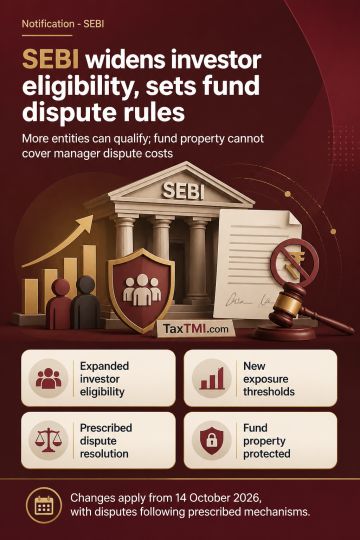
Accredited investor eligibility expands through securities-market exposure, while alternative investment fund disputes require prescribed resolution a...
Customs Assessment Portal centralises classification and valuation guidance to support consistent, transparent and informed compliance across stakehol...
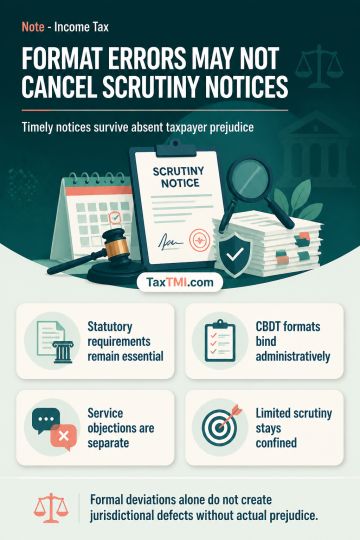
Section 143(2) requires a notice to be served within the statutory limitation, communicate scrutiny, and require attendance or evidence supporting the return. CBDT-prescribed scrutiny formats bind departmental authorities administratively, but non-use does not itself create a jurisdictional defect where the notice otherwise meets statutory requirements and no actual prejudice is established; Section 292B may cure formal defects. Section 292BB separately addresses objections to service, timeliness, or manner of service. Limited scrutiny remains confined to selected issues unless prescribed conversion safeguards are followed, and a later information notice cannot validate unauthorised expansion. Format non-compliance may nevertheless entail administrative accountability.
Section 143(2) requires a notice to be served within the statutory limitation, communicate scrutiny, and require attendance or evidence supporting the return. CBDT-prescribed scrutiny formats bind departmental authorities administratively, but non-use does not itself create a jurisdictional defect where the notice otherwise meets statutory requirements and no actual prejudice is established; Section 292B may cure formal defects. Section 292BB separately addresses objections to service, timeliness, or manner of service. Limited scrutiny remains confined to selected issues unless prescribed conversion safeguards are followed, and a later information notice cannot validate unauthorised expansion. Format non-compliance may nevertheless entail administrative accountability.
Note: It is a system-generated summary and is for quick reference only.
 TaxTMI
  TaxTMI