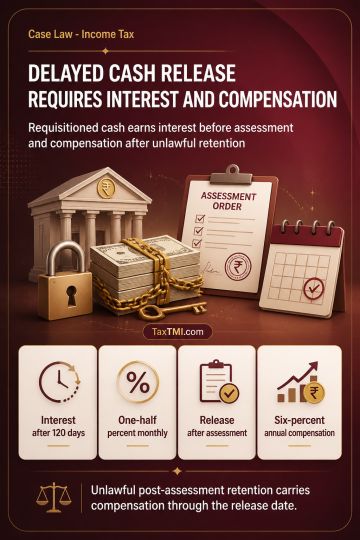
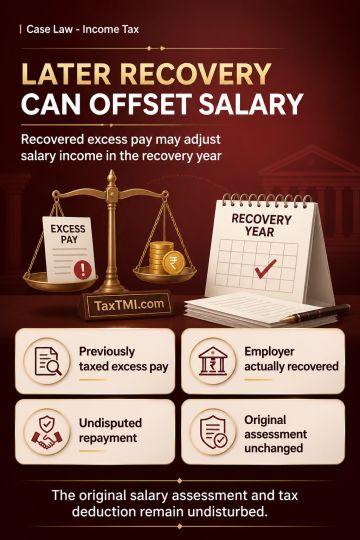
Interest on delayed release of requisitioned cash includes statutory pre-assessment interest and restitutionary compensation for unlawful post-assessm...
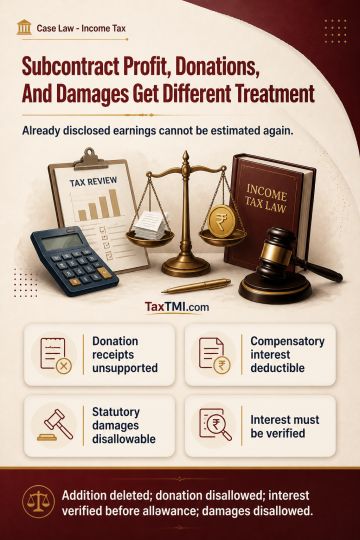
Incomplete inventory records justify rejecting accounts, while profit estimation requires relevant comparable material and interest falls under other ...
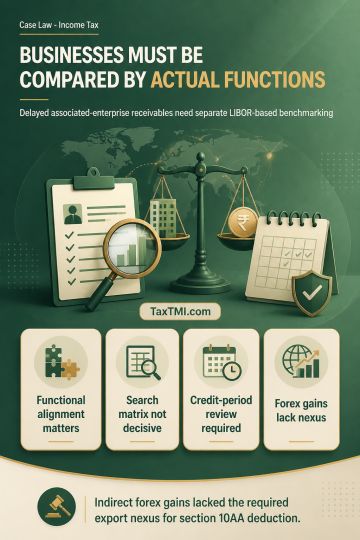
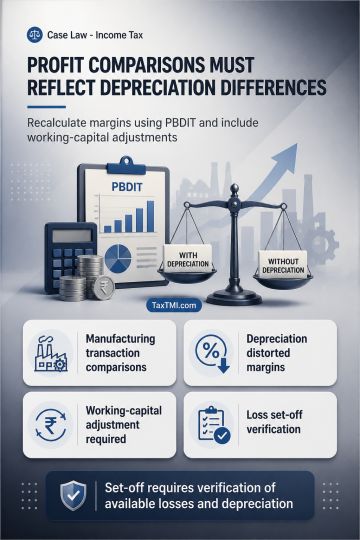
Transfer-pricing comparability requires functional alignment; delayed associated-enterprise receivables need separate LIBOR-based benchmarking, while ...
Extended reassessment limitation in search cases requires asset-linked escaped income, invalidating additions based only on unexplained money or expen...
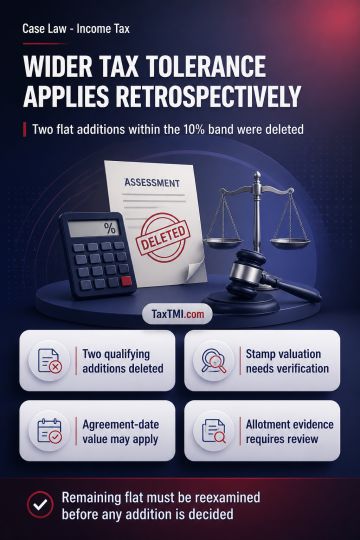
Enhanced tolerance band under section 43CA applies retrospectively, deleting qualifying deemed-sale additions while disputed stamp valuation requires ...
Recording of satisfaction by the Assessing Officer during...
Assessing Officer Satisfaction Requirement Bars Penalty for Cash Receipt in Immovable-Property Sale Cases Where Initiation Lacks Recorded Satisfaction.
Contents
Summary
Note
Bookmark
Share
✓ Copied successfully !
Print
Print Options
For full text, please login
Login to TaxTMI
Verification Pending
The Email Id has not been verified. Click on the link we have sent on
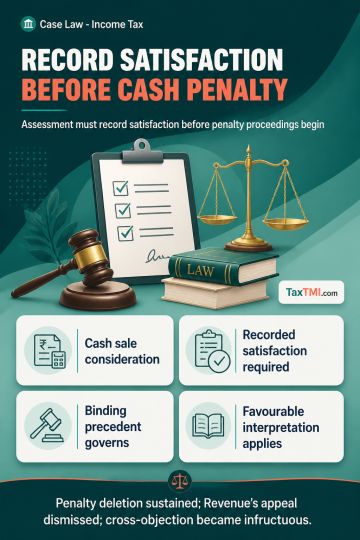
Recording of satisfaction by the Assessing Officer during assessment is required before penalty proceedings under section 271D can be initiated for cash receipt of immovable-property sale consideration. Where jurisdictionally binding precedent requires this satisfaction, a contrary Tribunal view based on law binding in another jurisdiction does not govern. When High Court interpretations diverge, the interpretation favourable to the assessee applies. On that basis, deletion of the penalty was sustained, the Revenue's appeal was dismissed, and the assessee's cross-objection became infructuous.
Recording of satisfaction by the Assessing Officer during assessment is required before penalty proceedings under section 271D can be initiated for cash receipt of immovable-property sale consideration. Where jurisdictionally binding precedent requires this satisfaction, a contrary Tribunal view based on law binding in another jurisdiction does not govern. When High Court interpretations diverge, the interpretation favourable to the assessee applies. On that basis, deletion of the penalty was sustained, the Revenue's appeal was dismissed, and the assessee's cross-objection became infructuous.
Note: It is a system-generated summary and is for quick reference only.
 TaxTMI
  TaxTMI
 of 4913