Assessing Officer jurisdiction after statutory transfer invalidates reassessment notices issued by transferor officers and nullifies resulting proceed...
Consequential appeal-effect orders must implement rectification deleting working-capital adjustments and reconsider the resulting arm's-length range c...
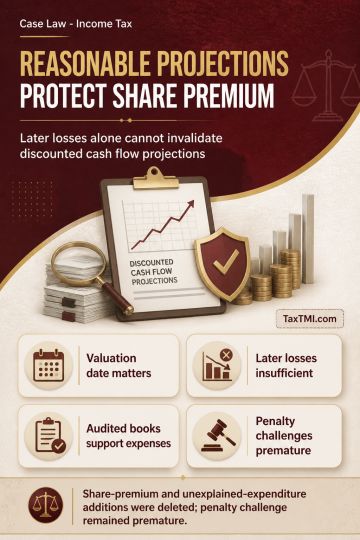
Discounted cash flow valuation protects share premium where projections are reasonable, while audited book expenses defeat unexplained-expenditure add...
Section 54 construction relief survives pre-transfer commencement when completion occurs within the statutory period, excluding ineligible spouse-owne...
Fraud classification show-cause notices founded on inconclusive forensic audit material cannot sustain action, permitting fresh proceedings on conclus...
Page of 4913
Press 'Enter' after typing page number.
881 to 900 of 98250 Results
❮
❯
❯❯
0 / 200
Expand Note
Add to Folder
No Folders have been created
+
Are you sure you want to delete "My most important" ?
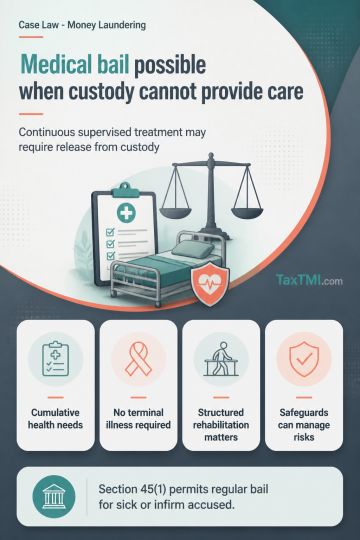
Section 45(1) of the PMLA permits regular bail for an accused who is sick or infirm. "Sick" and "infirm" operate disjunctively and do not require terminal illness, irreversible deterioration, imminent danger to life, surgery, or hospitalisation. Infirmity may result from substantial physical impairment without an immediate life-threatening condition. Medical needs must be assessed cumulatively, including coexisting conditions and the need for structured, continuous, supervised rehabilitation. Hospital referrals, diagnostic tests, or conservative management do not alone establish adequate care; the material issue is whether custody can effectively deliver the prescribed treatment. Bail safeguards may address risks to witnesses, evidence, investigation, and trial.
Section 45(1) of the PMLA permits regular bail for an accused who is sick or infirm. "Sick" and "infirm" operate disjunctively and do not require terminal illness, irreversible deterioration, imminent danger to life, surgery, or hospitalisation. Infirmity may result from substantial physical impairment without an immediate life-threatening condition. Medical needs must be assessed cumulatively, including coexisting conditions and the need for structured, continuous, supervised rehabilitation. Hospital referrals, diagnostic tests, or conservative management do not alone establish adequate care; the material issue is whether custody can effectively deliver the prescribed treatment. Bail safeguards may address risks to witnesses, evidence, investigation, and trial.
Note: It is a system-generated summary and is for quick reference only.
 TaxTMI
  TaxTMI
 of 4913