Mandatory textile export qualifiers distinguish flame-retardant fabrics from other listed fabrics for automated identification under the textiles ince...
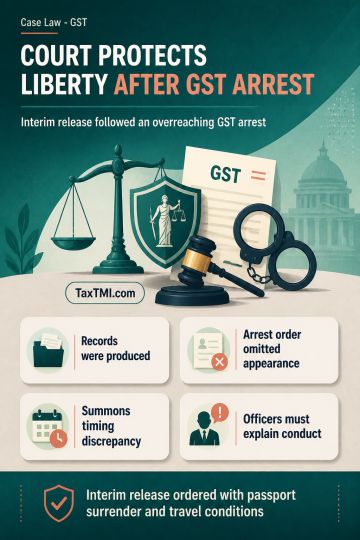
Personal liberty safeguards restrict arrest after court-directed GST appearance, requiring interim release where authorities overreach pending proceed...
Alternative statutory remedy and delay bar GST writ challenges despite pending rectification, while distinct subject matter permits parallel proceedin...
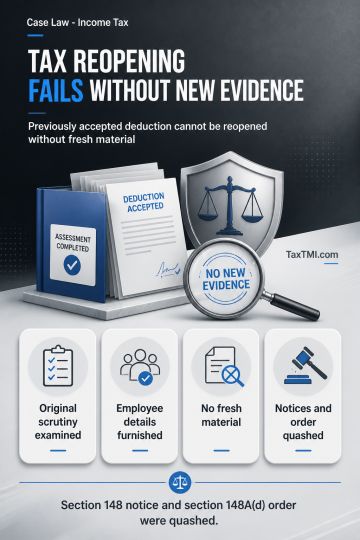
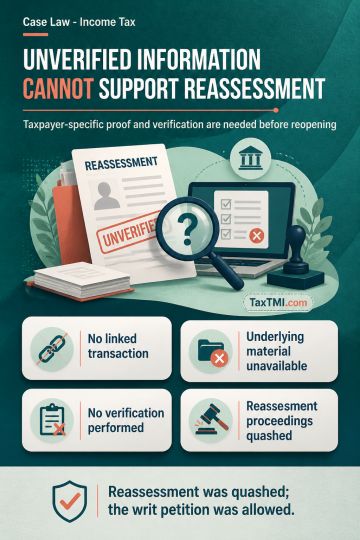
Unverified Insight Portal Information Cannot Justify Reassessment Without a Verified Taxpayer-Specific Income-Escape Nexus or Demonstrated Application...
Page of 4913
Press 'Enter' after typing page number.
861 to 880 of 98250 Results
❮
❯
❯❯
0 / 200
Expand Note
Add to Folder
No Folders have been created
+
Are you sure you want to delete "My most important" ?
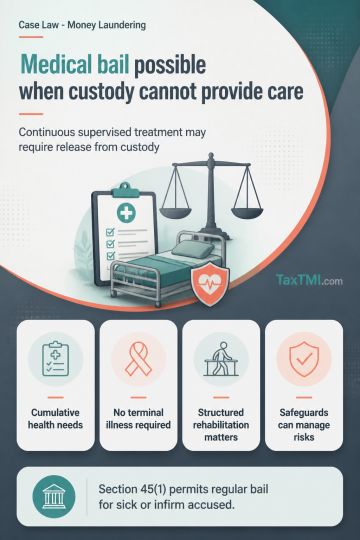
Section 45(1) of the PMLA permits regular bail for an accused who is sick or infirm. "Sick" and "infirm" operate disjunctively and do not require terminal illness, irreversible deterioration, imminent danger to life, surgery, or hospitalisation. Infirmity may result from substantial physical impairment without an immediate life-threatening condition. Medical needs must be assessed cumulatively, including coexisting conditions and the need for structured, continuous, supervised rehabilitation. Hospital referrals, diagnostic tests, or conservative management do not alone establish adequate care; the material issue is whether custody can effectively deliver the prescribed treatment. Bail safeguards may address risks to witnesses, evidence, investigation, and trial.
Section 45(1) of the PMLA permits regular bail for an accused who is sick or infirm. "Sick" and "infirm" operate disjunctively and do not require terminal illness, irreversible deterioration, imminent danger to life, surgery, or hospitalisation. Infirmity may result from substantial physical impairment without an immediate life-threatening condition. Medical needs must be assessed cumulatively, including coexisting conditions and the need for structured, continuous, supervised rehabilitation. Hospital referrals, diagnostic tests, or conservative management do not alone establish adequate care; the material issue is whether custody can effectively deliver the prescribed treatment. Bail safeguards may address risks to witnesses, evidence, investigation, and trial.
Note: It is a system-generated summary and is for quick reference only.
 TaxTMI
  TaxTMI
 of 4913