Functional comparability under TNMM requires transaction-specific FAR analysis before benchmarking business-support services provided to associated en...
Advance pricing agreement methodology can guide benchmarking for non-covered years when functions, assets, risks and activities remain materially unch...
Tax-audit exemption for substantially State-funded educational universities prevents audit-failure penalties where income qualifies for statutory exem...
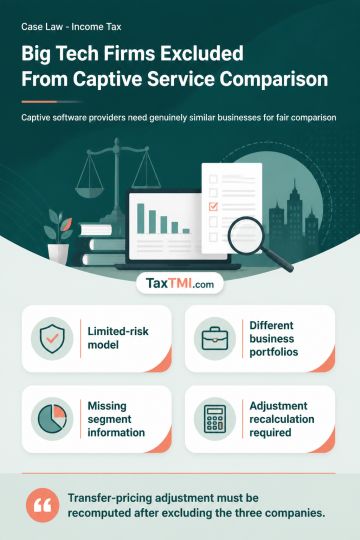
Functional, asset and risk analysis excludes diversified technology companies from captive software development comparables under cost-plus arrangemen...
Mobile-phone electronic evidence failed to establish customs undervaluation, while duty survived on non-authentic origin certificates without importer...
Automotive radio classification treats integrated infotainment features as supplementary, placing complete and qualifying unassembled units under the ...
Separate corporate personality prevents directors from being personally liable for company deposits without a guarantee or independent legal undertaki...
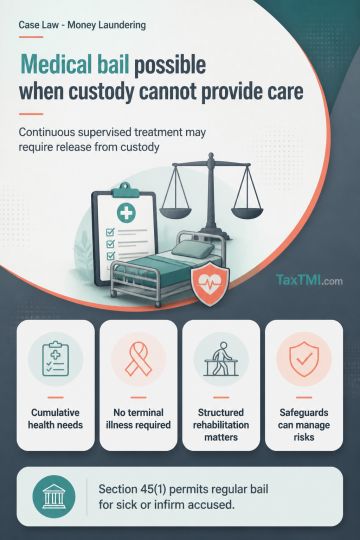
Section 45(1) of the PMLA permits regular bail for an accused who is sick or infirm. "Sick" and "infirm" operate disjunctively and do not require terminal illness, irreversible deterioration, imminent danger to life, surgery, or hospitalisation. Infirmity may result from substantial physical impairment without an immediate life-threatening condition. Medical needs must be assessed cumulatively, including coexisting conditions and the need for structured, continuous, supervised rehabilitation. Hospital referrals, diagnostic tests, or conservative management do not alone establish adequate care; the material issue is whether custody can effectively deliver the prescribed treatment. Bail safeguards may address risks to witnesses, evidence, investigation, and trial.
Section 45(1) of the PMLA permits regular bail for an accused who is sick or infirm. "Sick" and "infirm" operate disjunctively and do not require terminal illness, irreversible deterioration, imminent danger to life, surgery, or hospitalisation. Infirmity may result from substantial physical impairment without an immediate life-threatening condition. Medical needs must be assessed cumulatively, including coexisting conditions and the need for structured, continuous, supervised rehabilitation. Hospital referrals, diagnostic tests, or conservative management do not alone establish adequate care; the material issue is whether custody can effectively deliver the prescribed treatment. Bail safeguards may address risks to witnesses, evidence, investigation, and trial.
Note: It is a system-generated summary and is for quick reference only.
 TaxTMI
 TaxTMI

 of 4916