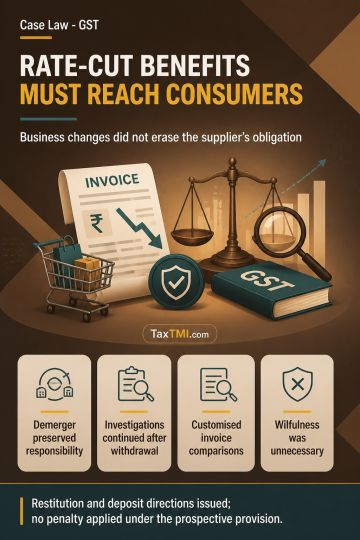
Anti-profiteering obligations survive business demerger, complaint withdrawal, and customized supply arrangements where rate-reduction benefits are no...
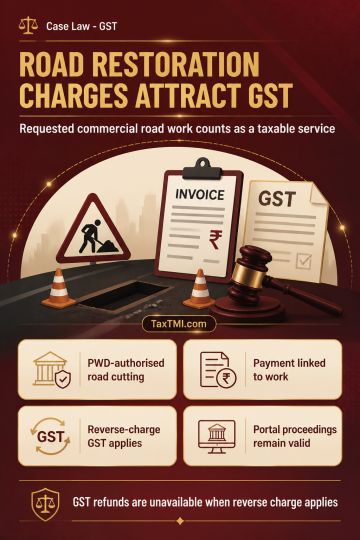
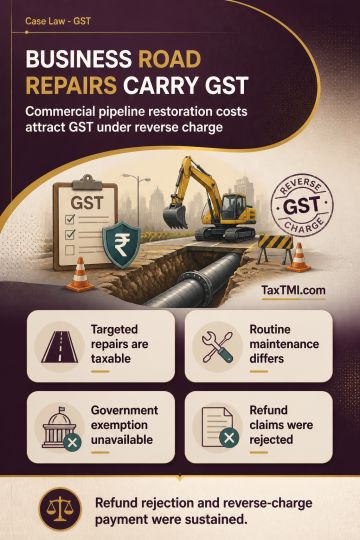
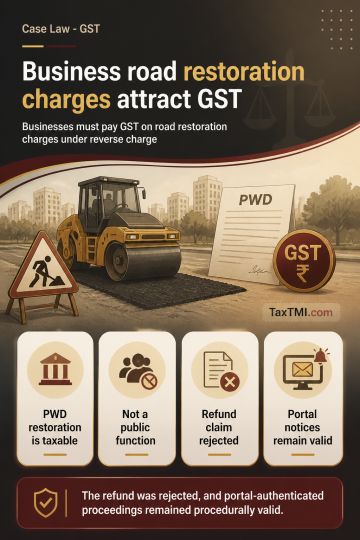
Road restoration charges constitute taxable services when requested for commercial pipeline activity, requiring reverse-charge GST from the business r...
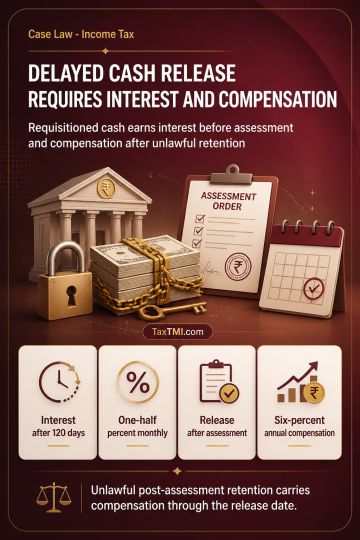
Interest on delayed release of requisitioned cash includes statutory pre-assessment interest and restitutionary compensation for unlawful post-assessm...
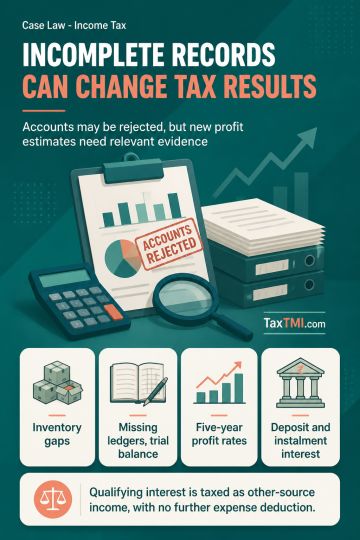
Incomplete inventory records justify rejecting accounts, while profit estimation requires relevant comparable material and interest falls under other ...
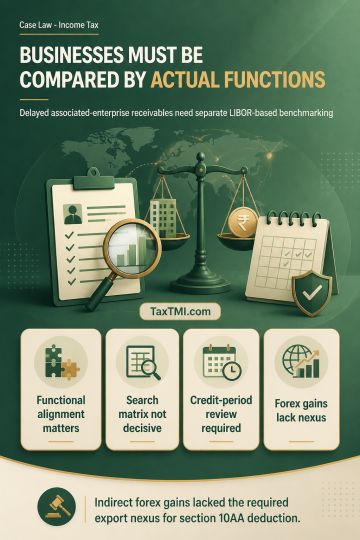
Transfer-pricing comparability requires functional alignment; delayed associated-enterprise receivables need separate LIBOR-based benchmarking, while ...
Page of 4915
Press 'Enter' after typing page number.
121 to 140 of 98300 Results
❮
❯
❯❯
0 / 200
Expand Note
Add to Folder
No Folders have been created
+
Are you sure you want to delete "My most important" ?
Regular scrutiny assessment under section 143(3) requires the...
Independent assessment discretion: unauthorised superior-officer consultation can invalidate regular scrutiny assessments by displacing the Assessing Officer's own judgment.
Contents
Summary
Note
Bookmark
Share
✓ Copied successfully !
Print
Print Options
For full text, please login
Login to TaxTMI
Verification Pending
The Email Id has not been verified. Click on the link we have sent on
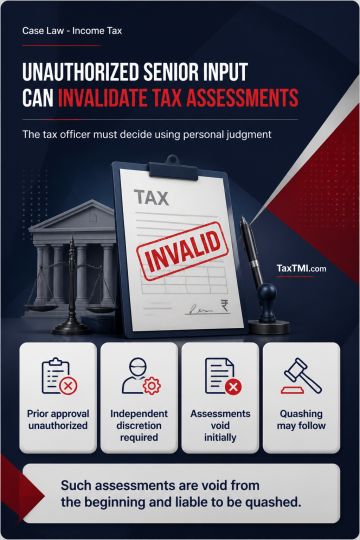
Regular scrutiny assessment under section 143(3) requires the Assessing Officer to exercise quasi-judicial discretion independently. Absent statutory authority, consultation with and prior approval from an Additional Commissioner during the assessment process constitutes unauthorised superior-officer participation and negates the Assessing Officer's independent application of mind. Such assessments are void ab initio and liable to be quashed. A superior officer may consult subordinates without displacing the superior officer's discretion, but subordinate consultation with a superior officer displaces the discretion vested exclusively in the Assessing Officer.
Regular scrutiny assessment under section 143(3) requires the Assessing Officer to exercise quasi-judicial discretion independently. Absent statutory authority, consultation with and prior approval from an Additional Commissioner during the assessment process constitutes unauthorised superior-officer participation and negates the Assessing Officer's independent application of mind. Such assessments are void ab initio and liable to be quashed. A superior officer may consult subordinates without displacing the superior officer's discretion, but subordinate consultation with a superior officer displaces the discretion vested exclusively in the Assessing Officer.
Note: It is a system-generated summary and is for quick reference only.
 TaxTMI
 TaxTMI

 of 4915