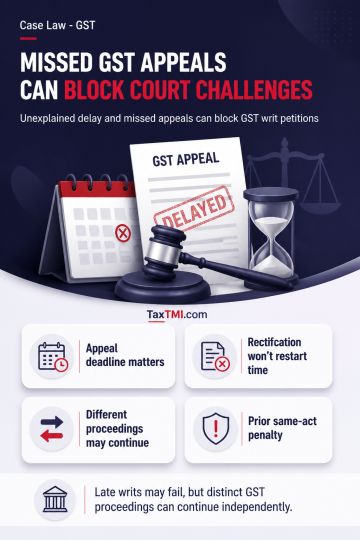
Alternative statutory remedy and delay bar GST writ challenges despite pending rectification, while distinct subject matter permits parallel proceedin...
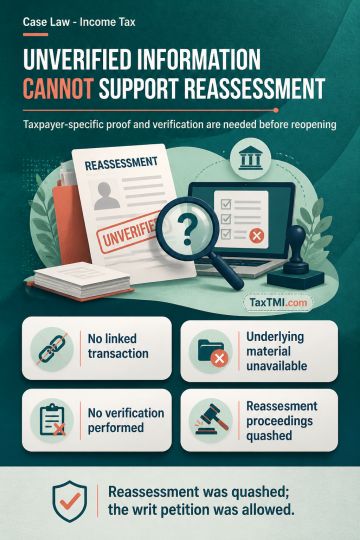
Unverified Insight Portal Information Cannot Justify Reassessment Without a Verified Taxpayer-Specific Income-Escape Nexus or Demonstrated Application...
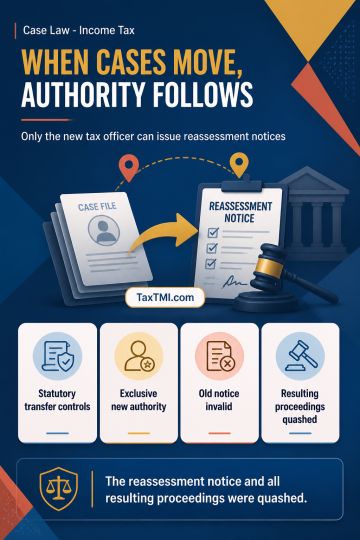
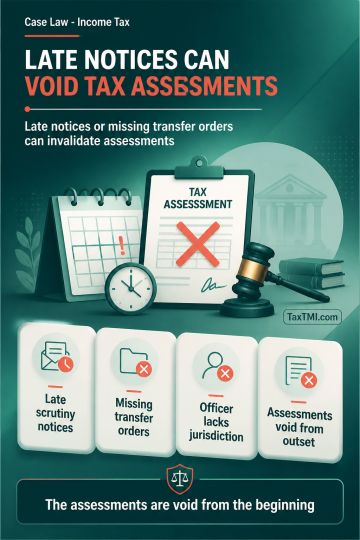
Assessing Officer jurisdiction after statutory transfer invalidates reassessment notices issued by transferor officers and nullifies resulting proceed...
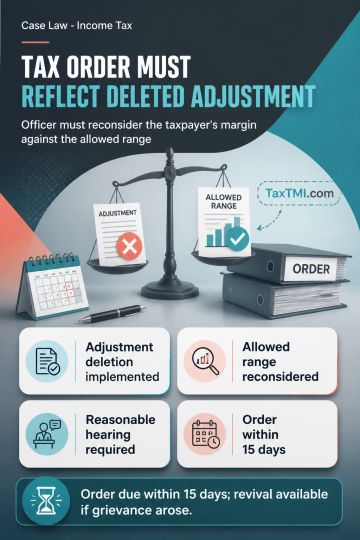
Consequential appeal-effect orders must implement rectification deleting working-capital adjustments and reconsider the resulting arm's-length range c...
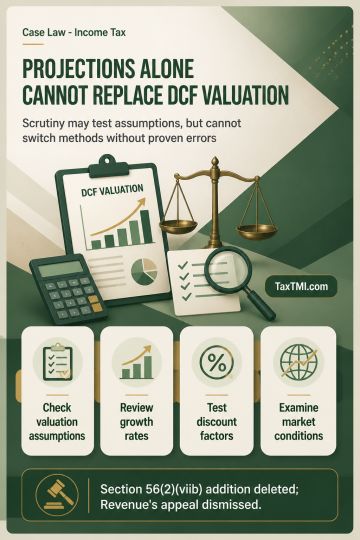
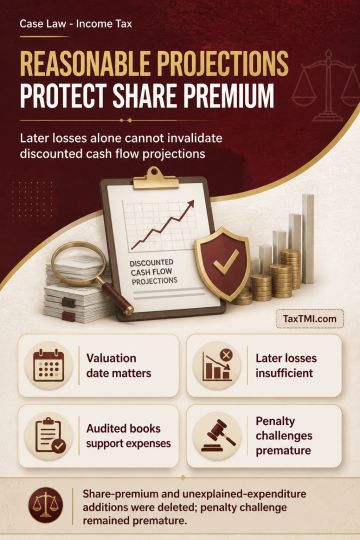
Discounted cash flow valuation protects share premium where projections are reasonable, while audited book expenses defeat unexplained-expenditure add...
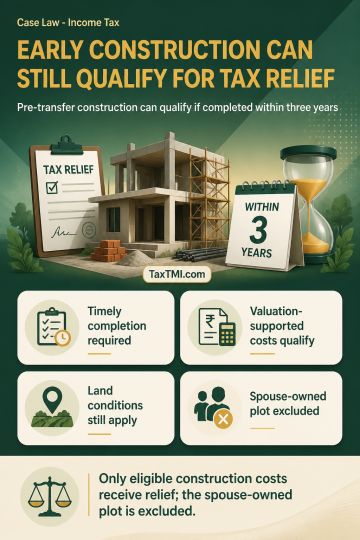
Section 54 construction relief survives pre-transfer commencement when completion occurs within the statutory period, excluding ineligible spouse-owne...
Page of 4916
Press 'Enter' after typing page number.
921 to 940 of 98302 Results
❮
❯
❯❯
0 / 200
Expand Note
Add to Folder
No Folders have been created
+
Are you sure you want to delete "My most important" ?
Regular scrutiny assessment under section 143(3) requires the...
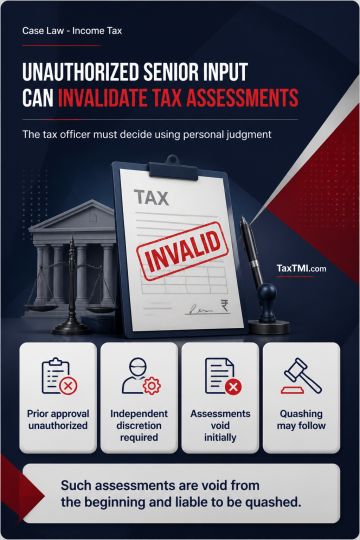
Independent assessment discretion: unauthorised superior-officer consultation can invalidate regular scrutiny assessments by displacing the Assessing Officer's own judgment.
Contents
Summary
Note
Bookmark
Share
✓ Copied successfully !
Print
Print Options
For full text, please login
Login to TaxTMI
Verification Pending
The Email Id has not been verified. Click on the link we have sent on
Regular scrutiny assessment under section 143(3) requires the Assessing Officer to exercise quasi-judicial discretion independently. Absent statutory authority, consultation with and prior approval from an Additional Commissioner during the assessment process constitutes unauthorised superior-officer participation and negates the Assessing Officer's independent application of mind. Such assessments are void ab initio and liable to be quashed. A superior officer may consult subordinates without displacing the superior officer's discretion, but subordinate consultation with a superior officer displaces the discretion vested exclusively in the Assessing Officer.
Regular scrutiny assessment under section 143(3) requires the Assessing Officer to exercise quasi-judicial discretion independently. Absent statutory authority, consultation with and prior approval from an Additional Commissioner during the assessment process constitutes unauthorised superior-officer participation and negates the Assessing Officer's independent application of mind. Such assessments are void ab initio and liable to be quashed. A superior officer may consult subordinates without displacing the superior officer's discretion, but subordinate consultation with a superior officer displaces the discretion vested exclusively in the Assessing Officer.
Note: It is a system-generated summary and is for quick reference only.
 TaxTMI
 TaxTMI

 of 4916