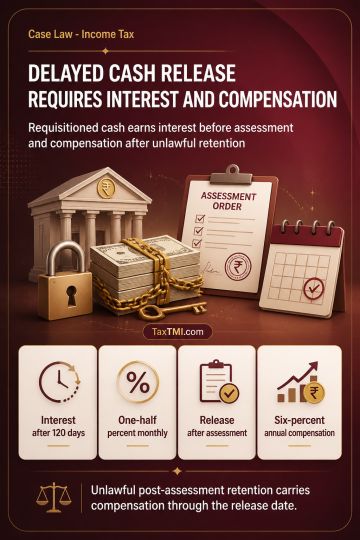
Interest on delayed release of requisitioned cash includes statutory pre-assessment interest and restitutionary compensation for unlawful post-assessm...
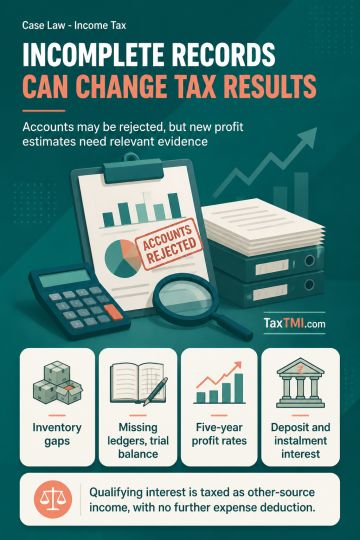
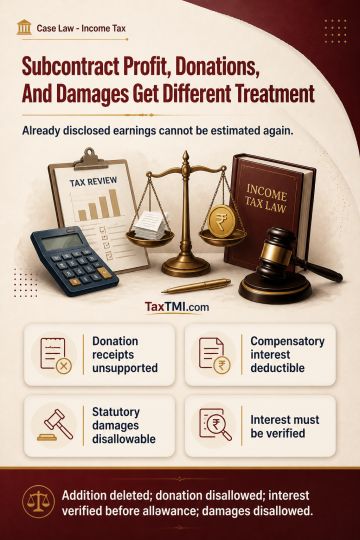
Incomplete inventory records justify rejecting accounts, while profit estimation requires relevant comparable material and interest falls under other ...
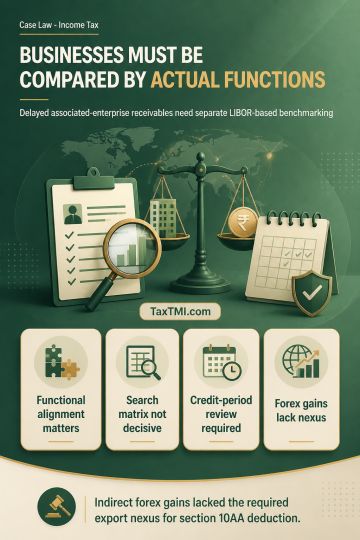
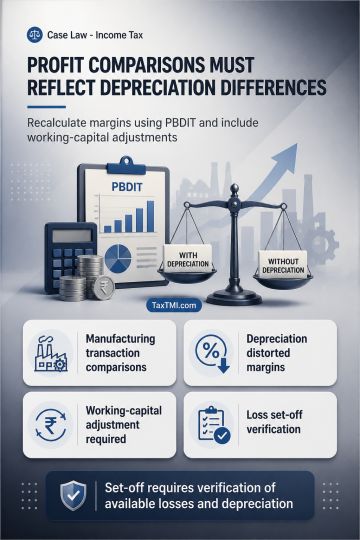
Transfer-pricing comparability requires functional alignment; delayed associated-enterprise receivables need separate LIBOR-based benchmarking, while ...
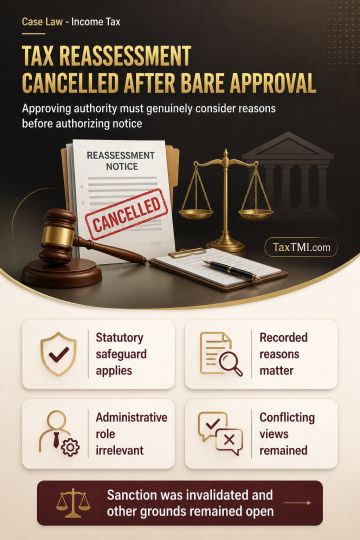
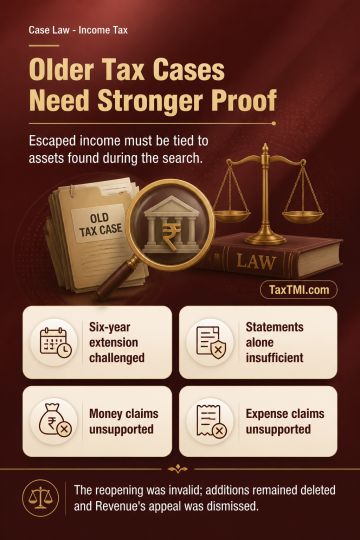
Extended reassessment limitation in search cases requires asset-linked escaped income, invalidating additions based only on unexplained money or expen...
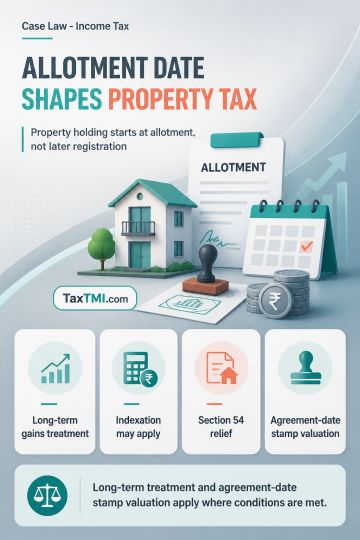
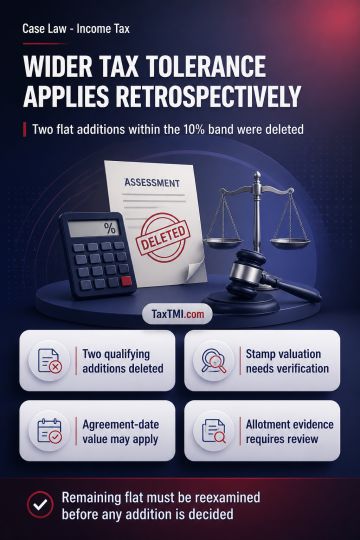
Enhanced tolerance band under section 43CA applies retrospectively, deleting qualifying deemed-sale additions while disputed stamp valuation requires ...
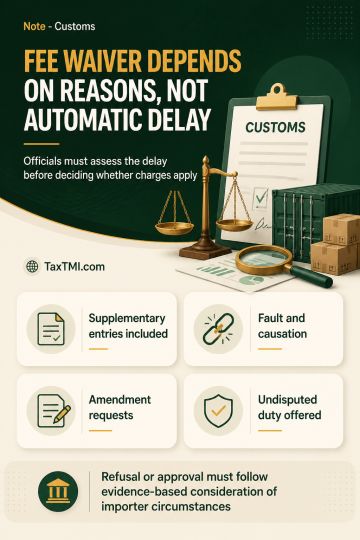
Late-presentation charges for a Bill of Entry arise only where the proper officer, after assessing the reasons for delay, is satisfied that no sufficient cause exists. Regulation 4(3) prescribes the charging framework and permits waiver where the reasons are satisfactory; automated calculation cannot replace this statutory assessment. For supplementary Bills of Entry covering excess cargo subsequently identified as part of a timely declared consignment, waiver depends on causation, importer fault, bona fide and prompt corrective action, amendment requests, and willingness to discharge undisputed duty. A legally sustainable refusal or grant of waiver requires a reasoned evaluation of evidence rather than mechanical reliance on delayed filing.
Late-presentation charges for a Bill of Entry arise only where the proper officer, after assessing the reasons for delay, is satisfied that no sufficient cause exists. Regulation 4(3) prescribes the charging framework and permits waiver where the reasons are satisfactory; automated calculation cannot replace this statutory assessment. For supplementary Bills of Entry covering excess cargo subsequently identified as part of a timely declared consignment, waiver depends on causation, importer fault, bona fide and prompt corrective action, amendment requests, and willingness to discharge undisputed duty. A legally sustainable refusal or grant of waiver requires a reasoned evaluation of evidence rather than mechanical reliance on delayed filing.
Note: It is a system-generated summary and is for quick reference only.
 TaxTMI
  TaxTMI
 of 4913