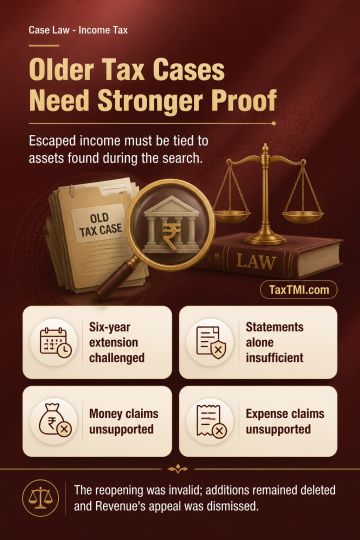
Extended reassessment limitation in search cases requires asset-linked escaped income, invalidating additions based only on unexplained money or expen...
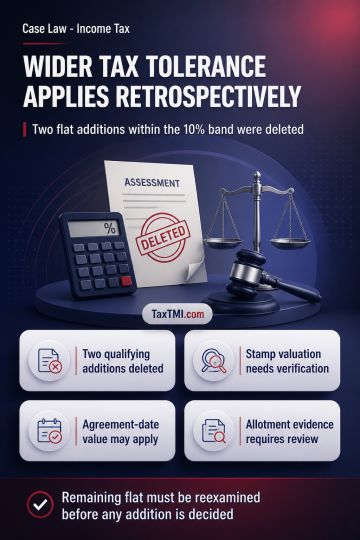
Enhanced tolerance band under section 43CA applies retrospectively, deleting qualifying deemed-sale additions while disputed stamp valuation requires ...
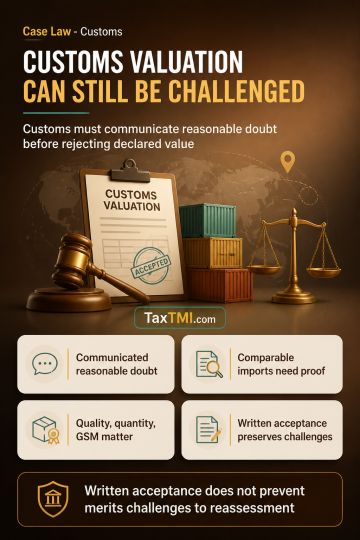
Customs transaction value rejection requires communicated reasonable doubt, while written reassessment acceptance preserves challenges to enhanced val...
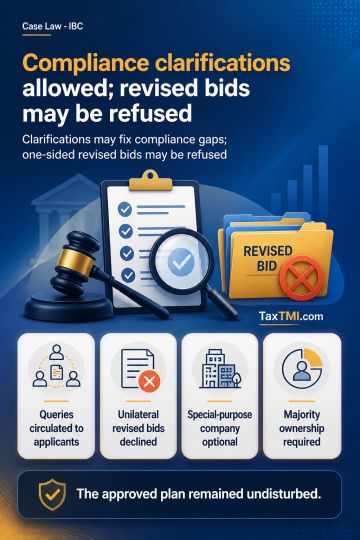
Challenge-mechanism compliance clarifications permitted, while unilateral revised resolution plans may be refused under creditors' commercial discreti...
COVID-19 limitation exclusion applies to judicial,...
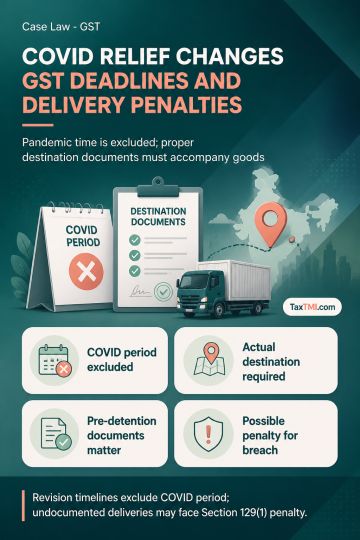
COVID-19 limitation exclusion and destination-specific e-way bills govern revisional timelines and penalties for undocumented third-party plywood deliveries.
Contents
Summary
Note
Bookmark
Share
✓ Copied successfully !
Print
Print Options
For full text, please login
Login to TaxTMI
Verification Pending
The Email Id has not been verified. Click on the link we have sent on
COVID-19 limitation exclusion applies to judicial, quasi-judicial and departmental proceedings, and must be excluded when calculating the period for exercising revisional powers where the statutory period overlaps that exclusion. For transport compliance, an e-way bill and tax invoice must cover the actual movement and destination of goods. Documents issued after detention do not cure the absence of destination-specific documentation at interception, particularly where no evidence supports a claimed technical glitch. Such undocumented third-party unloading may be treated as a wilful contravention intended to evade tax and may attract penalty under Section 129(1).
COVID-19 limitation exclusion applies to judicial, quasi-judicial and departmental proceedings, and must be excluded when calculating the period for exercising revisional powers where the statutory period overlaps that exclusion. For transport compliance, an e-way bill and tax invoice must cover the actual movement and destination of goods. Documents issued after detention do not cure the absence of destination-specific documentation at interception, particularly where no evidence supports a claimed technical glitch. Such undocumented third-party unloading may be treated as a wilful contravention intended to evade tax and may attract penalty under Section 129(1).
Note: It is a system-generated summary and is for quick reference only.
 TaxTMI
 TaxTMI

 of 4915