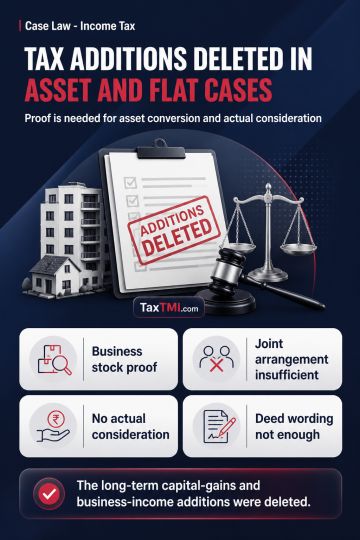
Capital Asset Conversion Requires Proven Business Stock Treatment; Paper Consideration in Spousal Flat Transfers Does Not Create Taxable Business Inco...
Human-probability test defeats political donation deduction where banking records mask accommodation-entry fund layering and evidence shows non-genuin...
Commercial property status protects capital-gains exemption when residential-house ownership limits are tested, while agricultural-land character gove...
Investigation deposits refunded after failed customs demands fall outside the statutory appellate pre-deposit interest regime and may attract compensa...
Resolution plan finality extinguishes unquantified operational-creditor claims and pending proceedings unless the approved plan expressly preserves th...
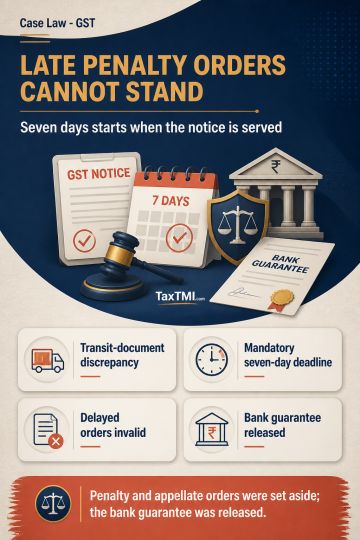
Section 129(3) of the CGST/KGST Act imposes a mandatory seven-day period, measured from service of notice, for issuing a detention-penalty order concerning a transit-document discrepancy. The term "shall" requires strict compliance because the provision authorises coercive detention and seizure; the absence of an express consequence for delay does not make the limit directory. An order passed after the prescribed period is illegal and without jurisdiction, with consequential setting aside of the penalty and appellate orders and release of the bank guarantee.
Section 129(3) of the CGST/KGST Act imposes a mandatory seven-day period, measured from service of notice, for issuing a detention-penalty order concerning a transit-document discrepancy. The term "shall" requires strict compliance because the provision authorises coercive detention and seizure; the absence of an express consequence for delay does not make the limit directory. An order passed after the prescribed period is illegal and without jurisdiction, with consequential setting aside of the penalty and appellate orders and release of the bank guarantee.
Note: It is a system-generated summary and is for quick reference only.
 TaxTMI
 TaxTMI

 of 4915