Interest on delayed release of requisitioned cash includes statutory pre-assessment interest and restitutionary compensation for unlawful post-assessm...
Incomplete inventory records justify rejecting accounts, while profit estimation requires relevant comparable material and interest falls under other ...
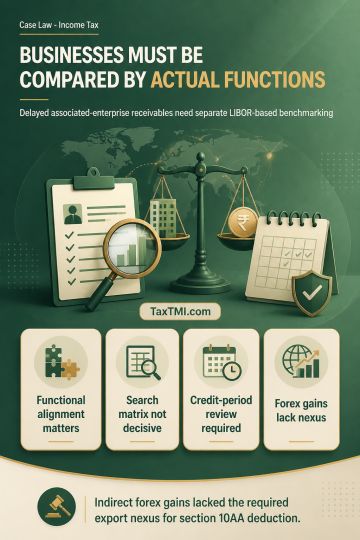
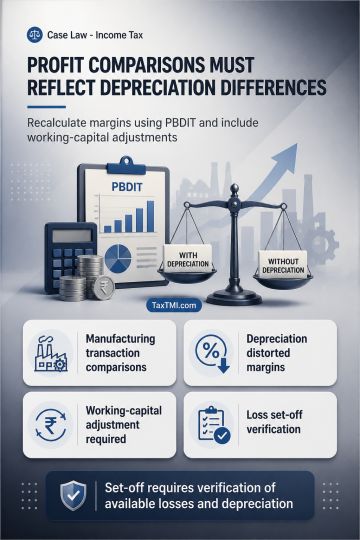
Transfer-pricing comparability requires functional alignment; delayed associated-enterprise receivables need separate LIBOR-based benchmarking, while ...
Extended reassessment limitation in search cases requires asset-linked escaped income, invalidating additions based only on unexplained money or expen...
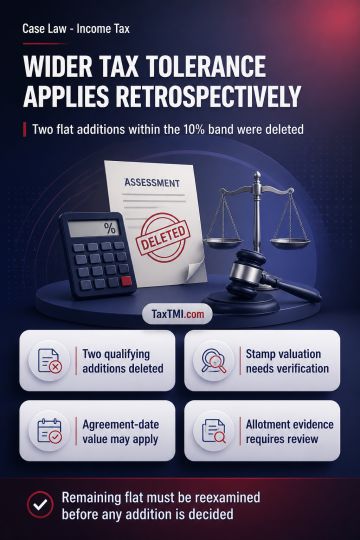
Enhanced tolerance band under section 43CA applies retrospectively, deleting qualifying deemed-sale additions while disputed stamp valuation requires ...
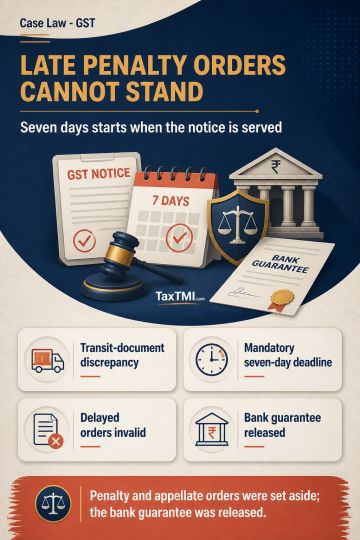
Section 129(3) of the CGST/KGST Act imposes a mandatory seven-day period, measured from service of notice, for issuing a detention-penalty order concerning a transit-document discrepancy. The term "shall" requires strict compliance because the provision authorises coercive detention and seizure; the absence of an express consequence for delay does not make the limit directory. An order passed after the prescribed period is illegal and without jurisdiction, with consequential setting aside of the penalty and appellate orders and release of the bank guarantee.
Section 129(3) of the CGST/KGST Act imposes a mandatory seven-day period, measured from service of notice, for issuing a detention-penalty order concerning a transit-document discrepancy. The term "shall" requires strict compliance because the provision authorises coercive detention and seizure; the absence of an express consequence for delay does not make the limit directory. An order passed after the prescribed period is illegal and without jurisdiction, with consequential setting aside of the penalty and appellate orders and release of the bank guarantee.
Note: It is a system-generated summary and is for quick reference only.
 TaxTMI
  TaxTMI
 of 4913