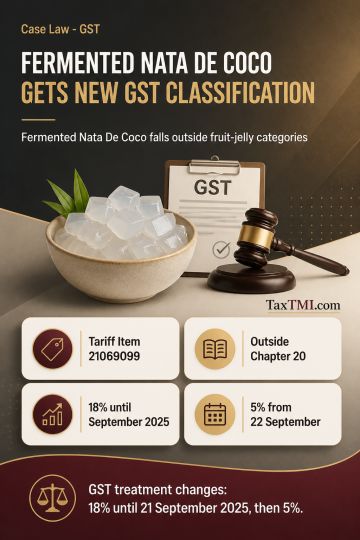
Residual food-preparation classification places fermented Nata De Coco outside fruit-jelly categories, changing its GST treatment across notified peri...
Settlement application eligibility requires a pending assessment when filed, preventing an extra prior-eligibility condition from blocking considerati...
Reassessment for unreturned property sales survives where transfer information, non-filing, and unsupported exemption claims establish a prima facie l...
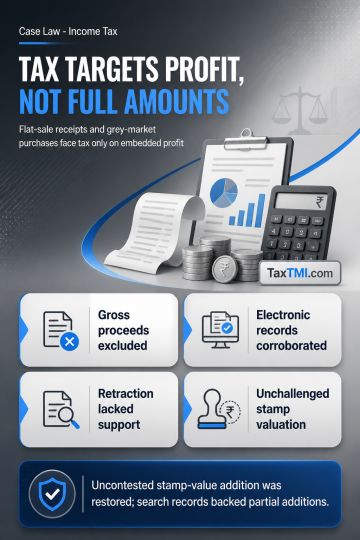
Profit-element taxation limits additions for unaccounted flat-sale receipts and grey-market purchases, while reliable search records support partial a...
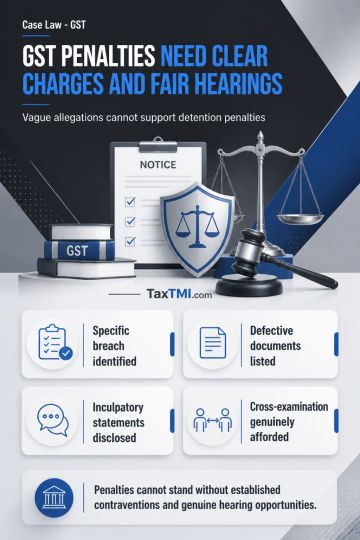
GST detention penalties under section 129 require a pleaded and established contravention of the Act or Rules. A show-cause notice must identify the defective documents and the precise legal provision allegedly breached; a vague allegation of diversion or unloading at an undeclared destination is insufficient. Reliance on inculpatory statements requires their disclosure, and an offered personal hearing and cross-examination opportunity must be genuinely afforded before adjudication. Appellate review must address material natural-justice objections and identify the statutory contravention rather than rely on route or invoicing observations alone.
GST detention penalties under section 129 require a pleaded and established contravention of the Act or Rules. A show-cause notice must identify the defective documents and the precise legal provision allegedly breached; a vague allegation of diversion or unloading at an undeclared destination is insufficient. Reliance on inculpatory statements requires their disclosure, and an offered personal hearing and cross-examination opportunity must be genuinely afforded before adjudication. Appellate review must address material natural-justice objections and identify the statutory contravention rather than rely on route or invoicing observations alone.
Note: It is a system-generated summary and is for quick reference only.
 TaxTMI
  TaxTMI
 of 4913