Coercive recovery during GST searches is restrained pending scrutiny, preserving normal business operations and requiring adherence to investigation g...
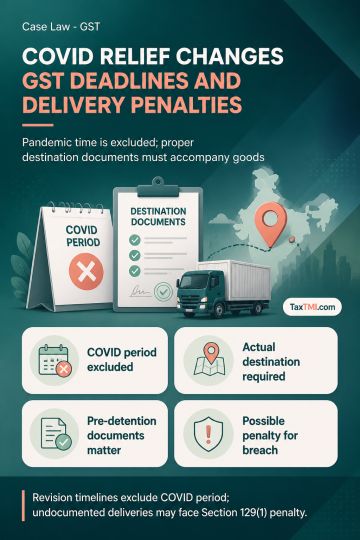
COVID-19 limitation exclusion and destination-specific e-way bills govern revisional timelines and penalties for undocumented third-party plywood deli...
Questions arising from miscellaneous application orders cannot challenge unaltered Tribunal findings, leaving the original order separately challengea...
Page of 4913
Press 'Enter' after typing page number.
1101 to 1120 of 98250 Results
❮
❯
❯❯
0 / 200
Expand Note
Add to Folder
No Folders have been created
+
Are you sure you want to delete "My most important" ?
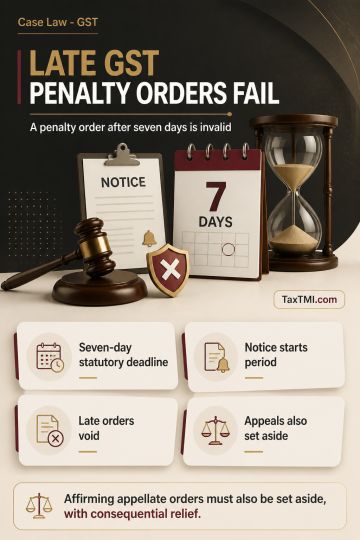
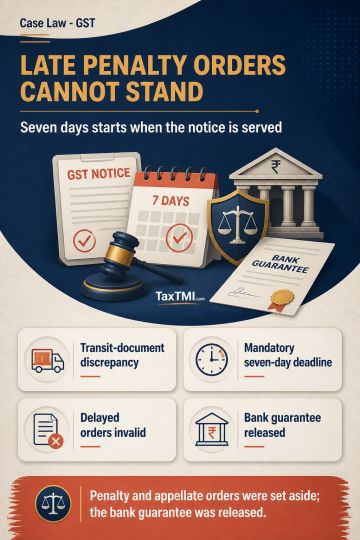
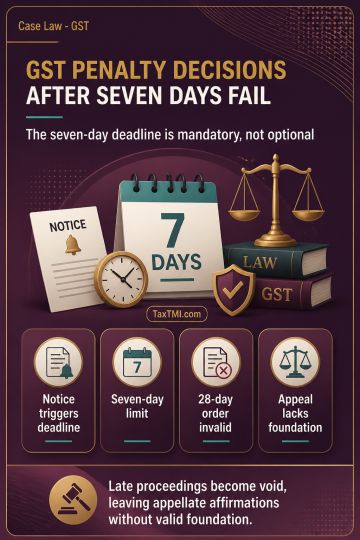
Section 129(3) requires a detention-penalty order to be passed within seven days of service of notice. The seven-day period is mandatory, not directory; an order made after that period, including one issued 28 days after notice, breaches the statutory requirement. Such delay vitiates the detention-penalty proceedings, renders the original order void ab initio and a nullity, and leaves no valid basis for an appellate order affirming the penalty.
Section 129(3) requires a detention-penalty order to be passed within seven days of service of notice. The seven-day period is mandatory, not directory; an order made after that period, including one issued 28 days after notice, breaches the statutory requirement. Such delay vitiates the detention-penalty proceedings, renders the original order void ab initio and a nullity, and leaves no valid basis for an appellate order affirming the penalty.
Note: It is a system-generated summary and is for quick reference only.
 TaxTMI
  TaxTMI
 of 4913