Blocked input tax credit for resort construction remains unavailable; interest follows actual utilisation, while delayed payment attracts statutory pe...
Duplicate PAN allocation requires record verification and deactivation reasons before assessment-related transactions can be attributed to an assessee...
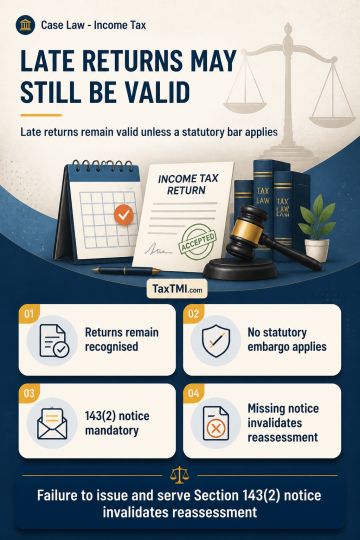
Faceless assessment safeguards require requested personal hearings and adequate final show-cause response time, failing which reassessment is required...
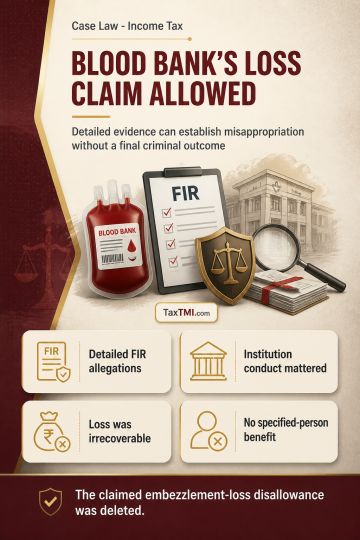
Embezzlement losses in charitable institutions remain allowable when misappropriation is established, irrecoverable, and not a specified-person benefi...
Page of 4921
Press 'Enter' after typing page number.
801 to 820 of 98411 Results
❮
❯
❯❯
0 / 200
Expand Note
Add to Folder
No Folders have been created
+
Are you sure you want to delete "My most important" ?
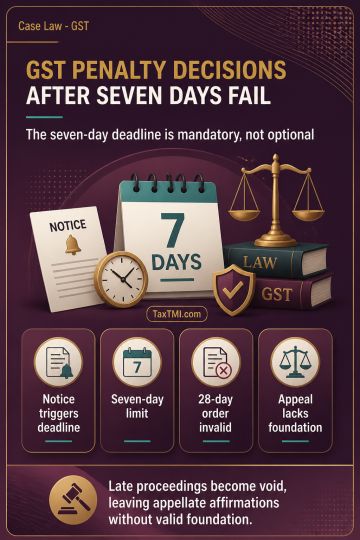
Section 129(3) requires a detention-penalty order to be passed within seven days of service of notice. The seven-day period is mandatory, not directory; an order made after that period, including one issued 28 days after notice, breaches the statutory requirement. Such delay vitiates the detention-penalty proceedings, renders the original order void ab initio and a nullity, and leaves no valid basis for an appellate order affirming the penalty.
Section 129(3) requires a detention-penalty order to be passed within seven days of service of notice. The seven-day period is mandatory, not directory; an order made after that period, including one issued 28 days after notice, breaches the statutory requirement. Such delay vitiates the detention-penalty proceedings, renders the original order void ab initio and a nullity, and leaves no valid basis for an appellate order affirming the penalty.
Note: It is a system-generated summary and is for quick reference only.
 TaxTMI
 TaxTMI

 of 4921