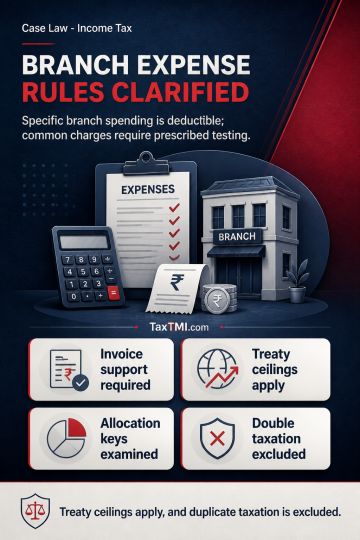
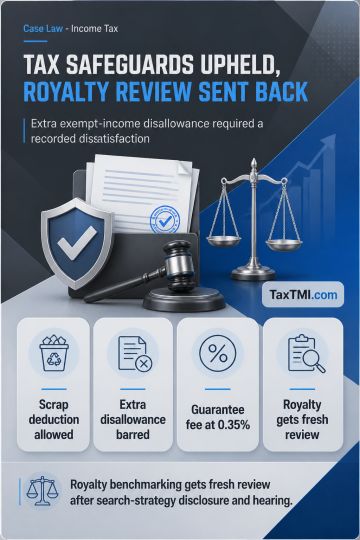
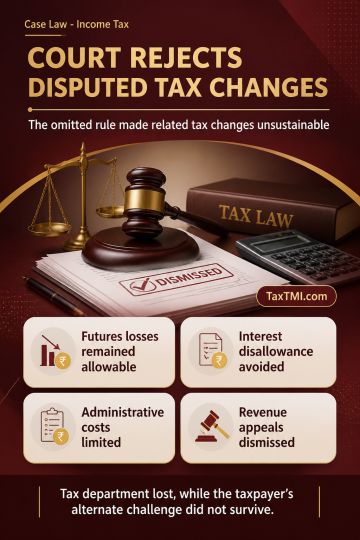
Head Office cost allocation requires prescribed transfer-pricing methods; treaty ceilings bar surcharge and cess, while duplicate taxation is excluded...
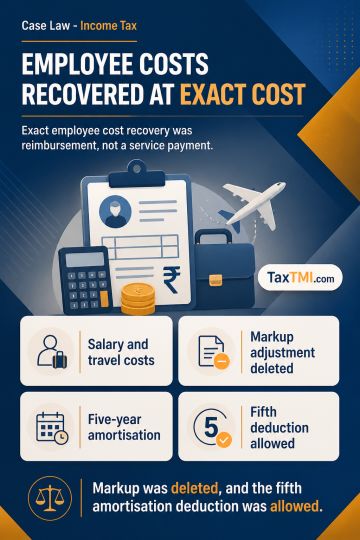
Cost-to-cost reimbursement of seconded employees is not service consideration; transfer-pricing markup was deleted and amalgamation amortisation allow...
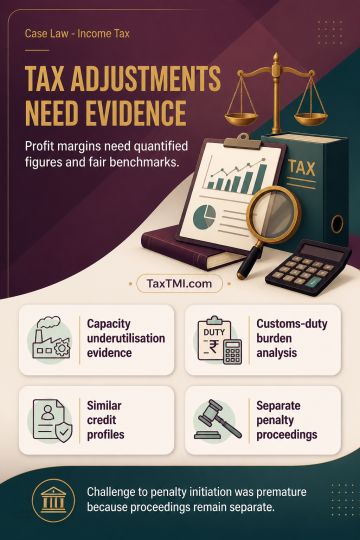
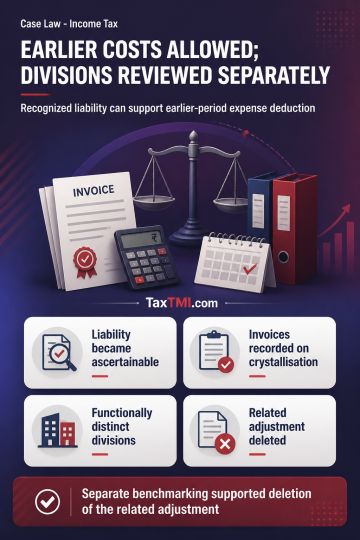
Crystallisation of liability supports prior-period expense deduction, while functionally distinct divisions require separate transfer-pricing benchmar...
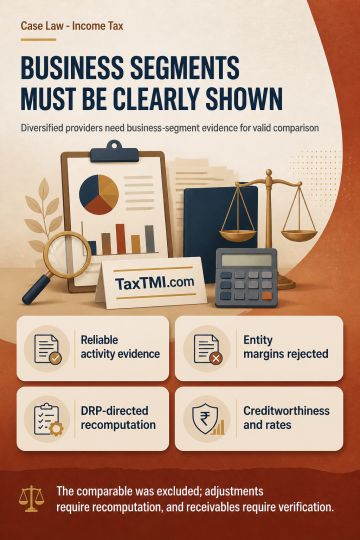
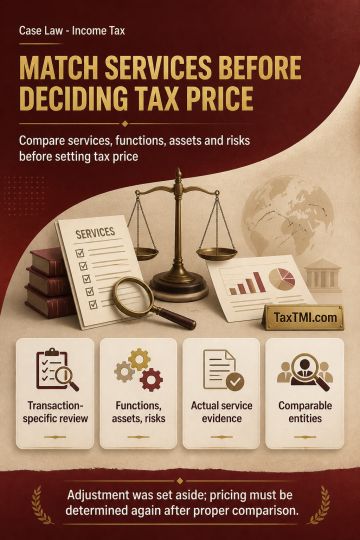
Functional comparability under TNMM requires transaction-specific FAR analysis before benchmarking business-support services provided to associated en...
Advance pricing agreement methodology can guide benchmarking for non-covered years when functions, assets, risks and activities remain materially unch...
Page of 4918
Press 'Enter' after typing page number.
341 to 360 of 98359 Results
❮
❯
❯❯
0 / 200
Expand Note
Add to Folder
No Folders have been created
+
Are you sure you want to delete "My most important" ?
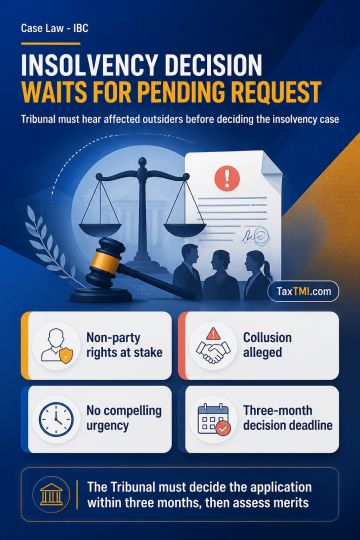
Fair opportunity to a non-party affected by insolvency proceedings requires consideration of its pending intervention application before final adjudication of the Section 7 company petition. The application under Section 60(5) alleged collusive initiation of insolvency proceedings and asserted potential effects on the applicant's rights and property. In the stated circumstances, judicial fairness required the Tribunal to determine that application first because no compelling urgency justified finalising the insolvency petition while it remained pending. The Tribunal was directed to decide the application within three months, if not already decided, and thereafter determine the insolvency petition on merits.
Fair opportunity to a non-party affected by insolvency proceedings requires consideration of its pending intervention application before final adjudication of the Section 7 company petition. The application under Section 60(5) alleged collusive initiation of insolvency proceedings and asserted potential effects on the applicant's rights and property. In the stated circumstances, judicial fairness required the Tribunal to determine that application first because no compelling urgency justified finalising the insolvency petition while it remained pending. The Tribunal was directed to decide the application within three months, if not already decided, and thereafter determine the insolvency petition on merits.
Note: It is a system-generated summary and is for quick reference only.
 TaxTMI
 TaxTMI

 of 4918