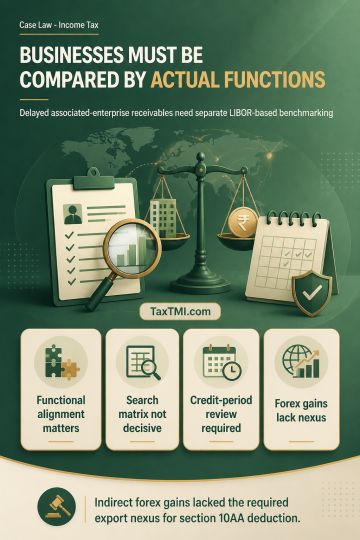
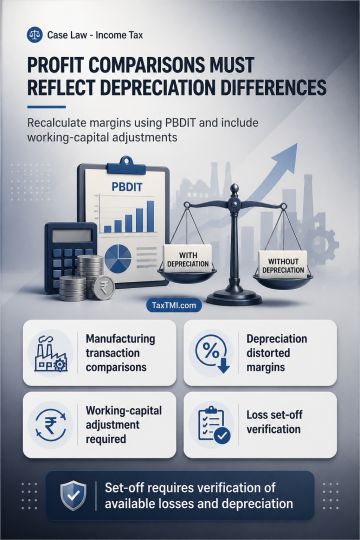
Transfer-pricing comparability requires functional alignment; delayed associated-enterprise receivables need separate LIBOR-based benchmarking, while ...
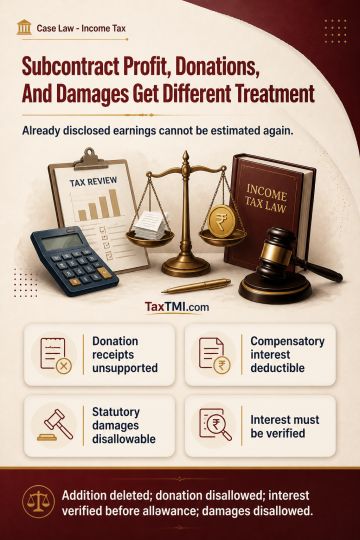
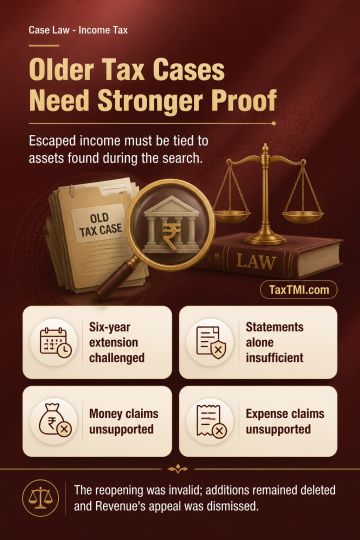
Extended reassessment limitation in search cases requires asset-linked escaped income, invalidating additions based only on unexplained money or expen...
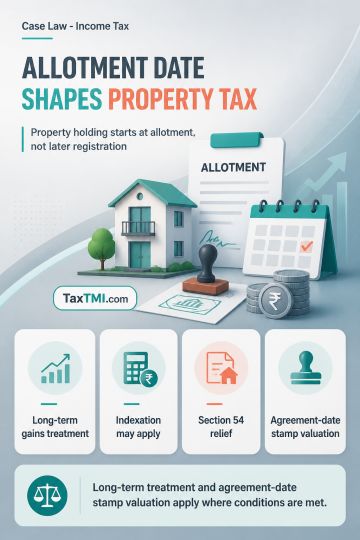
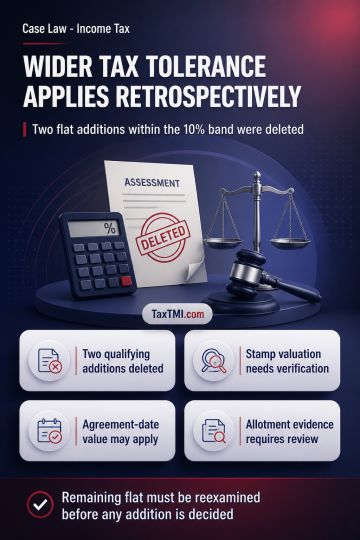
Enhanced tolerance band under section 43CA applies retrospectively, deleting qualifying deemed-sale additions while disputed stamp valuation requires ...
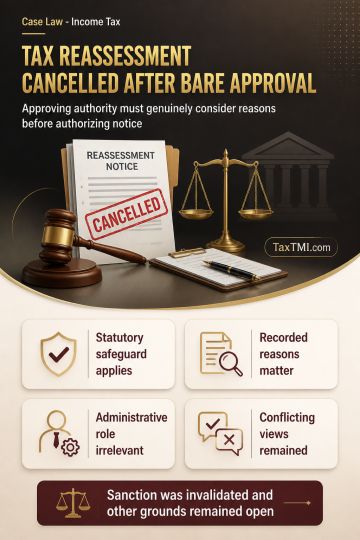
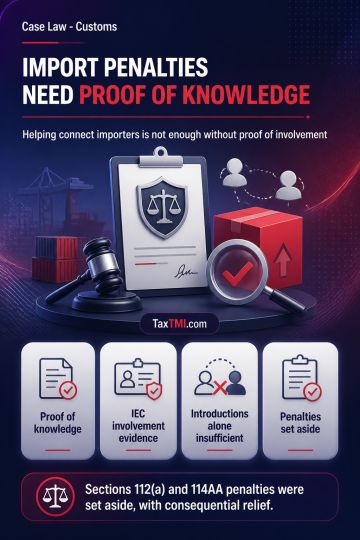
Customs transaction value rejection requires communicated reasonable doubt, while written reassessment acceptance preserves challenges to enhanced val...
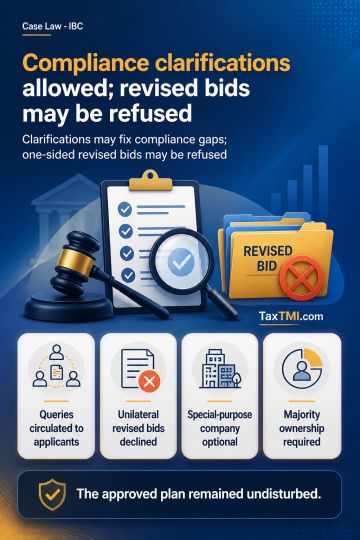
Challenge-mechanism compliance clarifications permitted, while unilateral revised resolution plans may be refused under creditors' commercial discreti...
GST treats each financial year as a separate tax period for...
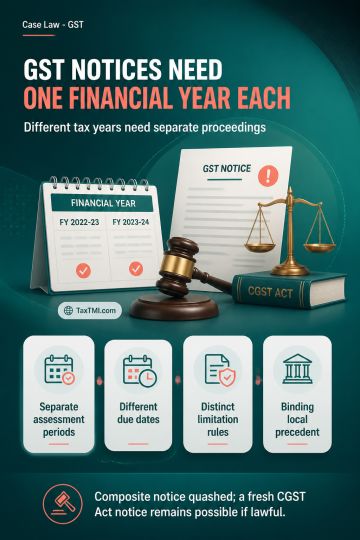
Year-wise GST tax periods make composite show cause notices impermissible, requiring separate proceedings despite contrary non-jurisdictional precedent.
Contents
Summary
Note
Bookmark
Share
✓ Copied successfully !
Print
Print Options
For full text, please login
Login to TaxTMI
Verification Pending
The Email Id has not been verified. Click on the link we have sent on
GST treats each financial year as a separate tax period for assessment, annual returns, demand limitation and recovery. A composite show cause notice covering multiple financial years improperly combines distinct periods with different due dates, limitation requirements, grounds and response obligations, and is therefore impermissible. Jurisdictional High Court precedent requiring year-wise notices remains binding on authorities notwithstanding a contrary High Court view and an in-limine dismissal of a special leave petition against that view, which does not trigger merger. The composite notice was quashed, with liberty to issue a fresh notice under the CGST Act if legally permissible.
GST treats each financial year as a separate tax period for assessment, annual returns, demand limitation and recovery. A composite show cause notice covering multiple financial years improperly combines distinct periods with different due dates, limitation requirements, grounds and response obligations, and is therefore impermissible. Jurisdictional High Court precedent requiring year-wise notices remains binding on authorities notwithstanding a contrary High Court view and an in-limine dismissal of a special leave petition against that view, which does not trigger merger. The composite notice was quashed, with liberty to issue a fresh notice under the CGST Act if legally permissible.
Note: It is a system-generated summary and is for quick reference only.
 TaxTMI
 TaxTMI

 of 4916