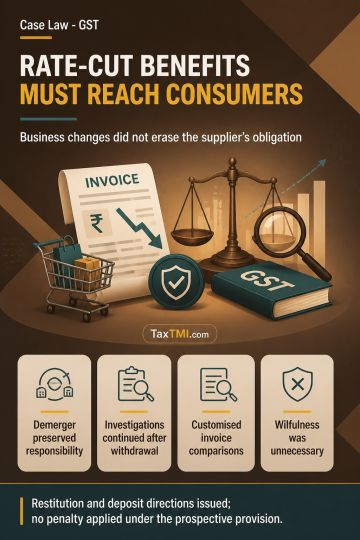
Anti-profiteering obligations survive business demerger, complaint withdrawal, and customized supply arrangements where rate-reduction benefits are no...
Road restoration charges constitute taxable services when requested for commercial pipeline activity, requiring reverse-charge GST from the business r...
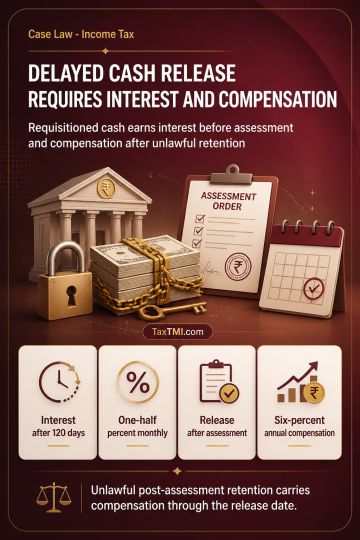
Interest on delayed release of requisitioned cash includes statutory pre-assessment interest and restitutionary compensation for unlawful post-assessm...
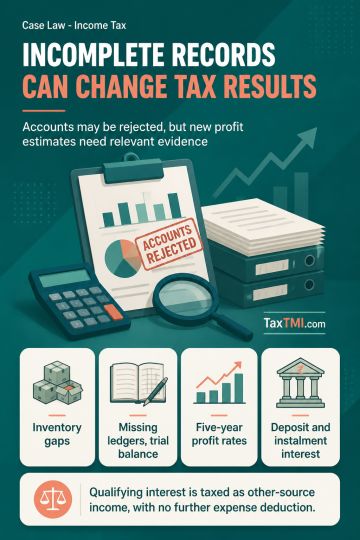
Incomplete inventory records justify rejecting accounts, while profit estimation requires relevant comparable material and interest falls under other ...
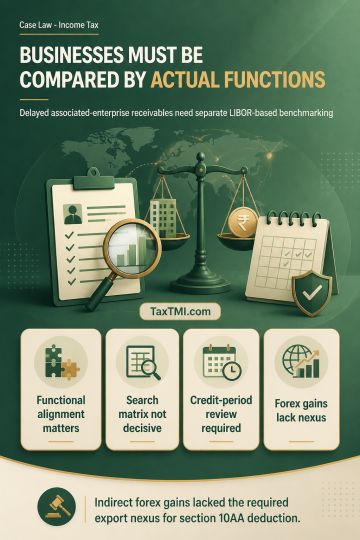
Transfer-pricing comparability requires functional alignment; delayed associated-enterprise receivables need separate LIBOR-based benchmarking, while ...
Sufficient cause for condoning inordinate delay in a revenue...
Sufficient cause for delayed revenue income-tax appeals requires bona fides, due diligence and a credible explanation; otherwise limitation bars appeal.
Contents
Summary
Note
Bookmark
Share
✓ Copied successfully !
Print
Print Options
For full text, please login
Login to TaxTMI
Verification Pending
The Email Id has not been verified. Click on the link we have sent on
Sufficient cause for condoning inordinate delay in a revenue income-tax appeal requires a credible explanation demonstrating bona fides and due diligence. Liberal construction of the limitation standard does not excuse negligence, inaction, departmental workload, difficulty locating records, or unexplained delay after appeal papers are finalised. The duration of delay may be relevant, but the adequacy of the explanation remains decisive. Where substantial delay persists even after exclusion of a limitation extension and the applicant provides only excuses, condonation is unavailable. Failure to establish sufficient cause results in dismissal of the condonation application and the appeal as time-barred.
Sufficient cause for condoning inordinate delay in a revenue income-tax appeal requires a credible explanation demonstrating bona fides and due diligence. Liberal construction of the limitation standard does not excuse negligence, inaction, departmental workload, difficulty locating records, or unexplained delay after appeal papers are finalised. The duration of delay may be relevant, but the adequacy of the explanation remains decisive. Where substantial delay persists even after exclusion of a limitation extension and the applicant provides only excuses, condonation is unavailable. Failure to establish sufficient cause results in dismissal of the condonation application and the appeal as time-barred.
Note: It is a system-generated summary and is for quick reference only.
 TaxTMI
 TaxTMI

 of 4918