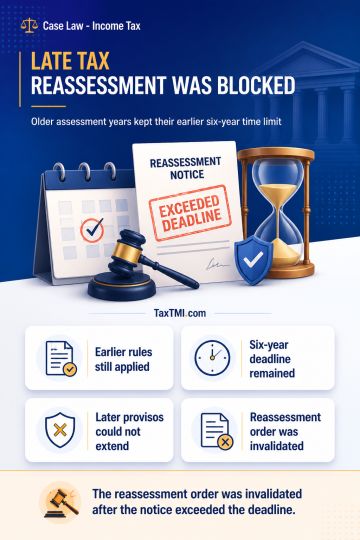
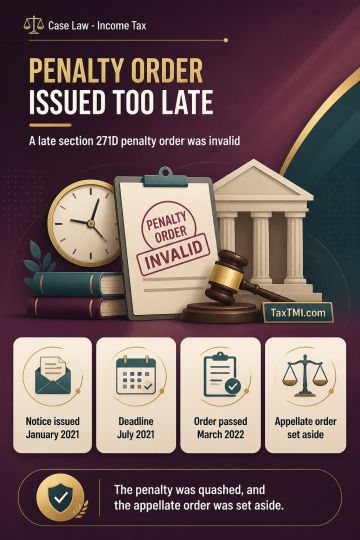
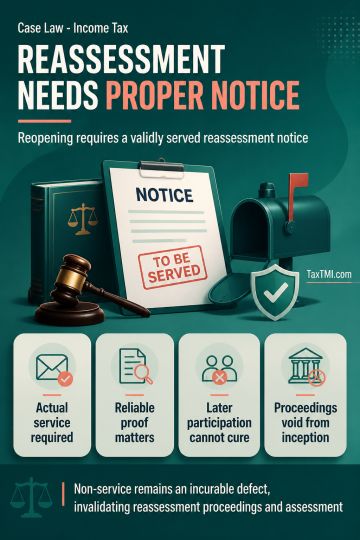
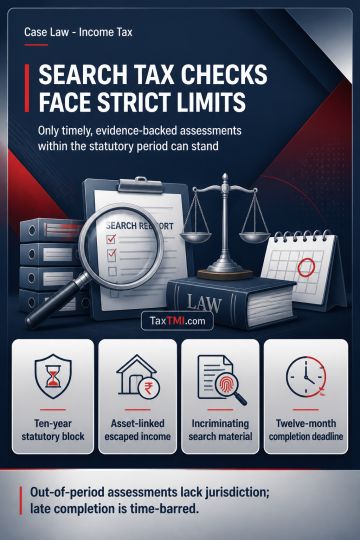
Pre-amendment reassessment limitation bars late notices under the preserved regime, invalidating consequential reassessment for affected earlier asses...
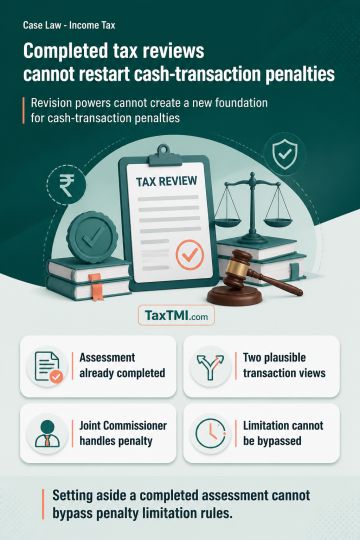
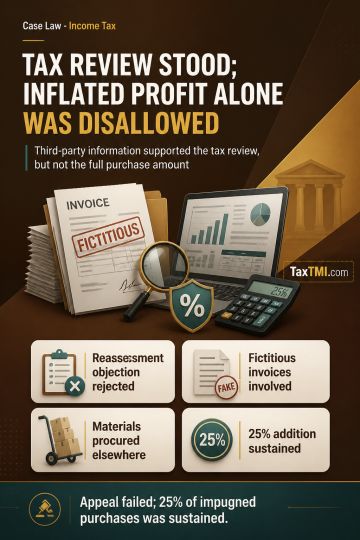
Cash-sales explanations for bank deposits require documentary reconciliation; reassessment notice survived where effective response time was available...
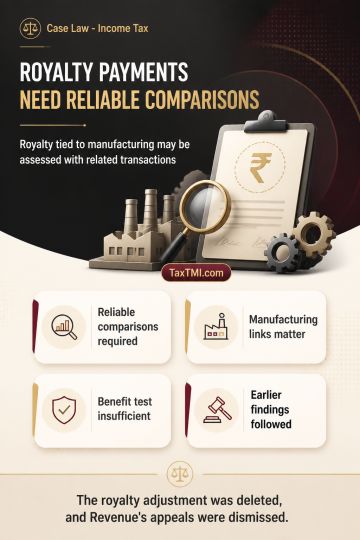
Functional comparability in transfer pricing prevents ad hoc arm's length adjustments where functions, assets, risks and reliable comparables are unes...
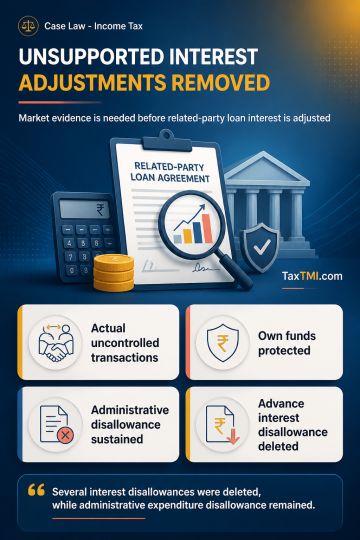
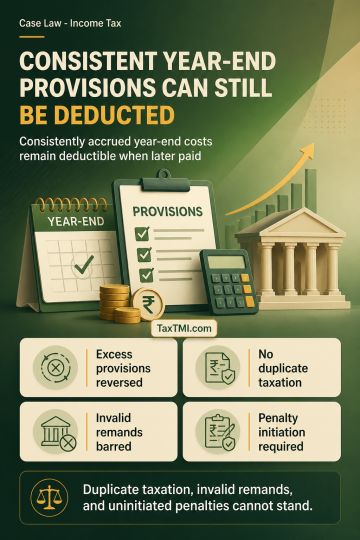
Contingency expenses, exempt-income disallowance, and royalty benchmarking: unsupported adjustments were deleted under consistent accounting and trans...
Section 47-A of the Indian Stamp Act authorises a reference...
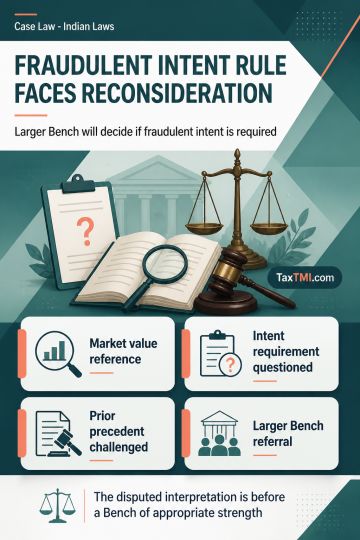
Section 47-A undervaluation threshold: fraudulent intent requirement faces reconsideration after referral to a larger Bench for authoritative resolution.
Contents
Summary
Note
Bookmark
Share
✓ Copied successfully !
Print
Print Options
For full text, please login
Login to TaxTMI
Verification Pending
The Email Id has not been verified. Click on the link we have sent on
Section 47-A of the Indian Stamp Act authorises a reference where the registering authority has reason to believe that an instrument does not truly state market value or consideration. Its text does not expressly require proof of wilful undervaluation or fraudulent intent to evade stamp duty. Earlier larger-Bench precedent had treated such culpable intent as necessary, but that interpretation has been questioned as inconsistent with the statutory language. Judicial discipline prevents a smaller Bench from reconsidering a larger-Bench view; accordingly, the proper jurisdictional threshold under Section 47-A and the correctness of the prior interpretation stand referred to a Bench of appropriate strength.
Section 47-A of the Indian Stamp Act authorises a reference where the registering authority has reason to believe that an instrument does not truly state market value or consideration. Its text does not expressly require proof of wilful undervaluation or fraudulent intent to evade stamp duty. Earlier larger-Bench precedent had treated such culpable intent as necessary, but that interpretation has been questioned as inconsistent with the statutory language. Judicial discipline prevents a smaller Bench from reconsidering a larger-Bench view; accordingly, the proper jurisdictional threshold under Section 47-A and the correctness of the prior interpretation stand referred to a Bench of appropriate strength.
Note: It is a system-generated summary and is for quick reference only.
 TaxTMI
 TaxTMI

 of 4918