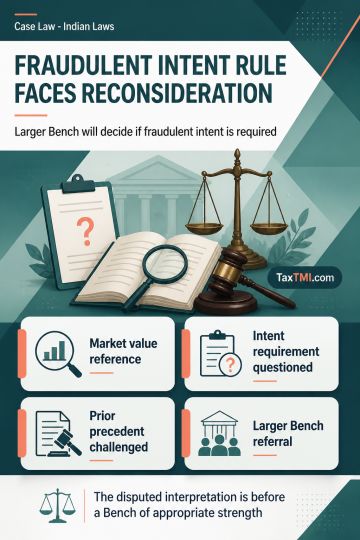
Section 47-A undervaluation threshold: fraudulent intent requirement faces reconsideration after referral to a larger Bench for authoritative resoluti...
RBI supersession powers over multi-State co-operative banks operate independently of the constitutional six-month ceiling and permit statutory extensi...
Charitable sports promotion: sponsorship receipts alone did not defeat registration where funds supported tournaments and player development activitie...
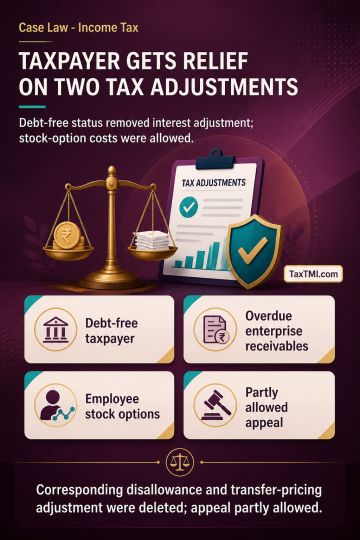
Overdue associated-enterprise receivables: debt-free status defeated notional-interest adjustment, while employee stock-option costs qualified as busi...
Page of 4921
Press 'Enter' after typing page number.
1721 to 1740 of 98411 Results
❮
❯
❯❯
0 / 200
Expand Note
Add to Folder
No Folders have been created
+
Are you sure you want to delete "My most important" ?
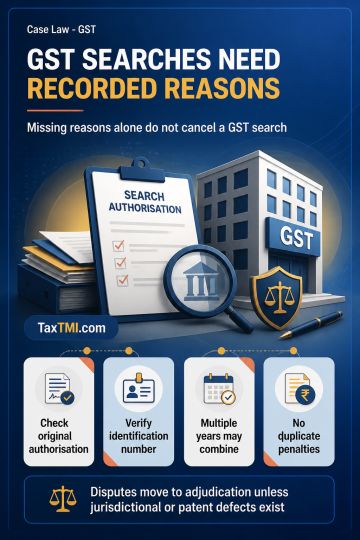
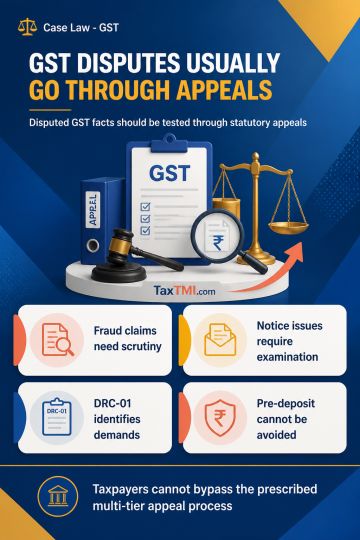
Search authorisation requires the competent officer to record reasons to believe; non-supply of those reasons to the searched person does not itself invalidate the search, but the original authorisation and contemporaneous records require examination in adjudication. Alleged absence of a Document Identification Number requires factual verification and does not alone justify quashing a notice. Investigation-based GST demands may proceed without prior return scrutiny, although scrutiny remains necessary for discrepancies identified solely through return scrutiny. A consolidated notice may cover multiple financial years if liability, limitation and applicable provisions are assessed separately for each year. Penalties cannot be imposed twice for the same act or omission. Disputes over suppression and quantification require statutory adjudication absent jurisdictional or patent legal defects.
Search authorisation requires the competent officer to record reasons to believe; non-supply of those reasons to the searched person does not itself invalidate the search, but the original authorisation and contemporaneous records require examination in adjudication. Alleged absence of a Document Identification Number requires factual verification and does not alone justify quashing a notice. Investigation-based GST demands may proceed without prior return scrutiny, although scrutiny remains necessary for discrepancies identified solely through return scrutiny. A consolidated notice may cover multiple financial years if liability, limitation and applicable provisions are assessed separately for each year. Penalties cannot be imposed twice for the same act or omission. Disputes over suppression and quantification require statutory adjudication absent jurisdictional or patent legal defects.
Note: It is a system-generated summary and is for quick reference only.
 TaxTMI
 TaxTMI

 of 4921