Electronic certificates of origin enable preferential tariffs under the India-New Zealand FTA when format, verification, and filing requirements are m...
Customs approval for liquid cargo exports extends designated jetty operations while existing boarding station and customs area limits remain unchanged...
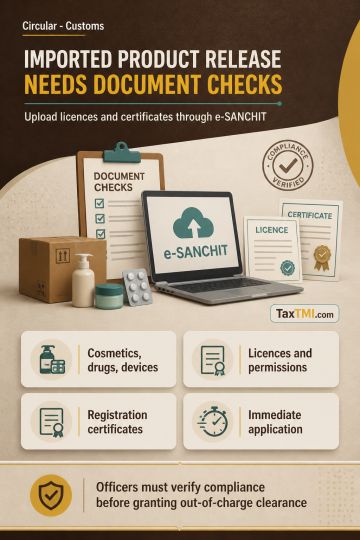
Mandatory compliance document verification now conditions out-of-charge clearance for imported cosmetics, drugs, and medical devices through PGA-facil...
Double taxation of turnover requires holistic verification across separately registered units and permits limited rectification of overlapping assessm...
Under TNMM, a Basmati rice trader that only procures and exports...
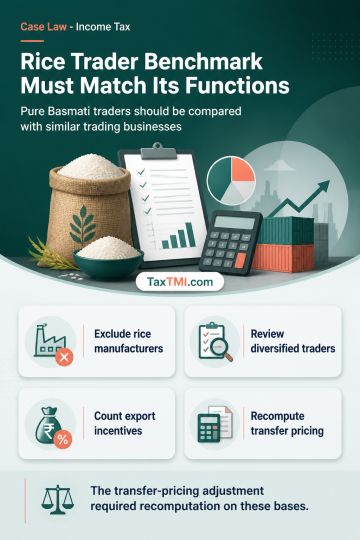
TNMM functional comparability requires excluding rice manufacturers from a pure Basmati rice trader's benchmark and recognising operating export receipts.
Contents
Summary
Note
Bookmark
Share
✓ Copied successfully !
Print
Print Options
For full text, please login
Login to TaxTMI
Verification Pending
The Email Id has not been verified. Click on the link we have sent on
Under TNMM, a Basmati rice trader that only procures and exports rice to its associated enterprise should be benchmarked against entities with comparable trading functions, assets and risks. Diversified commodity trading and rice milling, processing or manufacturing companies were treated as functionally dissimilar and excluded; milling and processing, rather than non-Basmati dealings or profitability alone, determined exclusion. Segmental trading results of a diversified company required reconsideration where trading represented its predominant revenue. Cash discounts reducing rice purchase cost and export incentives from licence sales were treated as operating income, since their exclusion would distort the operating-profit comparison. The transfer-pricing adjustment required recomputation on these bases.
Under TNMM, a Basmati rice trader that only procures and exports rice to its associated enterprise should be benchmarked against entities with comparable trading functions, assets and risks. Diversified commodity trading and rice milling, processing or manufacturing companies were treated as functionally dissimilar and excluded; milling and processing, rather than non-Basmati dealings or profitability alone, determined exclusion. Segmental trading results of a diversified company required reconsideration where trading represented its predominant revenue. Cash discounts reducing rice purchase cost and export incentives from licence sales were treated as operating income, since their exclusion would distort the operating-profit comparison. The transfer-pricing adjustment required recomputation on these bases.
Note: It is a system-generated summary and is for quick reference only.
 TaxTMI
 TaxTMI