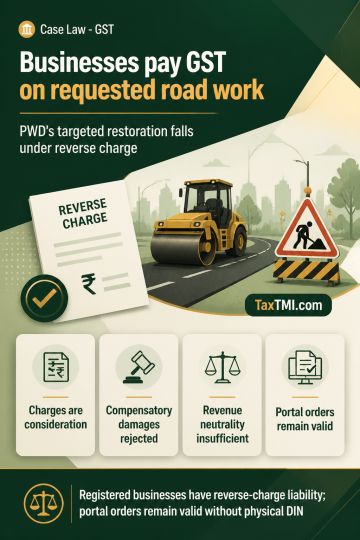
Request-driven road restoration attracts reverse-charge GST, not governmental-function treatment or compensatory-damages status for business recipient...
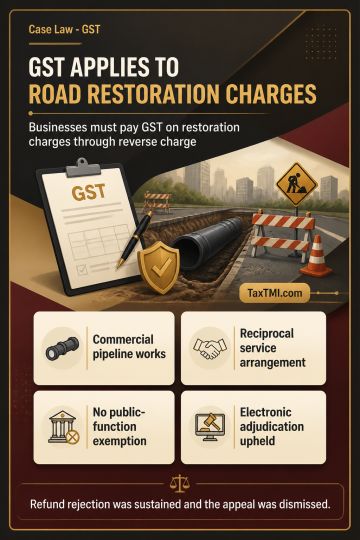
Road restoration charges for commercial pipeline works are taxable Government services, with reverse charge liability and no public-function exemption...
Model-wise import cap monitoring cannot justify withholding used multifunction machines where all-India tracking is absent and full security is furnis...
An appeal under the Insolvency and Bankruptcy Code was found invalidly instituted where it was filed and refiled without the certified copy of the impugned order and without seeking exemption from producing it. The SC held that Rule 22(2) of the NCLAT Rules requires the certified copy to accompany every appeal, and non-compliance goes to the root of institution rather than constituting a curable refiling defect. Because the appellant had not applied for the certified copy within limitation and had shown no diligence, the NCLAT was required first to verify valid institution before considering delay. Its failure to do so vitiated the condonation order, which was set aside.
An appeal under the Insolvency and Bankruptcy Code was found invalidly instituted where it was filed and refiled without the certified copy of the impugned order and without seeking exemption from producing it. The SC held that Rule 22(2) of the NCLAT Rules requires the certified copy to accompany every appeal, and non-compliance goes to the root of institution rather than constituting a curable refiling defect. Because the appellant had not applied for the certified copy within limitation and had shown no diligence, the NCLAT was required first to verify valid institution before considering delay. Its failure to do so vitiated the condonation order, which was set aside.
Note: It is a system-generated summary and is for quick reference only.
 TaxTMI
  TaxTMI
 of 4918