Form 26AS evidence requires successor-entity accounting verification after business transfer, while invoice-supported related-party advertising expend...
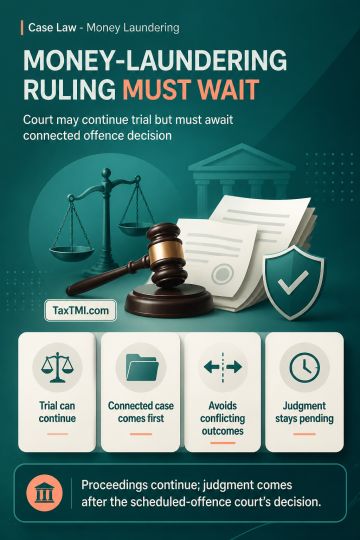
Money-laundering judgment timing requires awaiting the scheduled-offence decision despite continuation of the underlying trial where outcomes directly...
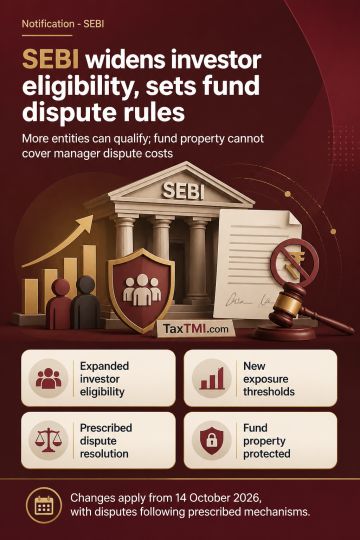
Accredited investor eligibility expands through securities-market exposure, while alternative investment fund disputes require prescribed resolution a...
The statutory bar on parallel proceedings under the GST law applies when the later action concerns the same subject matter, meaning the same distinct infraction, tax liability or obligation, not the year or return in general. Applying this principle, the High Court found that the assessment and rectification orders were unsustainable because the authority did not clearly determine whether the transactions covered by the earlier Central proceedings were being omitted from the State action or whether the State case involved separate infractions. The orders were quashed and the matter remanded for fresh consideration with a transaction-wise examination of overlap and exclusion of matters already covered by the Central authorities.
The statutory bar on parallel proceedings under the GST law applies when the later action concerns the same subject matter, meaning the same distinct infraction, tax liability or obligation, not the year or return in general. Applying this principle, the High Court found that the assessment and rectification orders were unsustainable because the authority did not clearly determine whether the transactions covered by the earlier Central proceedings were being omitted from the State action or whether the State case involved separate infractions. The orders were quashed and the matter remanded for fresh consideration with a transaction-wise examination of overlap and exclusion of matters already covered by the Central authorities.
Note: It is a system-generated summary and is for quick reference only.
 TaxTMI
  TaxTMI
 of 4915