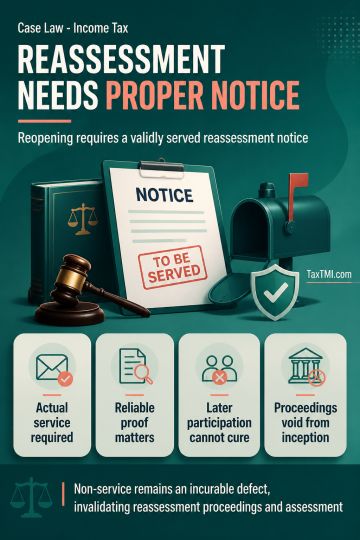
Pre-amendment reassessment limitation bars late notices under the preserved regime, invalidating consequential reassessment for affected earlier asses...
Cash-sales explanations for bank deposits require documentary reconciliation; reassessment notice survived where effective response time was available...
Functional comparability in transfer pricing prevents ad hoc arm's length adjustments where functions, assets, risks and reliable comparables are unes...
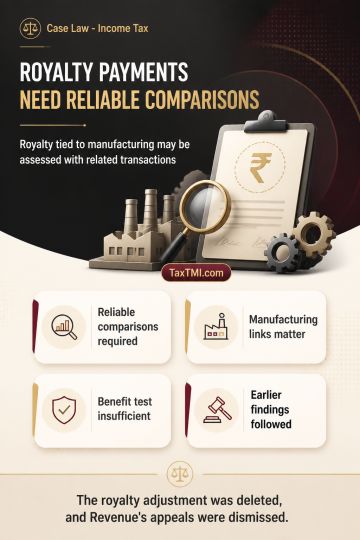
Contingency expenses, exempt-income disallowance, and royalty benchmarking: unsupported adjustments were deleted under consistent accounting and trans...
Page of 4921
Press 'Enter' after typing page number.
81 to 100 of 98414 Results
❮
❯
❯❯
0 / 200
Expand Note
Add to Folder
No Folders have been created
+
Are you sure you want to delete "My most important" ?
Section 40(a)(ia) disallowance applies only to expenditure actually claimed as a deduction in computing business income; where TDS-defaulted amounts remained capitalised in work-in-progress and were not charged to the profit and loss account, no current-year disallowance was warranted. Even under the percentage completion method, the decisive question was whether the expense had entered the year's computation, and the balance had to be adjusted in work-in-progress to avoid later deduction without compliance. The audit report could not override the actual accounting treatment. The Tribunal therefore upheld the CIT(A)'s limited verification approach and dismissed the Revenue's appeal.
Section 40(a)(ia) disallowance applies only to expenditure actually claimed as a deduction in computing business income; where TDS-defaulted amounts remained capitalised in work-in-progress and were not charged to the profit and loss account, no current-year disallowance was warranted. Even under the percentage completion method, the decisive question was whether the expense had entered the year's computation, and the balance had to be adjusted in work-in-progress to avoid later deduction without compliance. The audit report could not override the actual accounting treatment. The Tribunal therefore upheld the CIT(A)'s limited verification approach and dismissed the Revenue's appeal.
Note: It is a system-generated summary and is for quick reference only.
 TaxTMI
 TaxTMI

 of 4921