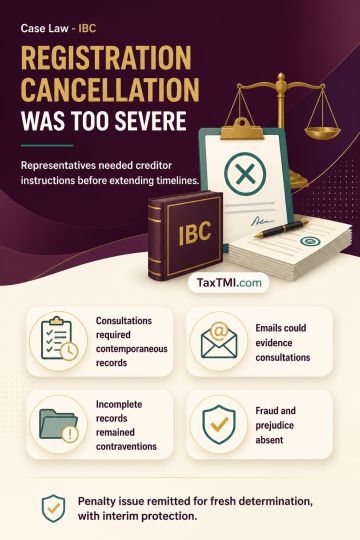
Disciplinary proportionality requires penalties for Authorised Representative misconduct to match proven harm, leading to reconsideration of registrat...
Political contribution deductions require genuine transactions; banking records and party registration alone cannot defeat evidence of accommodation e...
Post-death GST liability permits fresh proceedings against legal representatives, while discontinued-business recovery remains limited to the inherite...
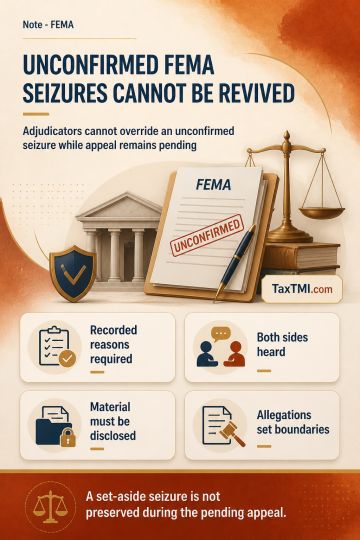
Non-confirmation of FEMA seizure prevents adjudicators from overriding pending appellate findings on recorded reasons and suspected foreign asset hold...
Section 40(a)(ia) disallowance applies only to expenditure actually claimed as a deduction in computing business income; where TDS-defaulted amounts remained capitalised in work-in-progress and were not charged to the profit and loss account, no current-year disallowance was warranted. Even under the percentage completion method, the decisive question was whether the expense had entered the year's computation, and the balance had to be adjusted in work-in-progress to avoid later deduction without compliance. The audit report could not override the actual accounting treatment. The Tribunal therefore upheld the CIT(A)'s limited verification approach and dismissed the Revenue's appeal.
Section 40(a)(ia) disallowance applies only to expenditure actually claimed as a deduction in computing business income; where TDS-defaulted amounts remained capitalised in work-in-progress and were not charged to the profit and loss account, no current-year disallowance was warranted. Even under the percentage completion method, the decisive question was whether the expense had entered the year's computation, and the balance had to be adjusted in work-in-progress to avoid later deduction without compliance. The audit report could not override the actual accounting treatment. The Tribunal therefore upheld the CIT(A)'s limited verification approach and dismissed the Revenue's appeal.
Note: It is a system-generated summary and is for quick reference only.
 TaxTMI
  TaxTMI
 of 4918