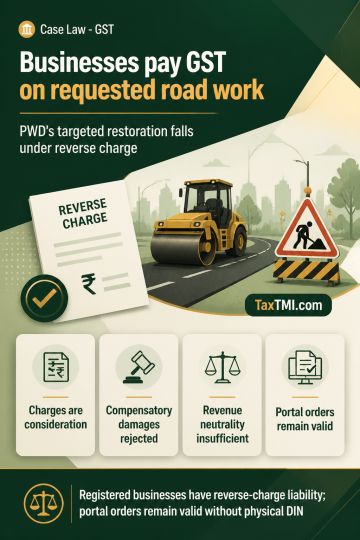
Request-driven road restoration attracts reverse-charge GST, not governmental-function treatment or compensatory-damages status for business recipient...
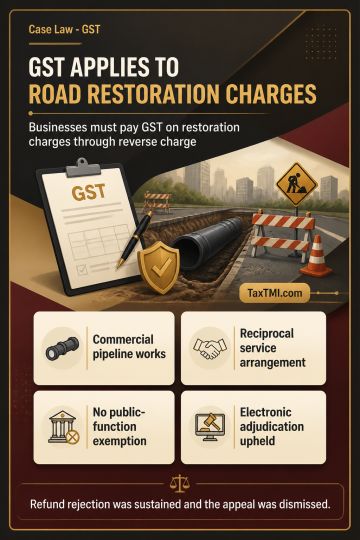
Road restoration charges for commercial pipeline works are taxable Government services, with reverse charge liability and no public-function exemption...
Model-wise import cap monitoring cannot justify withholding used multifunction machines where all-India tracking is absent and full security is furnis...
Provident fund, pension fund and gratuity fund dues are excluded from the liquidation estate under Section 36(4)(a)(iii) and cannot be brought into the waterfall under Section 53. The absence of a separately maintained fund does not remove that statutory protection, and such dues must be provided for from the corporate debtor's available funds. The Tribunal therefore found the claim could not be treated as a distribution claim and remitted the matter for fresh examination in accordance with law. It also held that provident fund dues relatable to a separate legal entity could not be fastened on the corporate debtor, as distinct entities carry separate liabilities.
Provident fund, pension fund and gratuity fund dues are excluded from the liquidation estate under Section 36(4)(a)(iii) and cannot be brought into the waterfall under Section 53. The absence of a separately maintained fund does not remove that statutory protection, and such dues must be provided for from the corporate debtor's available funds. The Tribunal therefore found the claim could not be treated as a distribution claim and remitted the matter for fresh examination in accordance with law. It also held that provident fund dues relatable to a separate legal entity could not be fastened on the corporate debtor, as distinct entities carry separate liabilities.
Note: It is a system-generated summary and is for quick reference only.
 TaxTMI
  TaxTMI
 of 4918