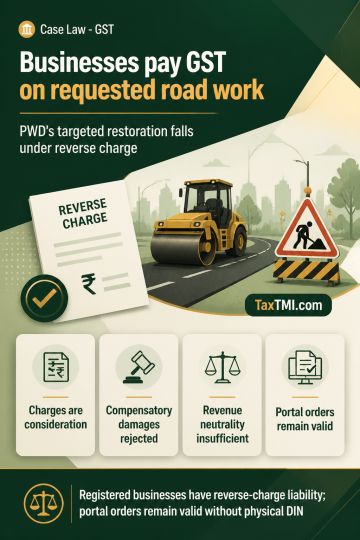
Request-driven road restoration attracts reverse-charge GST, not governmental-function treatment or compensatory-damages status for business recipient...
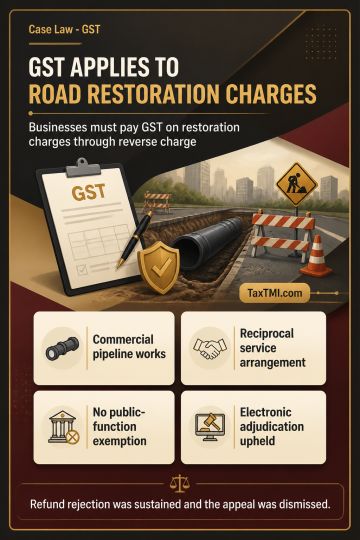
Road restoration charges for commercial pipeline works are taxable Government services, with reverse charge liability and no public-function exemption...
Model-wise import cap monitoring cannot justify withholding used multifunction machines where all-India tracking is absent and full security is furnis...
A disputed refund of advance paid for supply of goods was not treated as an undisputed operational debt, because the parties had continued negotiations, entered a later settlement arrangement, and the corporate debtor had asserted forfeiture for failure to lift stock within time. On that basis, debt and default were held not to coexist for Section 9 insolvency relief, and any challenge to forfeiture had to be pursued elsewhere. The Tribunal also held that limitation ran from the first refund demand, so the insolvency notice issued more than three years later was time-barred under Article 137. The Section 9 application was therefore dismissed.
A disputed refund of advance paid for supply of goods was not treated as an undisputed operational debt, because the parties had continued negotiations, entered a later settlement arrangement, and the corporate debtor had asserted forfeiture for failure to lift stock within time. On that basis, debt and default were held not to coexist for Section 9 insolvency relief, and any challenge to forfeiture had to be pursued elsewhere. The Tribunal also held that limitation ran from the first refund demand, so the insolvency notice issued more than three years later was time-barred under Article 137. The Section 9 application was therefore dismissed.
Note: It is a system-generated summary and is for quick reference only.
 TaxTMI
  TaxTMI
 of 4918