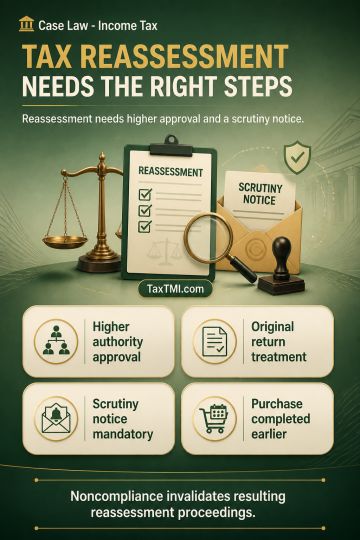
Opportunity to furnish unsecured-loan confirmations is required before reassessment initiation; proceedings require fresh consideration after taxpayer...
Under-reporting on a first reassessment return attracts penalty, while enhanced misreporting penalty requires proof of a statutory misreporting catego...
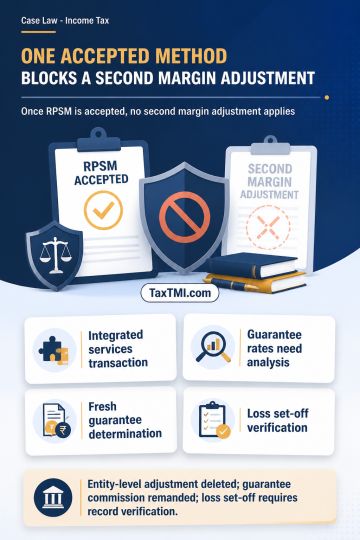
Business and management consultancy charges closely linked to the assessee's operations were held to be benchmarked on an aggregated basis under TNMM, not by a separate ALP analysis, where receipt of services was supported by additional evidence; the matter was remitted for fresh examination by the TPO after considering that evidence. For outstanding receivables from the associated enterprise, the Tribunal applied average LIBOR as the appropriate benchmark rate for delayed payment interest, rejecting the ad hoc higher rate adopted by the lower authorities. The appeal was partly allowed, with consultancy charges sent back for recomputation and receivable interest directed to be recalculated using average LIBOR.
Business and management consultancy charges closely linked to the assessee's operations were held to be benchmarked on an aggregated basis under TNMM, not by a separate ALP analysis, where receipt of services was supported by additional evidence; the matter was remitted for fresh examination by the TPO after considering that evidence. For outstanding receivables from the associated enterprise, the Tribunal applied average LIBOR as the appropriate benchmark rate for delayed payment interest, rejecting the ad hoc higher rate adopted by the lower authorities. The appeal was partly allowed, with consultancy charges sent back for recomputation and receivable interest directed to be recalculated using average LIBOR.
Note: It is a system-generated summary and is for quick reference only.
 TaxTMI
  TaxTMI
 of 4915