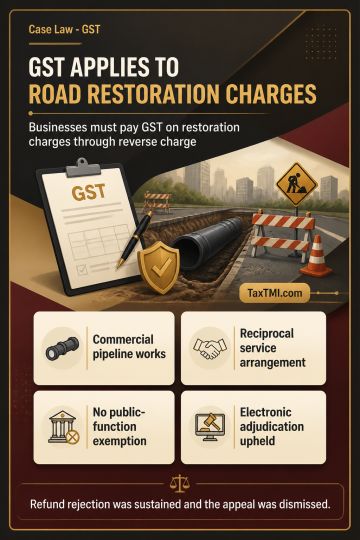
Request-driven road restoration attracts reverse-charge GST, not governmental-function treatment or compensatory-damages status for business recipient...
Road restoration charges for commercial pipeline works are taxable Government services, with reverse charge liability and no public-function exemption...
Model-wise import cap monitoring cannot justify withholding used multifunction machines where all-India tracking is absent and full security is furnis...
Repeated absence of the appellant and the statutory ceiling on adjournments justified dismissal for non-prosecution under Rule 20 of the CESTAT Procedure Rules, 1982. The Tribunal noted that the appeal had been listed repeatedly, yet there was no appearance for the appellant and no request that the matter be decided on merits. As adjournment could not be granted beyond the permitted limit of three times, no further indulgence was warranted. The appeal was therefore dismissed for non-prosecution.
Repeated absence of the appellant and the statutory ceiling on adjournments justified dismissal for non-prosecution under Rule 20 of the CESTAT Procedure Rules, 1982. The Tribunal noted that the appeal had been listed repeatedly, yet there was no appearance for the appellant and no request that the matter be decided on merits. As adjournment could not be granted beyond the permitted limit of three times, no further indulgence was warranted. The appeal was therefore dismissed for non-prosecution.
Note: It is a system-generated summary and is for quick reference only.
 TaxTMI
  TaxTMI
 of 4918