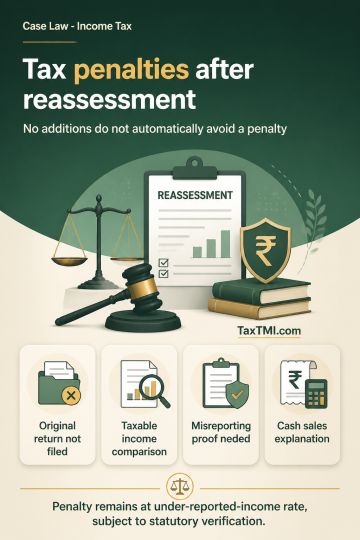
Under-reporting on a first reassessment return attracts penalty, while enhanced misreporting penalty requires proof of a statutory misreporting catego...
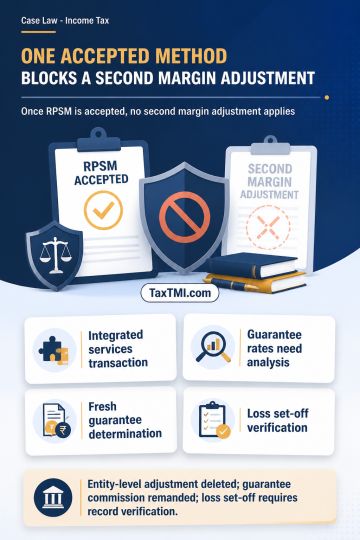
Form 26AS evidence requires successor-entity accounting verification after business transfer, while invoice-supported related-party advertising expend...
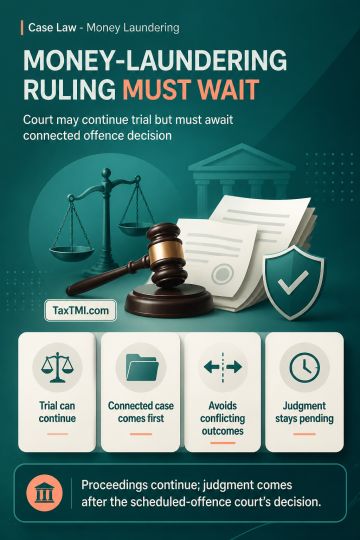
Money-laundering judgment timing requires awaiting the scheduled-offence decision despite continuation of the underlying trial where outcomes directly...
Page of 4921
Press 'Enter' after typing page number.
141 to 160 of 98411 Results
❮
❯
❯❯
0 / 200
Expand Note
Add to Folder
No Folders have been created
+
Are you sure you want to delete "My most important" ?
Section 32A(2) of the IBC bars attachment or other action against a corporate debtor's property for offences committed before commencement of insolvency, and the statutory explanation expressly includes attachment within the prohibited action. Where the corporate debtor had already entered liquidation before the provisional attachment order was issued, the later attachment could not be sustained. The tribunal therefore treated both the provisional attachment order and its confirmation as contrary to Section 32A(2) and set them aside, holding that the property of the liquidating corporate debtor was immune from such post-liquidation attachment.
Section 32A(2) of the IBC bars attachment or other action against a corporate debtor's property for offences committed before commencement of insolvency, and the statutory explanation expressly includes attachment within the prohibited action. Where the corporate debtor had already entered liquidation before the provisional attachment order was issued, the later attachment could not be sustained. The tribunal therefore treated both the provisional attachment order and its confirmation as contrary to Section 32A(2) and set them aside, holding that the property of the liquidating corporate debtor was immune from such post-liquidation attachment.
Note: It is a system-generated summary and is for quick reference only.
 TaxTMI
  TaxTMI
 of 4921